Blog
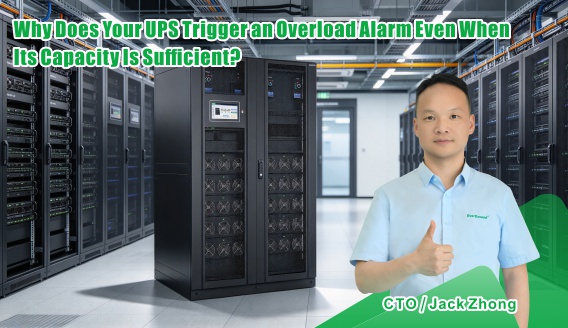
  • Why Does Your UPS Trigger an Overload Alarm Even When Its Capacity Is Sufficient?

    Why Does Your UPS Trigger an Overload Alarm Even When Its Capacity Is Sufficient?

    Oct , 22 2026
    In data centers, industrial automation systems, medical equipment and other critical applications, a UPS may trigger an overload alarm even when the displayed load is well below its rated capacity. Why does this happen when the load is only 60%? The problem is not necessarily that the UPS is undersized. Nonlinear loads, such as servers, variable-frequency drives and rectifier-based power supplies,...
    more
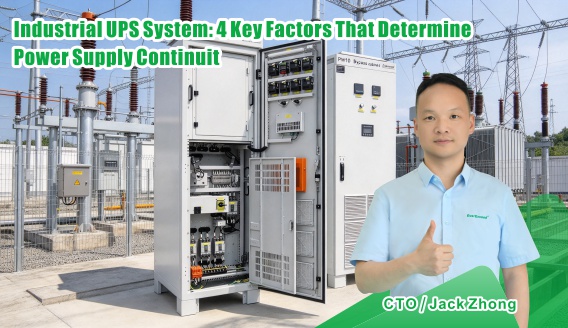
  • Industrial UPS System: 4 Key Factors That Determine Power Supply Continuit

    Industrial UPS System: 4 Key Factors That Determine Power Supply Continuit

    Oct , 16 2026
    A UPS is more than a backup power source that keeps equipment running during a power outage. For servers, industrial control systems, communication equipment, and other critical loads, power continuity depends on how the entire system responds to changing operating conditions. From normal utility power to a sudden outage, and from inverter operation to bypass and battery operation, the real value ...
    more
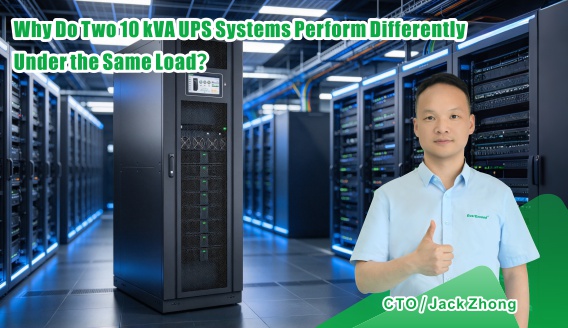
  • Why Do Two 10 kVA UPS Systems Perform Differently Under the Same Load

    Why Do Two 10 kVA UPS Systems Perform Differently Under the Same Load

    Oct , 10 2026
    Quick Answer A UPS's rated capacity is only the starting point. Its actual load-handling capability depends on output power factor, peak current, overload curves, and load characteristics. Two 10 kVA UPS systems may perform very differently under the same load. One may operate reliably, while the other may trigger alarms, transfer to bypass, or experience degraded output waveforms—even when ...
    more
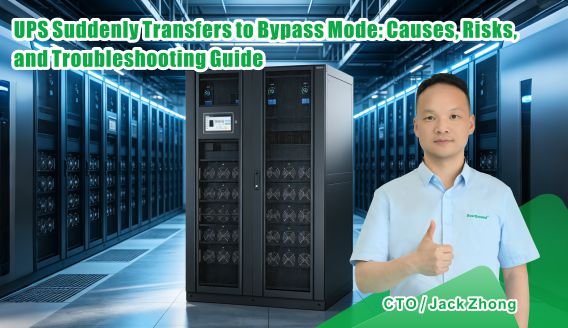
  • UPS Suddenly Transfers to Bypass Mode: Causes, Risks, and Troubleshooting Guide

    UPS Suddenly Transfers to Bypass Mode: Causes, Risks, and Troubleshooting Guide

    Aug , 25 2026
    Quick Answer When a UPS suddenly transfers to bypass mode, it does not always mean the UPS has failed. In many cases, the transfer is a protection action caused by conditions such as overload, inverter abnormality, or maintenance operation. However, bypass mode is different from normal inverter operation. Although the load may continue running, the UPS may no longer provide the same level of volta...
    more
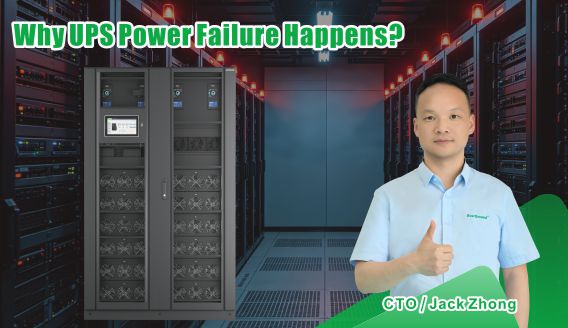
  • UPS Power Failure: Causes, Troubleshooting & How to Prevent It

    UPS Power Failure: Causes, Troubleshooting & How to Prevent It

    Apr , 11 2026
    UPS power failure is one of the most critical risks in data centers, telecom systems, and industrial facilities. However, most UPS failures are not caused by equipment defects — they are the result of incorrect selection, improper operation, poor environment, or lack of maintenance. In this article, we analyze the most common UPS failure causes and provide practical UPS troubleshooting solut...
    more
  • Turn Your UPS from a Cost Center into a Profit Engine

    Turn Your UPS from a Cost Center into a Profit Engine

    Apr , 10 2026
    The digital world is expanding faster than ever. With the rapid growth of 5G, AI, IoT, autonomous driving, and cloud computing, global data centers are scaling at an unprecedented pace. But alongside this growth comes a critical challenge: Rising energy costsPressure to improve efficiencyDemand for greener operations Traditionally, UPS systems were installed for one purpose only: power protection....
    more
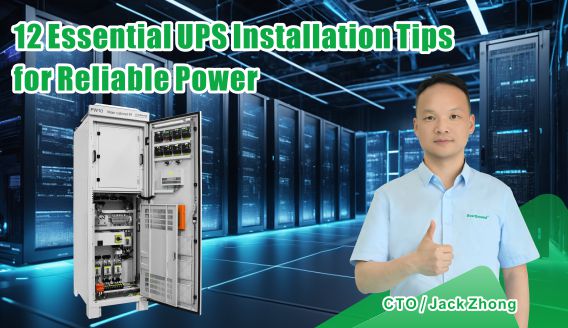
  • 12 Key Considerations for UPS Installation: Ensure Safe and Reliable Power

    12 Key Considerations for UPS Installation: Ensure Safe and Reliable Power

    Apr , 01 2026
    Proper installation of a UPS (Uninterruptible Power Supply) or EPS system is essential for safety, reliability, and long-term performance. Following best practices can prevent operational failures, extend battery life, and protect connected equipment. Here are 12 key points to guide UPS installation.   1. Prepare Input and Output Wiring Pre-install input/output cables to the site, reserv...
    more
  • 5 Common UPS Parallel Systems & Redundancy Modes Explained

    5 Common UPS Parallel Systems & Redundancy Modes Explained

    Apr , 01 2026
    In mission-critical environments such as data centers, telecom networks, industrial plants, and financial institutions, a reliable UPS parallel system is essential to eliminate single points of failure and ensure continuous power. Choosing the right UPS redundancy configuration requires balancing reliability, complexity, and investment. Below are five common UPS architectures, ranked from high-end...
    more
  • Lithium Battery UPS Solutions for Factory Mobile Carts: Driving Smarter and Greener Workshops

    Lithium Battery UPS Solutions for Factory Mobile Carts: Driving Smarter and Greener Workshops

    Nov , 08 2025
    As industrial automation advances and green energy adoption accelerates, the combination of lithium batteries and uninterruptible power supplies (UPS) is transforming factory operations. Among various workshop tools, mobile carts—used for material handling, equipment maintenance, and production support—are becoming smarter, lighter, and more energy-efficient thanks to lithium battery U...
    more
first page 1 2 3 ... 17 >> last page

a total of17 pages

leave a message
welcome to everexceed
If you are interested in our products and want to know more details,please leave a message here,we will reply you as soon as we can.

home

products

about

contact