

Blog
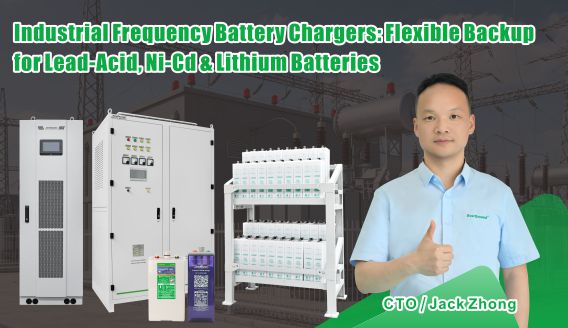
  • Industrial Frequency Battery Chargers: Flexible Backup for Lead-Acid, Ni-Cd & Lithium Batteries

    Industrial Frequency Battery Chargers: Flexible Backup for Lead-Acid, Ni-Cd & Lithium Batteries

    Apr , 28 2026
    In critical power applications such as substations, power plants, metro systems, ring main units, and emergency lighting, DC backup power systems depend on batteries. Different environments have different requirements: power plants prioritize cost and high-temperature tolerance, railways require long lifespan and overcharge resilience, and modern smart substations or data centers favor high-energy...
    more
  • Industrial & Commercial Energy Storage: Why PCS, BMS, and EMS Are the Core, Not Just Big Chargers

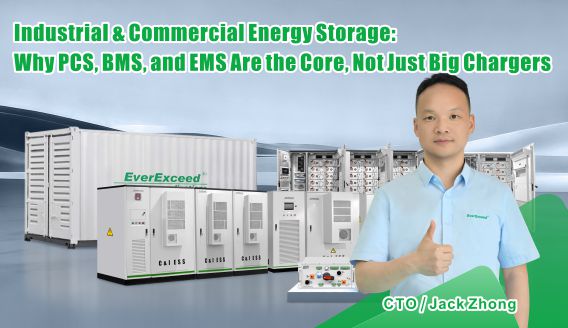
    Industrial & Commercial Energy Storage: Why PCS, BMS, and EMS Are the Core, Not Just Big Chargers

    May , 08 2026
    Many newcomers to industrial energy storage systems and commercial energy storage solutions tend to think of them simply as “big batteries with big chargers.” While not entirely wrong, this perspective barely scratches the surface. Unlike conventional chargers, which primarily convert AC to DC to charge a battery, industrial and commercial energy storage systems are comp...
    more
  • Why Battery Chargers Need Float and Equalization Charging Management

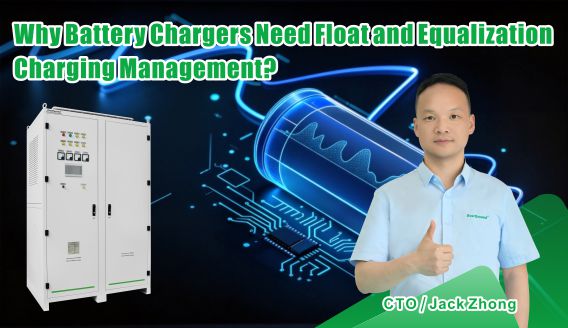
    Why Battery Chargers Need Float and Equalization Charging Management

    May , 25 2026
    In modern industrial DC power systems, the battery charger plays a key role in maintaining battery health and reliability. Proper charging management—including float charging, equalization charging, current limiting, and temperature compensation—ensures stable performance and extends battery lifespan. Why Battery Charging Management Is Critical in DC Power Systems Many field applicatio...
    more
  • Why Remote Telecom Base Station Power Systems Enable Mass Deployment

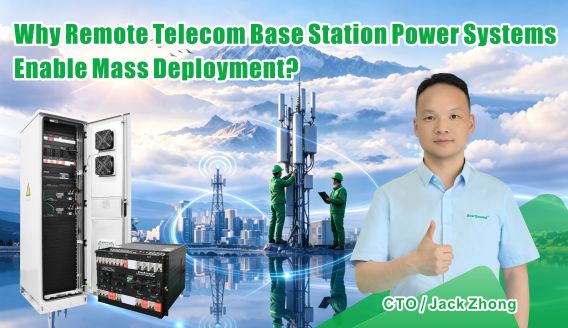
    Why Remote Telecom Base Station Power Systems Enable Mass Deployment

    May , 26 2026
    Remote telecom base station power systems can be deployed at scale because they are built on four core principles: a standardized 48V DC architecture, modular rectifier design, low-maintenance operation, and remote monitoring capability. These features allow operators to deploy thousands of sites efficiently while reducing installation complexity, operational costs, and maintenance frequency. Why ...
    more
  • Why Lithium Batteries Are the Best Partner for Telecom Power Systems Instead of Power Frequency Chargers

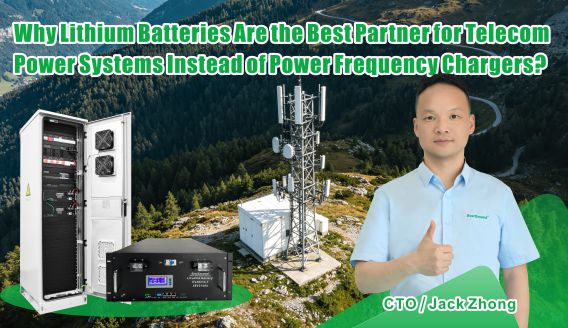
    Why Lithium Batteries Are the Best Partner for Telecom Power Systems Instead of Power Frequency Chargers

    Jun , 04 2026
    Why Telecom Base Stations and Power Frequency Chargers Don’t Match In industrial power systems like substations or metro control rooms, power frequency chargers work reliably with lead-acid, NiCd, and even lithium batteries. However, in telecom power systems, power frequency chargers are almost never used. The reason lies in the unique requirements of telecom base stations: ·&nbs...
    more
  • Why Industrial Battery Charger Testing Requires More Than Output Voltage Checks

    Why Industrial Battery Charger Testing Requires More Than Output Voltage Checks

    Jun , 04 2026
    Field testing of an industrial battery charger should not rely only on output voltage. A complete verification must include output quality,protection functions, alarm signals, load response, and communication interfaces. Only full-system testing can ensure reliable operation in real DC power systems. Introduction In many field commissioning scenarios, battery chargers are often evaluated by simply...
    more
first page << 1 ... 6 7 8 last page

a total of8 pages

leave a message
welcome to everexceed
If you are interested in our products and want to know more details,please leave a message here,we will reply you as soon as we can.

home

products

about

contact