A power outage can happen without warning. Severe storms, hurricanes, extreme temperatures, grid failures, or unexpected equipment faults can leave households without electricity for hours or even several days.
While flashlights, emergency food, and drinking water are essential, preparing for a prolonged blackout requires something more: a reliable backup power solution.
A well-prepared household should have both basic emergency supplies and a dependable source of electricity. With a home solar energy storage system, homeowners can store electricity generated by solar panels and use it when the grid goes down, helping maintain essential household operations and greater energy independence.
So, what should you include in your power outage survival kit? And how can solar lithium batteries help keep your home powered during an emergency?
Let's take a closer look.
Power outages are more than just an inconvenience. Depending on the duration and weather conditions, losing electricity can affect household safety, communication, food storage, and daily comfort.
Some common consequences include:
A practical emergency kit should cover the basic needs of your household for at least 72 hours. The exact supplies will depend on family size, climate, medical requirements, and local emergency risks.
Here are the essential items to prepare.
Keep enough drinking water for every household member. A general emergency planning guideline is at least one gallon of water per person per day for three days.
Recommended supplies include:
Choose food that does not require refrigeration or extensive cooking.
When electricity goes out, reliable lighting becomes an immediate priority.
Prepare:
Battery-powered lighting is generally safer and more convenient than relying on candles, particularly in households with children or pets.
Keeping communication devices operational is essential during emergencies.
Your emergency kit should include:
For households that experience frequent or prolonged outages, a larger backup power system may be necessary to support Wi-Fi routers, computers, and other essential equipment.
Medical and hygiene supplies should also be included.
Consider preparing:
Keep essential medications and medical instructions in an accessible location.
Store important documents in waterproof bags and prepare basic emergency tools.
These may include identification documents, insurance information, emergency cash, a multi-tool, duct tape, work gloves, and a battery-powered weather radio.
Having emergency supplies is important, but electricity is another critical part of household preparedness.
The backup power capacity you need depends on which appliances you want to operate and how long you expect the outage to last.
| Outage Duration | Recommended Preparation | Power Requirements |
|---|---|---|
| 0–12 hours | Flashlights, power banks, emergency radio | Phone charging and basic lighting |
| 1–3 days | Food, water, medical supplies, backup power | Refrigerator, Wi-Fi, lighting, essential electronics |
| 4–7 days | Extended emergency supplies and energy storage | Multiple household appliances and essential equipment |
| More than 7 days | Long-term emergency planning and renewable energy | Solar charging and expandable battery storage |
For example, a household that only needs to charge mobile phones and operate a few LED lights will have very different requirements from a family that wants to keep its refrigerator, internet connection, fans, and medical equipment running.
Before choosing a backup battery, consider:
Understanding these factors helps you choose a suitable home backup power solution rather than purchasing a battery based on capacity alone.
For homeowners who want more than a few hours of backup electricity, a solar energy storage system offers a practical long-term solution.
Unlike conventional backup batteries that depend entirely on electricity from the grid for recharging, a solar battery system can store energy generated by photovoltaic panels.
A typical home solar energy storage system consists of three main components:
Solar Panels: Convert sunlight into electricity during the day.
LiFePO4 Battery: Stores excess solar energy for use when solar generation is insufficient or when the grid is unavailable.
Hybrid Inverter: Manages energy flow between solar panels, the battery, household loads, and the utility grid.
Under normal operating conditions, solar panels supply electricity to household appliances during the day. Excess electricity can be stored in the battery for later use.
At night, or when solar generation is insufficient, the stored energy can power household loads.
When the utility grid fails, a properly configured backup system with an inverter that supports backup operation can switch to battery power and continue supplying designated essential loads.
If sufficient sunlight is available, solar panels can also recharge the battery during the daytime, helping extend backup availability.
This combination of solar generation and lithium battery storage offers several advantages:
For households facing frequent grid interruptions, solar-plus-storage can be a valuable investment in long-term energy resilience.
Battery capacity, installation space, safety, and system compatibility are all important considerations when selecting a residential energy storage battery.
LiFePO4 (Lithium Iron Phosphate) technology has become a popular choice for residential solar storage because of its long cycle life, thermal stability, and reliable performance.
EverExceed provides a range of residential solar lithium batteries designed for integration with photovoltaic systems and hybrid inverters.
Depending on household energy requirements, several configurations are available.
For homeowners looking for a compact residential energy storage solution, the EverExceed 51.2V 200Ah wall-mounted LiFePO4 battery offers a nominal energy capacity of 10.24kWh.
Key features include:
Its space-saving wall-mounted design makes it suitable for residential solar energy storage and home backup applications.
Explore: 51.2V 200Ah LiFePO4 Wall-Mounted Solar Battery – 10kWh
For households with relatively modest electricity requirements, a 5kWh-class battery can provide a flexible starting point for residential energy storage.
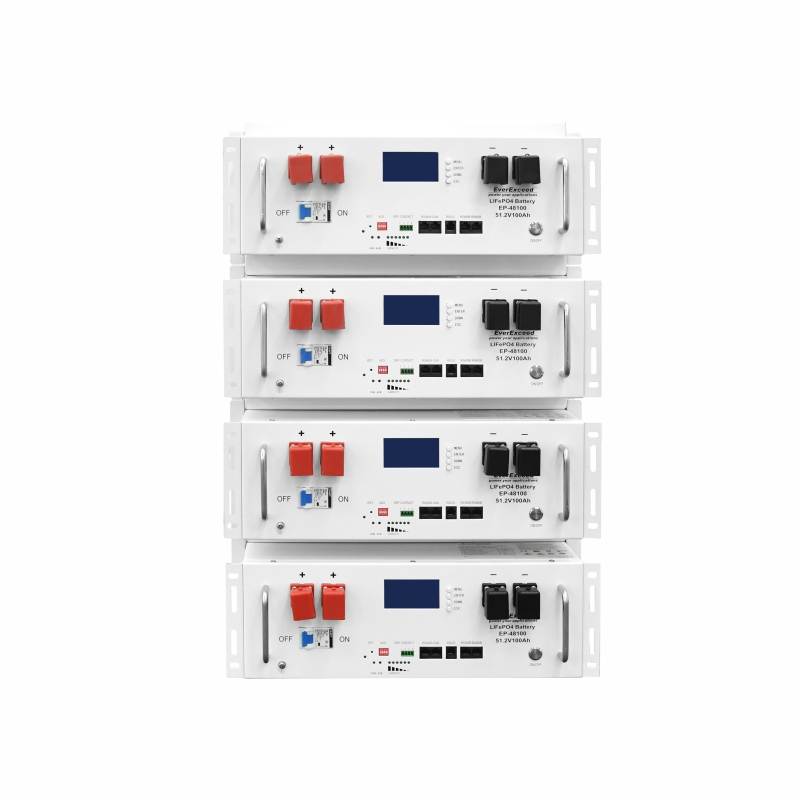
The EverExceed 51.2V 100Ah LiFePO4 battery is designed for residential photovoltaic applications.
Its key features include:
It can be used to store solar energy for evening consumption and provide backup power for selected household appliances.
Explore: 51.2V 100Ah LiFePO4 Battery – 5kWh Home Energy Storage
For households requiring greater backup capacity, a floor-mounted lithium battery provides additional energy storage in a convenient cabinet-style design.
The EverExceed 15kWh floor-mounted battery features a vertical structure with integrated wheels, making installation and positioning more flexible.
It is designed for residential solar energy storage applications where higher battery capacity and convenient deployment are important.
Explore: 51.2V 15kWh Floor-Mounted Energy Storage Battery
For larger residential energy requirements, EverExceed also offers higher-capacity floor-standing LiFePO4 battery configurations.
Explore: 51.2V 16kWh Floor-Standing LiFePO4 Battery
Installing a solar battery system is only part of the preparation. Proper configuration and regular maintenance are equally important.
Here are several practical recommendations:
1. Identify Essential Household Loads
List the appliances that must remain operational during a power outage, such as refrigerators, lighting, Wi-Fi routers, fans, and essential medical equipment.
2. Calculate Your Daily Energy Consumption
Estimate the total energy consumption of these appliances in kWh. This helps determine the appropriate battery capacity.
3. Check Inverter and Battery Compatibility
Ensure that the hybrid inverter supports the battery voltage, communication protocol, charging parameters, and backup operating mode.
4. Configure Essential Load Backup
Not every home appliance needs to operate during an outage. Prioritize critical loads and ensure the inverter has sufficient output power and appropriate backup functionality.
5. Inspect the System Regularly
Check battery status, inverter operation, electrical connections, and communication settings. Keep the system updated and follow the manufacturer's maintenance recommendations.
6. Prepare for Low-Solar Conditions
Consecutive cloudy or rainy days can reduce solar generation. Consider sufficient battery capacity, grid charging where available, and an alternative backup plan for extended outages.
A properly designed system should account for both everyday energy consumption and emergency operating conditions.
A reliable power outage survival plan involves more than storing food, water, and flashlights. It also means having a dependable way to maintain electricity when the grid is unavailable.
For short outages, portable power banks and rechargeable lights may be sufficient. For longer disruptions, a residential solar energy storage system can provide a more sustainable and flexible backup power solution.
With over 20 years of battery manufacturing experience and more than 10 years of system integration expertise, EverExceed provides LiFePO4 solar batteries and energy storage solutions for residential and commercial applications.
From wall-mounted home batteries to modular rack-mounted and floor-standing energy storage systems, EverExceed supports different backup power requirements with flexible configurations and intelligent battery management.
Prepare today. Stay powered tomorrow.
Explore EverExceed Solar Energy Storage Solutions to find a suitable lithium battery for your home energy storage and backup power needs.
tags :
categories
recent posts




scan to wechat:everexceed