Installing solar panels is a great way to reduce electricity bills and make better use of renewable energy. However, a traditional grid-tied solar system without battery storage cannot store excess electricity for later use. During the daytime, surplus solar energy is often exported to the utility grid, while electricity must still be purchased when solar production decreases at night.
Adding a battery to an existing solar system provides a practical way to improve energy independence, increase solar self-consumption, and provide backup power when the grid goes down.
The good news is that you do not necessarily need to replace your entire solar installation. In many cases, an existing solar PV system can be upgraded with a compatible lithium battery and the appropriate inverter configuration.
In this guide, EverExceed explains how to add battery storage to an existing solar system, including inverter compatibility, AC-coupled and DC-coupled configurations, battery capacity selection, installation considerations, and how to choose the right LiFePO4 battery for your energy storage needs.
Yes. Most existing solar PV systems can be upgraded with battery storage, provided that the inverter architecture, electrical configuration, and battery compatibility are properly evaluated.
Before selecting a battery, it is important to identify your current solar system configuration.
Grid-Tied Solar System
A standard grid-tied solar system uses solar panels and a grid-connected inverter to supply electricity to household loads. Excess energy is exported to the grid.
To add battery storage, you can generally choose between an AC-coupled battery system or replacing the existing inverter with a compatible hybrid inverter.
Hybrid Solar System
If your existing inverter already supports battery storage, you may only need to add a compatible lithium battery.
The battery communicates with the inverter through supported communication protocols, such as CAN or RS485, allowing the system to manage charging, discharging, and battery protection.
Off-Grid Solar System
For an off-grid solar installation, additional batteries can increase available energy storage and extend backup time. However, the battery bank must meet the inverter's voltage, current, communication, and parallel-connection requirements.
Before installation, always check the inverter manufacturer's approved battery compatibility list and the battery manufacturer's technical documentation.
When adding a battery to an existing solar system, one of the most important decisions is choosing between AC coupling and DC coupling.
Both configurations can store excess solar energy, but they differ in system architecture and installation requirements.
An AC-coupled system connects a battery and its dedicated battery inverter to the AC side of the existing solar installation.
The original grid-tied solar inverter remains in place, meaning there is usually no need to replace a working solar inverter.
How it works:
Solar panels generate DC electricity.
The existing solar inverter converts DC power into AC electricity.
Household loads consume the electricity they need.
Excess AC electricity is converted back into DC through the battery inverter to charge the battery.
Stored energy is converted into AC electricity and supplied to household loads when needed.
Key advantages:
An AC-coupled configuration is often a practical choice when the existing solar inverter is still functioning well.
A DC-coupled system connects the battery directly to a compatible hybrid inverter on the DC side.
Solar electricity can be used to charge the battery without first passing through the existing grid-tied inverter.
Key advantages:
However, if the existing inverter is not battery-ready, a DC-coupled upgrade may require replacing it with a compatible hybrid inverter.
| Comparison | AC-Coupled System | DC-Coupled System |
|---|---|---|
| Existing solar inverter | Usually retained | May need replacement |
| Battery connection | AC side | DC side |
| Additional equipment | Battery inverter | Compatible hybrid inverter |
| Retrofit flexibility | Generally high | Depends on inverter |
| Energy conversion | Additional conversion stage | Fewer conversion stages |
| Best application | Existing solar systems | New or upgraded hybrid systems |
Which option should you choose?
If your existing solar inverter is relatively new and works properly, an AC-coupled system may be the more economical retrofit option.
If your existing inverter is aging or you are planning a complete system upgrade, a DC-coupled solution with a hybrid inverter may be worth considering.
The final configuration should always be determined by the inverter specifications, battery compatibility, backup requirements, and installation conditions.
Choosing the correct battery capacity is essential for maximizing solar energy utilization without investing in unnecessary storage capacity.
A battery that is too small may not store enough excess solar energy, while an oversized battery may remain underutilized for much of the year.
Consider the following factors when calculating your storage requirements.
Check your solar monitoring application or electricity meter to determine how much excess solar energy your system exports to the grid each day.
This indicates how much surplus energy may be available for battery charging.
Review your household electricity consumption after sunset.
If your home uses 8kWh of electricity overnight, a battery with approximately 8–10kWh of nominal capacity may be a reasonable starting point, depending on its usable capacity and system efficiency.
The battery's depth of discharge determines how much of its rated capacity can be used.
For example, a 10.24kWh battery with a specified 90% DoD provides approximately 9.22kWh of usable energy before considering other system losses.
Consider whether you plan to add more electrical appliances, an EV charger, or additional solar panels.
A modular battery system that supports approved parallel expansion can provide greater flexibility for future energy requirements.
Assume a home has:
A battery system with approximately 10kWh of nominal capacity could be a suitable starting point, subject to the battery's usable capacity, inverter rating, and backup load requirements.
For smaller energy requirements, a 5.12kWh battery may be considered. For larger residential storage requirements, a 10.24kWh battery or an appropriately configured expandable battery bank may be more suitable.
The final battery size should be based on actual energy consumption data rather than solar panel capacity alone.
Battery chemistry directly affects system safety, usable energy, lifespan, maintenance, and overall operating costs.
Among the available energy storage technologies, lithium iron phosphate (LiFePO4) batteries have become a popular choice for residential solar storage applications.
1. Enhanced Safety
LiFePO4 battery chemistry offers good thermal stability compared with many other lithium-ion chemistries.
A battery equipped with a smart Battery Management System (BMS) can monitor cell voltage, temperature, current, and operating conditions to help prevent overcharging, over-discharging, and other abnormal conditions.
Additional protection technologies, such as aerosol fire suppression systems and flame-retardant materials, can provide further layers of safety when incorporated into the battery design.
2. High Energy Density
LiFePO4 batteries offer a compact energy storage solution, making them suitable for wall-mounted and rack-mounted residential installations where available space is limited.
3. Long Cycle Life
Designed for repeated charging and discharging, LiFePO4 batteries can support long-term solar energy storage applications. Actual cycle life depends on cell quality, operating temperature, depth of discharge, and charging conditions.
4. Low Maintenance
Compared with traditional lead-acid batteries, lithium batteries generally require less routine maintenance and offer higher usable capacity within a similar nominal energy rating.
5. Smart Battery Management
An intelligent BMS provides battery monitoring and protection, while supported CAN or RS485 communication enables coordination between the battery and compatible inverters.
For solar energy storage projects, choosing a battery with suitable communication protocols is just as important as selecting the correct voltage and capacity.
Adding a battery to an existing PV system requires careful electrical evaluation and professional installation.
Here are the main steps involved.
Identify the inverter manufacturer, model, rated power, battery voltage requirements, and supported battery communication protocols.
If you are using a hybrid inverter, check whether your selected battery is included in its compatibility list.
Determine whether an AC-coupled or DC-coupled system is more appropriate.
Then select the battery voltage, nominal capacity, discharge current, and expansion configuration according to the system requirements.
The battery should be installed in a location that meets its environmental and safety requirements.
Important considerations include:
A qualified installer should complete the electrical connections according to the battery and inverter manufacturers' installation manuals.
For lithium battery systems, communication connections must also be configured correctly to ensure proper BMS and inverter coordination.
After installation, the installer should configure battery parameters, charging and discharging limits, operating modes, and backup settings.
The system should then be tested to verify normal charging, discharging, monitoring, and backup operation where supported.
Important: Adding a battery to a grid-connected solar installation may require utility approval, electrical inspections, permits, or changes to existing feed-in arrangements. Requirements vary by country and local regulations. Always work with a qualified solar installer.
Yes, provided that the battery system is designed to support expansion.
For households with increasing electricity consumption, modular battery storage offers a flexible way to increase capacity over time.
For example:
These examples represent nominal battery energy capacity. Actual system capacity and usable energy depend on the battery specifications and inverter configuration.
Before adding batteries, check the following:
For the best performance and system consistency, use the same approved battery model and follow the manufacturer's expansion instructions. Do not mix different battery models or brands unless the manufacturers explicitly approve the configuration.
EverExceed provides lithium battery solutions designed for residential solar energy storage and a variety of renewable energy applications.
With more than 20 years of battery manufacturing experience and over 10 years of system integration expertise, EverExceed combines battery technology, intelligent battery management, and customized engineering capabilities to support different energy storage requirements.
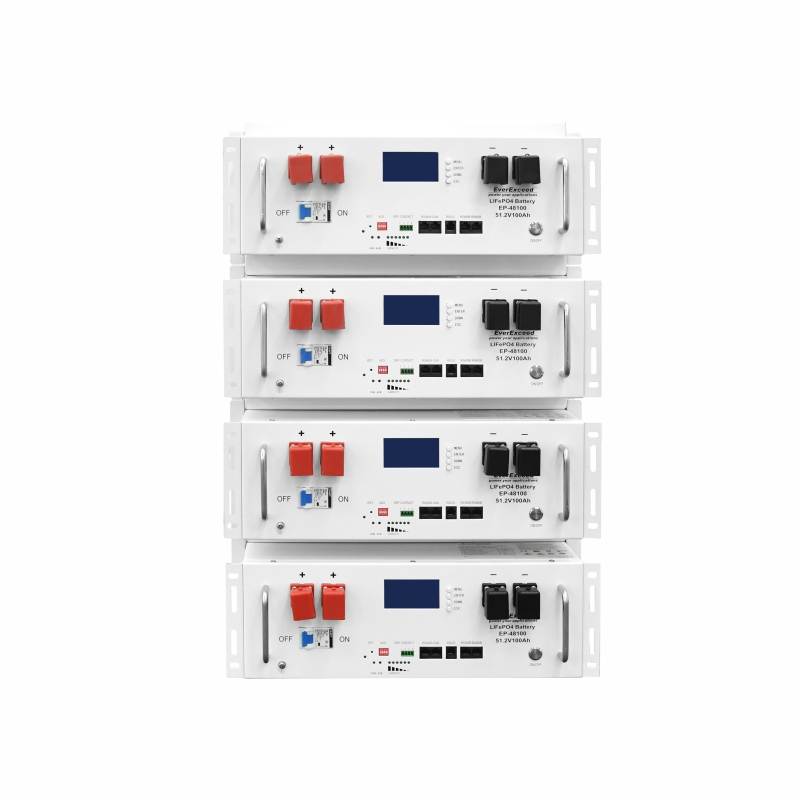
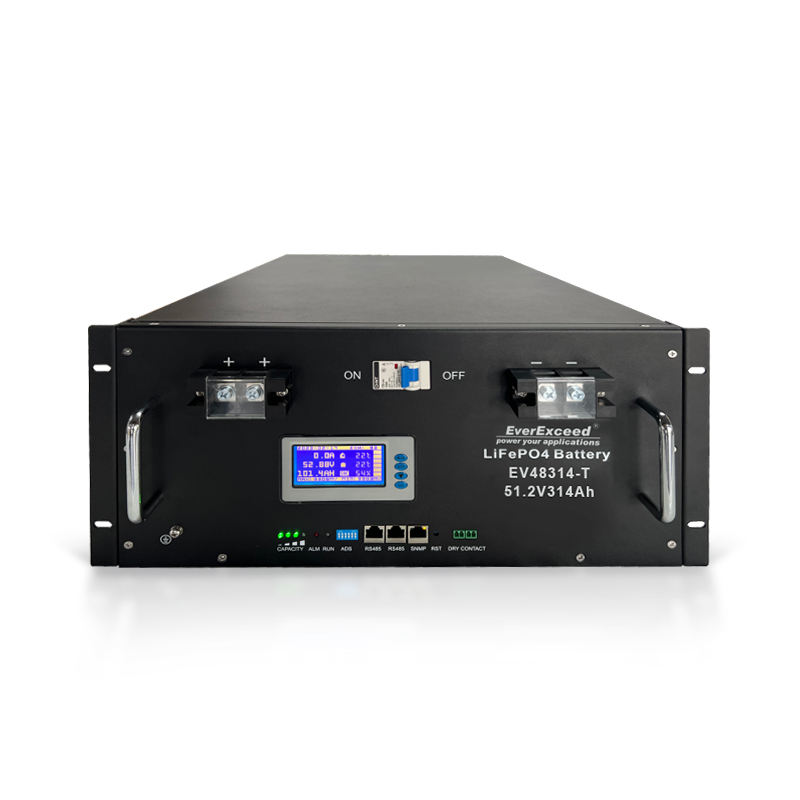
For customers looking to upgrade an existing solar installation, EverExceed offers 51.2V LiFePO4 battery configurations that can be matched with compatible hybrid inverters and battery inverter systems.
A compact energy storage option for residential solar applications.
Key features:
51.2V nominal voltage and 100Ah capacity.
A higher-capacity battery solution for households with greater energy storage requirements.
Key features:
Whether you are upgrading an existing rooftop solar system or planning a new residential energy storage installation, battery selection should be based on actual energy consumption, inverter compatibility, and backup requirements.
EverExceed supports customized battery solutions and OEM/ODM manufacturing services for different project requirements.
From battery configuration and customized design to manufacturing and system integration, EverExceed works with global distributors, solar installers, and energy solution providers to deliver reliable energy storage solutions.
Q1: Can I add a battery to my existing solar panels without replacing the inverter?
Yes. In many cases, you can retain your existing grid-tied solar inverter by installing an AC-coupled battery system with a compatible battery inverter. However, the existing inverter and electrical configuration must be evaluated first.
Q2: Can I add a lithium battery to an existing solar system?
Yes. LiFePO4 batteries can be integrated into many existing solar systems when the battery voltage, charging and discharging parameters, communication protocols, and inverter compatibility meet the system requirements.
Q3: Do I need a hybrid inverter to add a solar battery?
Not necessarily. A hybrid inverter is one option, but an AC-coupled battery system can also add storage to an existing grid-tied solar installation without replacing the original solar inverter.
Q4: Can I add a battery to a solar system with microinverters?
Yes. An AC-coupled battery configuration is commonly used with microinverter-based solar systems. However, backup operation requires a compatible battery inverter and appropriate control of the existing solar system during grid outages.
Q5: What size battery do I need for an existing 5kW or 10kW solar system?
Solar panel capacity alone cannot determine the ideal battery size. Daily excess solar generation, nighttime electricity consumption, desired backup duration, and inverter limitations should all be considered.
A 5.12kWh or 10.24kWh battery may be a starting point for certain residential applications, but the final configuration should be determined by actual energy usage data.
Q6: Can I use a solar battery for backup power during a grid outage?
Yes, if the complete system supports backup operation. This typically requires a backup-capable inverter, appropriate grid isolation equipment, and a properly configured backup circuit. A standard grid-tied inverter alone will generally shut down during a grid outage for safety reasons.
Q7: Can I add more batteries to my existing battery bank?
Yes, if the battery model supports parallel expansion and the existing inverter and battery bank meet the manufacturer's requirements. Use approved configurations and follow the specified installation procedures.
Adding battery storage is an effective way to make better use of existing solar energy, increase self-consumption, and improve household energy resilience.
Whether you need a compact 5.12kWh battery or a larger 10.24kWh energy storage configuration, selecting the right battery and inverter combination is essential for long-term system performance.
EverExceed provides LiFePO4 battery manufacturing, customized OEM/ODM solutions, and technical support for residential solar energy storage applications.
Looking to add battery storage to your existing solar system?
Contact EverExceed with your current inverter model, solar PV capacity, daily electricity consumption, and desired backup requirements. Our team can help you evaluate a suitable battery configuration for your project.
EverExceed – Safer, Smarter, Simpler.
categories
recent posts




scan to wechat:everexceed