As data centers, industrial facilities, and critical infrastructure continue to expand, reliable backup power has become increasingly important. A well-designed UPS battery system must not only provide sufficient backup power during outages but also accommodate future changes in load demand, runtime requirements, and facility capacity.
High-voltage lithium battery systems are becoming an increasingly practical option for modern UPS applications. With high energy density, intelligent battery management, and flexible system configurations, they can support reliable backup power while optimizing installation space and long-term operating costs.
However, selecting or expanding a high-voltage UPS battery system requires more than simply adding battery capacity. Battery sizing, power requirements, UPS compatibility, system architecture, and future scalability must all be considered.
This guide explains the key factors to consider when planning a high-voltage UPS battery system for data centers and other critical power applications.
Battery capacity is one of the most important factors in UPS system planning. It determines how long critical equipment can continue operating when the main power supply is interrupted.
Before selecting a battery system, identify the following requirements:
A preliminary calculation can be made using:
Required Energy (kWh) = Critical Load (kW) × Backup Time (h)
For example, if a data center has a critical load of 100 kW and requires 15 minutes of backup time:
100 kW × 0.25 h = 25 kWh
This represents the energy required at the load side. The actual battery capacity must be higher after considering UPS conversion efficiency, battery discharge characteristics, and the applicable design margins.
For high-voltage lithium battery systems, battery sizing should also be verified against manufacturer discharge data rather than relying on nominal energy capacity alone.
A high-voltage UPS battery system must be properly matched to the UPS DC input requirements to ensure stable and reliable operation.
Two important parameters need to be evaluated.
DC Voltage Compatibility
The battery system's nominal voltage and operating voltage range must comply with the UPS battery input specifications.
Depending on the UPS architecture and project requirements, high-voltage lithium battery configurations may include 192V, 240V, 384V, or 512V DC systems.
The final configuration should be determined according to the UPS manufacturer's specifications and the required backup power capacity.
Battery Discharge Power
The battery must deliver sufficient DC power to support the UPS during a power interruption.
A preliminary relationship is:
DC Current (A) = DC Power (W) ÷ DC Voltage (V)
For example, higher-voltage battery configurations can deliver the same power at a lower current compared with lower-voltage systems, which can help optimize cable sizing and electrical system design.
However, the final design must consider battery discharge limits, BMS protection settings, cable specifications, and UPS conversion efficiency.
For facilities with increasing power requirements, a modular battery architecture can provide greater flexibility for future system expansion.
Depending on the project design, high-voltage UPS battery systems may adopt different configurations.
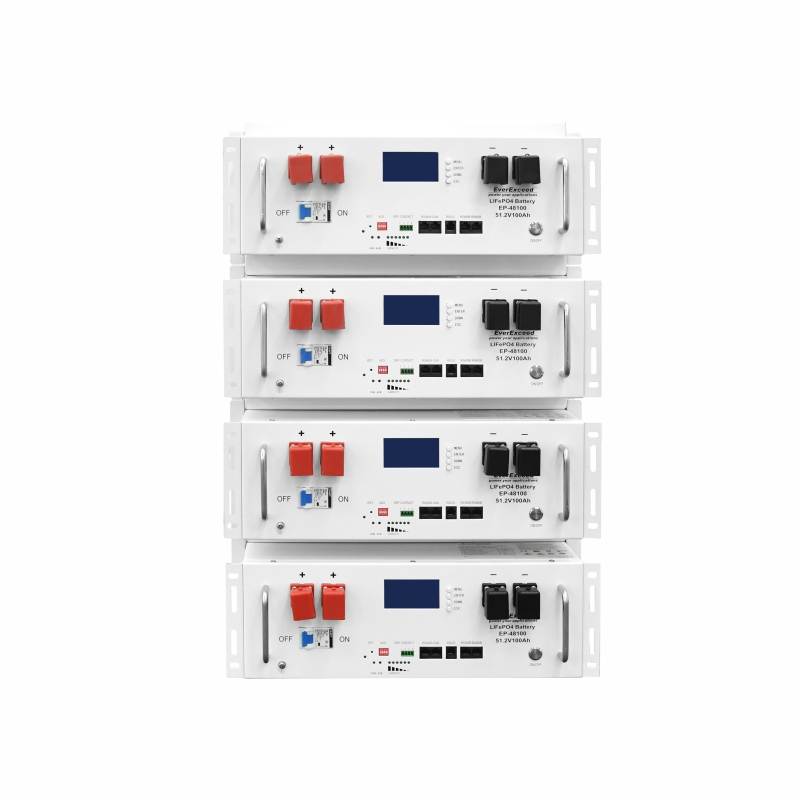
Individual Battery Modules
Modular battery designs allow system capacity and voltage to be configured according to application requirements. They can simplify system integration and support project-specific battery configurations.
Parallel Battery Cabinets or Battery Strings
For applications requiring higher backup capacity or longer runtime, multiple battery cabinets or strings may be considered where the UPS and battery platform support parallel operation.
The design must account for current sharing, electrical isolation, protection coordination, and BMS communication.
Customized High-Voltage Battery Systems
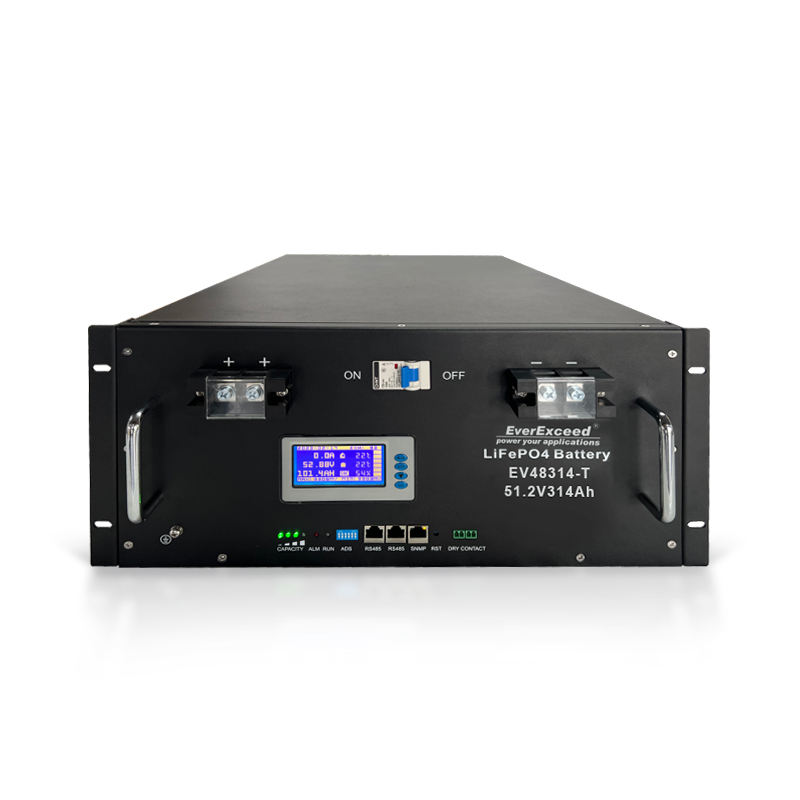
For large-scale data centers and industrial facilities, customized battery systems can help address specific requirements for voltage, capacity, installation space, communication interfaces, and system integration.
A scalable design should consider not only current demand but also potential future expansion, ensuring that the battery architecture remains compatible with the overall UPS system.
Compatibility is essential when integrating a lithium battery system with a UPS.
Unlike conventional battery installations, lithium battery systems rely on an intelligent Battery Management System (BMS) to monitor operating conditions and manage battery protection.
Important integration factors include:
Voltage Compatibility: Ensure that the battery voltage range matches the UPS DC input requirements.
Communication Protocol: Verify communication compatibility through supported interfaces such as CAN or RS485, where applicable.
Battery Monitoring: Enable real-time monitoring of voltage, current, temperature, state of charge (SOC), and battery alarms.
Protection Coordination: Ensure that BMS protection functions and UPS operating logic work together correctly.
Charging Compatibility: Confirm that UPS charging parameters comply with the lithium battery manufacturer's specifications.
A properly integrated BMS helps monitor battery conditions, identify abnormal operating situations, and improve the reliability of the backup power system.
For customized UPS applications, communication protocols, battery configurations, and system interfaces should be confirmed during the design stage.
High-voltage lithium battery systems are often selected for data centers and industrial applications where installation space, operational reliability, and maintenance efficiency are important considerations.
When planning the installation, evaluate the following aspects.
Space Optimization
High-energy-density lithium battery systems can provide substantial backup capacity within a relatively compact footprint. This is particularly valuable for data centers and facilities with limited equipment room space.
Battery Safety
A reliable battery system should incorporate multiple layers of protection, including:
High-quality lithium iron phosphate (LiFePO4) battery cells
Intelligent BMS monitoring and protection
Overvoltage, undervoltage, overcurrent, and temperature protection
Short-circuit protection
Integrated safety management and optional fire suppression configurations
Maintenance and Monitoring
Smart monitoring capabilities help operators track battery operating conditions, identify potential issues, and manage system performance.
Remote monitoring and communication functions can also support centralized battery management in critical infrastructure environments.
A UPS battery system should be designed around both current requirements and future operational needs.
As data centers add servers or industrial facilities increase production capacity, backup power requirements may change.
When evaluating future expansion, consider:
Whether the existing UPS supports additional battery capacity
Whether the battery system allows approved parallel expansion
Whether the BMS and communication architecture can accommodate additional battery units
Whether the installation space and electrical infrastructure have sufficient capacity
Whether expanding the existing system is more cost-effective than replacing it
In addition to initial procurement costs, evaluate the total cost of ownership (TCO), including battery replacement frequency, maintenance requirements, installation costs, energy efficiency, and expected service life.
A properly planned high-voltage lithium battery system can help improve space utilization, simplify maintenance, and support long-term backup power requirements.
It is important to note that adding battery capacity does not automatically increase UPS output power or system redundancy. Any expansion must comply with the approved UPS and battery system configuration.
Choosing a qualified manufacturer is an important part of ensuring the long-term performance of a UPS battery system.
When evaluating suppliers, consider the following factors:
Battery Manufacturing Experience: Look for manufacturers with established experience in lithium battery design, development, and production.
System Integration Expertise: Evaluate their ability to integrate high-voltage batteries with different UPS platforms and power architectures.
Customization Capabilities: Confirm whether they can provide customized voltage, capacity, cabinet structures, and communication interfaces.
Battery Management Technology: Check the BMS monitoring, protection, and communication functions.
Quality and Certifications: Review relevant product certifications, testing reports, and manufacturing quality management systems.
Technical Support: Ensure that the supplier can provide engineering assistance, system configuration recommendations, and after-sales support.
Working with an experienced battery manufacturer and system integrator can help reduce integration risks and ensure that the selected solution meets project-specific requirements.
Planning a high-voltage UPS battery system requires a comprehensive evaluation of battery capacity, DC power requirements, UPS compatibility, system architecture, safety, and future expansion needs.
For data centers, telecommunications facilities, industrial plants, and other critical infrastructure, a properly designed high-voltage lithium battery system can provide reliable backup power while optimizing installation space and long-term operating costs.
With more than 20 years of battery manufacturing experience and over 10 years of system integration expertise, EverExceed provides customized high-voltage lithium battery solutions for UPS and critical power applications.
Available system configurations include 192V, 240V, 384V, and 512V DC battery systems, with project-specific capacity, BMS communication, and cabinet designs to meet different UPS requirements.
Looking for a reliable high-voltage UPS battery solution?
Contact EverExceed to discuss your UPS model, required backup runtime, battery voltage, and project specifications. Our technical team can help evaluate a suitable high-voltage lithium battery configuration for your application.
tags :
categories
recent posts




scan to wechat:everexceed