
Blog
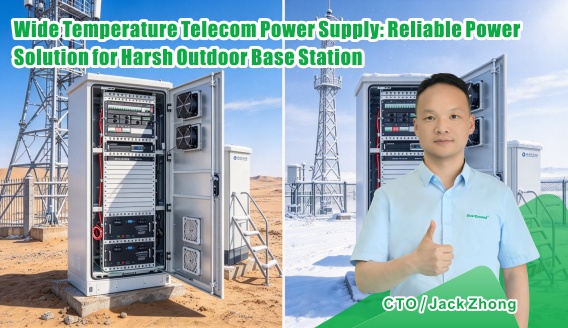
  • Wide Temperature Telecom Power Supply: Reliable Power Solution for Harsh Outdoor Base Station Environments

    Wide Temperature Telecom Power Supply: Reliable Power Solution for Harsh Outdoor Base Station Environments

    Sep , 27 2026
    Quick Answer Outdoor base stations operate in diverse environments, from extremely cold regions to high-temperature and high-humidity areas. A standard indoor power supply may not withstand these conditions for long periods. A wide temperature telecom power supply is designed with low-temperature startup capability, high-temperature derating control, condensation protection, intelligent cooling, a...
    more
  • Top 10 Factors to Consider When Choosing an Energy Storage System

    Top 10 Factors to Consider When Choosing an Energy Storage System

    Sep , 28 2026
    How to Select a Safe, Reliable, and Cost-Effective ESS Solution As energy storage systems become increasingly important for residential, commercial, industrial, and renewable energy applications, selecting the right ESS requires careful evaluation of battery technology, system design, safety features, and long-term performance. With over 20 years of battery manufacturing experience and 10+ years o...
    more
  • How to Store Lithium and LiFePO4 Batteries Properly

    How to Store Lithium and LiFePO4 Batteries Properly

    Sep , 28 2026
    Lithium batteries are designed for reliable, long-term performance, but proper storage is still important when the battery will remain unused for an extended period.   Whether you are storing a battery during the winter, keeping a backup battery for emergencies, or temporarily taking an RV, UPS, or solar system out of service, the right storage practices can help minimize unnecessary battery ...
    more
  • Why Does the Main Breaker Trip First? Understanding Selective Protection in DC Distribution Systems

    Why Does the Main Breaker Trip First? Understanding Selective Protection in DC Distribution Systems

    Oct , 09 2026
    Quick Answer When a branch short circuit causes the main breaker to trip first, the problem is not necessarily that the breaker is too small or too large. A more common cause is poor selectivity and coordination between upstream and downstream protection devices. A well-designed DC distribution system should isolate a fault as close to its location as possible. Ideally, a short circuit on one bran...
    more
  • Why Do Two 10 kVA UPS Systems Perform Differently Under the Same Load

    Why Do Two 10 kVA UPS Systems Perform Differently Under the Same Load

    Oct , 10 2026
    Quick Answer A UPS's rated capacity is only the starting point. Its actual load-handling capability depends on output power factor, peak current, overload curves, and load characteristics. Two 10 kVA UPS systems may perform very differently under the same load. One may operate reliably, while the other may trigger alarms, transfer to bypass, or experience degraded output waveforms—even when ...
    more
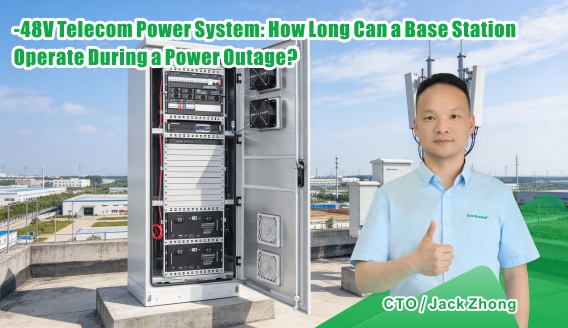
  • 48V Telecom Power System: How Long Can a Base Station Operate During a Power Outage?

    48V Telecom Power System: How Long Can a Base Station Operate During a Power Outage?

    Oct , 16 2026
    When the grid fails, a telecom base station must continue supplying power to keep network services available. But how long can it actually operate without utility power? The answer depends on several factors, including the site's power consumption, battery capacity, battery condition, and the configuration of the telecom power system. A reliable 48V telecom power system does more than provide back...
    more
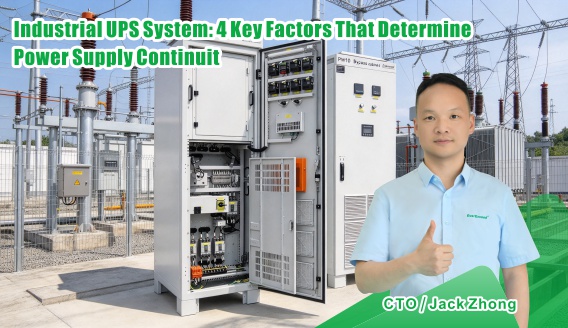
  • Industrial UPS System: 4 Key Factors That Determine Power Supply Continuit

    Industrial UPS System: 4 Key Factors That Determine Power Supply Continuit

    Oct , 16 2026
    A UPS is more than a backup power source that keeps equipment running during a power outage. For servers, industrial control systems, communication equipment, and other critical loads, power continuity depends on how the entire system responds to changing operating conditions. From normal utility power to a sudden outage, and from inverter operation to bypass and battery operation, the real value ...
    more
  • How to Choose a Custom Lithium UPS Battery Manufacturer for Your Power System

    How to Choose a Custom Lithium UPS Battery Manufacturer for Your Power System

    Oct , 16 2026
    A practical guide for OEMs, ODMs, system integrators, and industrial power solution providers Choosing a custom lithium UPS battery manufacturer is more than a battery purchasing decision. A reliable UPS battery supplier should be able to do more than assemble cells into a battery pack. The manufacturer needs to understand the target UPS, translate electrical and mechanical requirements into a sui...
    more
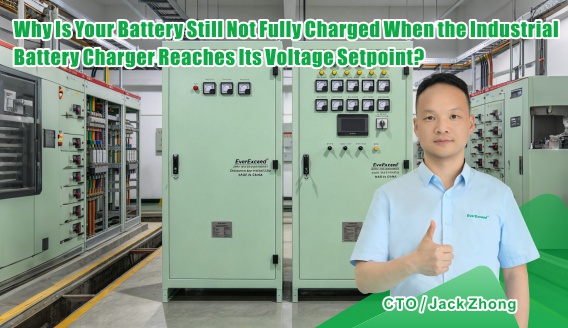
  • Why Is Your Battery Still Not Fully Charged When the Industrial Battery Charger Reaches Its Voltage Setpoint?

    Why Is Your Battery Still Not Fully Charged When the Industrial Battery Charger Reaches Its Voltage Setpoint?

    Oct , 22 2026
    In industrial applications, a common assumption is that once the battery voltage reaches its setpoint, charging should be complete. However, for DC systems, auxiliary power supplies, substation battery banks and large industrial equipment, this judgment is incomplete. Reaching the target terminal voltage only indicates that charging has entered a new stage. It does not necessarily mean the battery...
    more
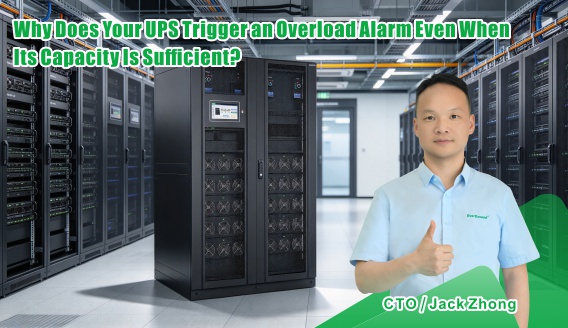
  • Why Does Your UPS Trigger an Overload Alarm Even When Its Capacity Is Sufficient?

    Why Does Your UPS Trigger an Overload Alarm Even When Its Capacity Is Sufficient?

    Oct , 22 2026
    In data centers, industrial automation systems, medical equipment and other critical applications, a UPS may trigger an overload alarm even when the displayed load is well below its rated capacity. Why does this happen when the load is only 60%? The problem is not necessarily that the UPS is undersized. Nonlinear loads, such as servers, variable-frequency drives and rectifier-based power supplies,...
    more
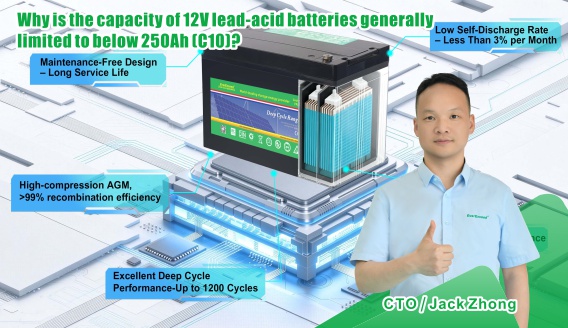
  • Why Are 12V Lead Acid Batteries Commonly Limited to Around 250Ah (C10)?

    Why Are 12V Lead Acid Batteries Commonly Limited to Around 250Ah (C10)?

    Oct , 24 2026
    Introduction When selecting a 12V lead acid battery for UPS systems, telecommunications, solar energy storage, or backup power applications, buyers often notice that many standard products have capacities of 250Ah (C10) or less. Meanwhile, 2V lead acid batteries are widely available in much higher capacities, ranging from several hundred amp-hours to over 3,000Ah. Why is there such a difference? T...
    more
first page << 1 ... 25 26 27 last page

a total of27 pages

leave a message
welcome to everexceed
If you are interested in our products and want to know more details,please leave a message here,we will reply you as soon as we can.

home

products

about

contact