A practical guide for OEMs, ODMs, system integrators, and industrial power solution providers
Choosing a custom lithium UPS battery manufacturer is more than a battery purchasing decision. A reliable UPS battery supplier should be able to do more than assemble cells into a battery pack. The manufacturer needs to understand the target UPS, translate electrical and mechanical requirements into a suitable battery and BMS design, validate the solution at system level, and support the product from prototype development through production.
For OEMs, ODMs, UPS manufacturers, system integrators, and industrial power solution providers, the right partner can help reduce integration risks while improving battery safety, reliability, serviceability, and lifecycle performance.
This guide explains the key factors to evaluate when comparing custom lithium UPS battery manufacturers and highlights the capabilities that matter when a lithium battery must work as an integrated part of a UPS power-protection system.
What Makes a UPS Battery Manufacturer Different from a General Battery Supplier?
A UPS battery operates as part of a complete power-protection system. Its requirements are determined not only by nominal voltage and capacity, but also by the UPS DC bus, charging strategy, load profile, backup-time target, discharge current, protection settings, installation space, and communication interface.
For a custom lithium UPS battery project, a capable manufacturer should be able to evaluate the relationship between the battery, BMS, UPS, and load rather than treating the battery as an isolated component. This is particularly important when lithium batteries are being used to replace conventional lead-acid batteries or when a battery needs to be adapted to a specific UPS platform.
1. Verify UPS Engineering and Application Experience
The first step is to determine whether the manufacturer has practical experience developing lithium battery systems for UPS applications. Experience with general lithium battery packs does not necessarily mean the supplier understands UPS operating conditions.
A qualified manufacturer should be able to work with requirements such as:
• UPS DC bus voltage and battery configuration
• Charging and discharge requirements
• UPS power, load profile, and backup-time requirements
• Battery cutoff, protection, and alarm conditions
• Installation space and mechanical constraints
• Required UPS-battery communication and monitoring functions
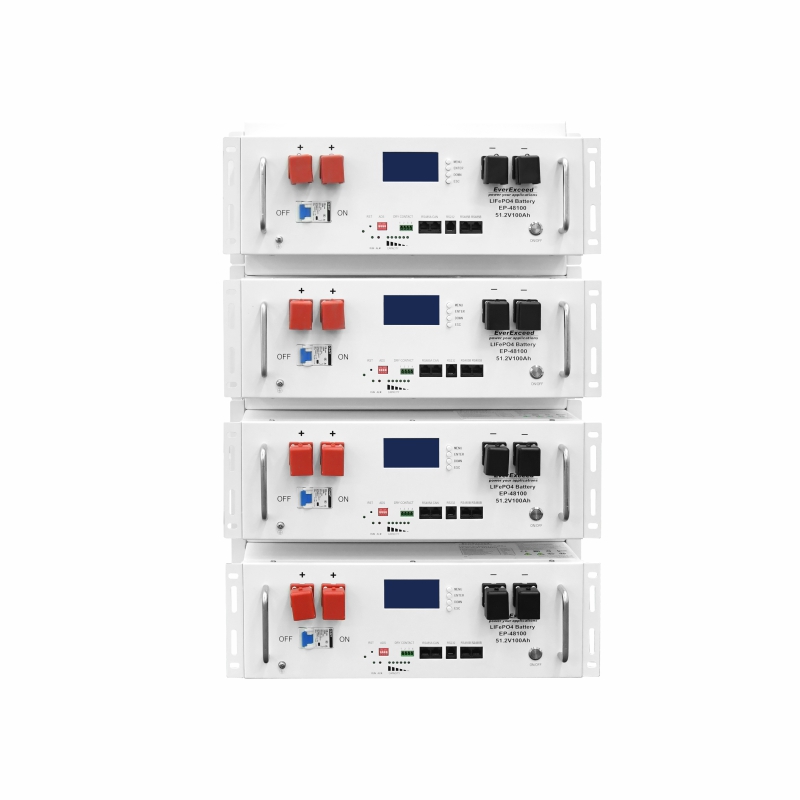
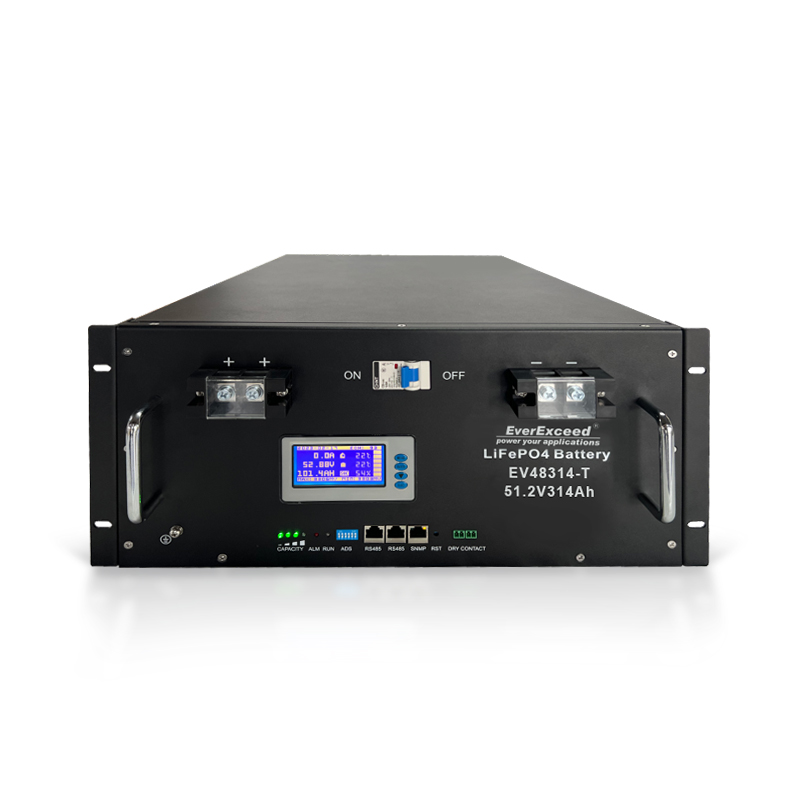
EverExceed develops lithium battery solutions for UPS and critical power applications, including high-voltage lithium battery systems designed around different UPS voltage and capacity requirements. This application-oriented approach allows the battery system to be considered together with the UPS rather than as a standalone battery pack.
2. Evaluate Custom Battery and BMS Design Capability
A custom UPS battery may require changes to both the battery architecture and its control system. The manufacturer should be able to select and configure the appropriate cell technology, voltage, capacity, series-parallel configuration, modules, connectors, cabling, enclosure, and protection architecture according to the project.
The BMS is equally important. Depending on the application, it may need cell-level monitoring, temperature monitoring, balancing, SOC/SOH estimation, over-voltage and under-voltage protection, over-current protection, short-circuit protection, thermal protection, alarm management, and controlled battery disconnect functions.
For OEM and ODM projects, the key question is whether the manufacturer can engineer these functions around the target UPS instead of simply offering a fixed battery model.
EverExceed's lithium UPS portfolio includes high-voltage configurations such as 192V, 240V, 384V, 409V, and 512V-class systems, with different capacity options. These configurations can support customized backup-power requirements across UPS and critical power applications.
3. Check UPS-BMS Communication and Integration Capability
Battery design and UPS integration are related but distinct engineering tasks. A lithium UPS battery may need to communicate with the UPS through CAN, RS485, Modbus, SNMP, or another defined interface, depending on the system architecture.
However, supporting a communication protocol alone does not guarantee successful integration. The manufacturer should understand data mapping, BMS parameters, firmware settings, alarms, fault conditions, charging status, discharge status, and the operating logic required by the target UPS.
A strong integration process should therefore include communication verification and functional testing with the target system. For projects involving OEM UPS platforms or system integration, previous integration experience and documented test procedures are valuable indicators of technical capability.
EverExceed lithium battery systems can incorporate intelligent BMS and communication functions to support monitoring, protection, and system integration requirements.
4. Assess Power, Capacity, and Backup-Time Design
UPS batteries often need to deliver substantial power over relatively short backup periods. Battery selection should therefore be based on actual UPS operating conditions rather than nominal Ah capacity alone.
The manufacturer should evaluate factors such as UPS power, expected load, backup time, DC bus voltage, discharge current, battery configuration, allowable depth of discharge, and operating conditions.
A quotation that only lists voltage, capacity, and price provides limited evidence that the battery has been evaluated against the actual UPS application. The objective is not simply to select a battery with sufficient nominal capacity, but to establish a configuration that can reliably meet the required backup performance.
For example, EverExceed's high-voltage lithium UPS solutions are available in multiple voltage and capacity configurations, allowing the battery system to be matched to different UPS architectures and backup-power requirements.
5. Evaluate Prototype Testing and UPS-Level Validation
A reliable custom lithium UPS battery project should progress beyond battery-level testing. The battery needs to be evaluated both as an electrical energy source and as part of the target UPS system.
Depending on the project, validation may include charging performance, discharge performance, backup time, communication, alarms, protection functions, battery disconnect behavior, thermal performance, and other application-specific requirements.
A structured development process can follow:
Prototype → UPS Integration → System Validation → Engineering Revision → Production
This approach helps identify issues that may not be visible during battery-only testing. BMS parameters, communication settings, battery configuration, firmware, connectors, or mechanical details may need to be refined before the design is released for production.
6. Evaluate Safety, Quality Control, and Traceability
Safety and quality should be evaluated at both the engineering and manufacturing levels. A lithium UPS battery should incorporate appropriate protection and fault-management functions according to the battery design, UPS, application, and target market.
For LiFePO₄-based systems, key considerations can include cell quality, BMS protection, temperature monitoring, electrical isolation, short-circuit protection, over-current protection, and controlled charging and discharging.
Manufacturing quality also matters. Evaluate how the manufacturer controls incoming cells and components, battery assembly, BMS installation, electrical testing, and end-of-line testing.
For OEM and ODM projects, traceability is particularly important. Battery configurations, components, cell batches, production records, test results, firmware versions, and engineering changes should be controlled so that the production product remains consistent with the validated design.
EverExceed combines lithium battery R&D and manufacturing capabilities with established quality-management practices and supports certification and testing requirements according to application and market requirements.
7. Verify Manufacturing Capability and Production Scalability
Prototype capability does not automatically mean that a supplier can support commercial production. Before selecting a manufacturer, evaluate how the project moves from prototype to pilot production and then to mass production.
Important considerations include production capacity, lead time, supply continuity, process control, batch consistency, engineering change management, and the ability to maintain the approved battery configuration during production.
For OEM and ODM projects, configuration control is especially important. The approved battery design, BMS parameters, firmware, mechanical configuration, components, and production processes should remain controlled throughout the product lifecycle.
As a battery manufacturer with dedicated production capabilities, EverExceed can support the transition from product development and engineering validation to repeatable production for lithium battery applications.
8. Check Documentation and Long-Term Engineering Support
A custom battery project does not end when the first production units are delivered. OEMs, UPS manufacturers, and system integrators may need technical documentation, troubleshooting, engineering changes, firmware updates, replacement components, and production adjustments over the product lifecycle.
Depending on the project, useful documentation may include battery specifications, BMS functions, communication interfaces, test results, operating conditions, approved configurations, safety information, and production records.
A manufacturer with coordinated R&D, engineering, production, and service capabilities can provide greater continuity throughout the project lifecycle.
9. Compare Total Supplier Value, Not Just Battery Price
The lowest battery quotation does not necessarily represent the lowest project cost. For a custom lithium UPS battery, the real project cost can also be affected by engineering development, prototype iterations, integration testing, production yield, lead time, documentation, warranty, and technical support.
When comparing suppliers, evaluate the complete scope of what each manufacturer provides. A supplier that can support engineering, validation, production, and after-sales technical service may reduce the hidden costs and risks associated with repeated integration work or inconsistent production.
For B2B projects, suppliers should be compared against the same technical and commercial requirements so that the decision is based on total project value rather than unit price alone.
Questions to Ask a Custom Lithium UPS Battery Manufacturer
1. Do you have experience developing lithium battery systems for UPS applications?
2. Can you design the battery and BMS according to our UPS voltage, load, backup-time, and installation requirements?
3. Can you support communication and integration with our specific UPS platform?
4. How do you validate the battery together with the target UPS?
5. What technical documentation and test records are provided?
6. How are BMS parameters, firmware, and engineering changes controlled?
7. What is your process from prototype development to pilot and mass production?
8. What engineering, warranty, and technical support is available after product launch?
When Do You Need a Custom Lithium UPS Battery?
A custom lithium UPS battery may be appropriate when a standard battery cannot fully meet the requirements of the target system. Typical situations include non-standard DC voltage or capacity, specific backup-time requirements, limited installation space, a proprietary UPS communication interface, customized BMS settings, or special protection and monitoring requirements.
Customization can also be useful when the same battery platform needs to be adapted for multiple UPS configurations or when an existing UPS battery system is being upgraded from conventional lead-acid technology to lithium.
Why Choose EverExceed for Custom Lithium UPS Battery Solutions?
EverExceed is a global manufacturer of customized AC/DC power and lithium battery solutions, with more than 20 years of battery R&D and manufacturing experience and more than 10 years of energy storage system integration experience.
For lithium UPS applications, EverExceed combines battery technology, intelligent BMS, high-voltage battery architecture, system integration, manufacturing, testing, and technical support. Its lithium UPS portfolio covers multiple voltage and capacity configurations, helping OEMs, UPS manufacturers, system integrators, and industrial customers develop reliable backup-power solutions around their specific application requirements.
The goal is not simply to supply a lithium battery. It is to provide a battery system that can be engineered, integrated, validated, produced, and supported as part of the customer's critical power infrastructure.
Conclusion
Choosing a custom lithium UPS battery manufacturer requires evaluating more than battery specifications and price. The right manufacturer should be able to understand the UPS requirements, engineer the battery and BMS, support communication and integration, validate the system, control production quality, and provide technical continuity throughout the product lifecycle.
For OEMs, ODMs, system integrators, UPS manufacturers, and industrial power solution providers, these capabilities can help reduce integration risk and create a more reliable path from prototype to commercial production.
Planning a custom lithium UPS battery project? Share your UPS voltage, power/load profile, backup-time requirements, communication requirements, installation constraints, and expected project volume with EverExceed to discuss a customized solution.
tags :
categories
recent posts




scan to wechat:everexceed