Lithium batteries are designed for reliable, long-term performance, but proper storage is still important when the battery will remain unused for an extended period.
Whether you are storing a battery during the winter, keeping a backup battery for emergencies, or temporarily taking an RV, UPS, or solar system out of service, the right storage practices can help minimize unnecessary battery aging and ensure reliable performance when the battery is needed again.
Here are some simple and practical guidelines for storing a lithium battery properly.
1. Keep the Battery at an Appropriate State of Charge
One of the most important considerations for long-term storage is the battery’s state of charge (SOC).
For extended storage:
Avoid storing the battery completely full for a long period.
Avoid storing the battery in a deeply discharged condition.
A moderate state of charge is generally recommended for long-term storage.
Follow the battery manufacturer’s recommended SOC range whenever available.
Keeping the battery within an appropriate storage range can help reduce unnecessary battery stress and support long-term capacity retention.
For 12V and 24V lithium batteries used as lead-acid replacements, always refer to the product specifications and charging recommendations before storage. Different battery models may have different voltage and SOC characteristics.
If you purchased a non-Bluetooth version battery, you can estimate the remaining power based on voltage. Taking a 12V battery as an example:
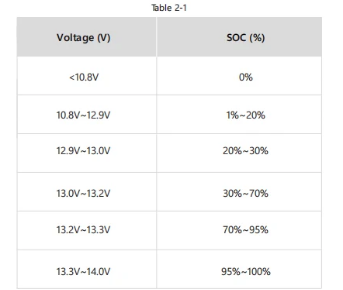
Before putting the battery into storage, make sure there are no unnecessary electrical connections.
Disconnect the battery from chargers.
Disconnect all loads and connected equipment.
Turn off unnecessary monitoring or communication functions if applicable.
Check that there is no equipment continuing to draw standby power from the battery.
This is especially important for backup batteries that may remain connected to UPS systems, solar equipment, lighting systems, or other loads for extended periods.
Even a small continuous load can gradually reduce the battery's state of charge during long-term storage.
3. Store the Battery in a Cool and Dry Location
The storage environment can also affect battery life and performance.
For best results:
Store the battery in a cool, dry and well-ventilated location.
Avoid direct sunlight and excessive heat.
Keep the battery away from water, moisture and corrosive substances.
Avoid extremely hot or freezing conditions.
Keep the battery away from children and pets.
Store the battery in a clean and stable location where it will not be physically damaged.
A suitable storage environment helps reduce unnecessary aging and protects the battery and its internal components.
4. Check the Battery Periodically
Even though lithium batteries generally have a low self-discharge rate, they should not simply be stored and forgotten for an extended period.
If the battery will remain unused for several months:
Check its condition periodically.
Monitor the state of charge when possible.
Recharge the battery when necessary according to the manufacturer's recommendations.
Before returning it to service, check the battery, terminals and connections for any visible abnormalities.
For long-term storage, periodic inspection is particularly important for batteries used as emergency or backup power sources. It helps ensure that the battery is ready when you actually need it.
5. Proper Storage Helps Your Battery Stay Ready
Good storage practices are especially important for lithium batteries used in applications where reliable backup power matters.
EverExceed's 12V and 24V Lead-Acid Replacement Lithium Batteries are designed as a lightweight and long-life alternative to conventional lead-acid batteries. With lithium battery technology and integrated battery management protection, they can be used for a wide range of backup and energy applications, including UPS backup power, RV systems, solar applications, emergency lighting and other DC power systems.
Compared with traditional lead-acid batteries, lithium batteries can offer advantages such as longer service life, lower maintenance requirements and higher usable energy, making them a practical choice for applications where dependable backup power is required.
Whether your battery is used every day or kept as a backup, proper storage and regular inspection are simple steps that can help maintain reliable performance over the long term.
Store it properly today, and keep reliable power ready for tomorrow.
categories
recent posts




scan to wechat:everexceed