Commercial and industrial energy storage systems are increasingly being used to reduce electricity costs, improve energy flexibility, integrate renewable energy, and provide backup power for critical loads.
However, selecting the right C&I energy storage system is not simply a matter of choosing the largest battery capacity. The system needs to be designed according to the facility's load profile, electricity tariff structure, backup requirements, available installation space, and expected return on investment.
So, how should businesses evaluate a commercial and industrial energy storage system?
This guide outlines the key factors to consider, from application objectives and system sizing to battery technology, PCS, EMS, site conditions, and economic analysis.
Before selecting an energy storage system, clearly define what you expect the system to achieve.
Different applications require different battery capacities, power ratings, operating strategies, and system configurations.
Peak shaving is one of the most common applications for commercial and industrial energy storage.
The energy storage system charges when electricity prices are lower and discharges during high-price periods, allowing businesses to reduce electricity purchased from the grid during expensive periods.
Depending on the local electricity tariff structure and load profile, this operating strategy can help businesses reduce energy costs and improve the utilization of stored energy.
For commercial and industrial facilities subject to demand charges, the monthly electricity bill may be affected not only by total energy consumption but also by the facility's maximum demand.
An energy storage system can discharge during periods of high power demand to reduce the facility's grid-side peak load.
This approach can help businesses manage peak demand and potentially reduce demand-related electricity costs.
Energy storage can also serve as a backup power source during grid outages or voltage fluctuations.
For facilities with critical production equipment, communication systems, data processing equipment, or other essential loads, an appropriately configured BESS can provide backup power and help maintain business continuity.
The required battery capacity depends on the critical load power and the required backup duration.
Integrating energy storage with distributed photovoltaic systems allows businesses to store excess solar power and use it when solar generation is insufficient.
Instead of exporting all excess PV electricity to the grid, the energy storage system can store part of the generation for later use.
This can increase the utilization of on-site solar generation and reduce dependence on grid electricity.
EverExceed provides integrated solar + energy storage solutions for commercial and industrial applications, supporting different operating modes including grid-connected and backup power applications.
Once the application objectives have been defined, the next step is to determine the required power (kW) and energy capacity (kWh).
These two parameters describe different aspects of an energy storage system.
The rated power determines how much power the energy storage system can deliver or absorb at a given time.
For example, a facility with a high instantaneous peak load may require a higher PCS and battery power rating to effectively perform peak shaving or support critical loads.
The system's power rating should therefore be evaluated based on:
Energy capacity determines how much energy the battery can store and how long it can support a given load.
For example, a 500 kW system with 1 MWh of usable energy has a theoretical two-hour energy duration when operating continuously at 500 kW.
However, actual backup duration depends on factors such as usable state of charge, battery operating limits, system efficiency, ambient conditions, and load variation.
Therefore, both kW and kWh must be considered when sizing a C&I energy storage system.
The required C-rate depends on the intended application.
Applications requiring frequent and relatively high-power charging and discharging may require a different battery configuration from applications primarily designed for long-duration backup.
For example:
A properly sized system should balance battery power, energy capacity, operating frequency, and expected battery lifetime.
A C&I energy storage system is more than a battery.
A complete system typically includes the battery system, PCS, EMS, thermal management, protection system, fire safety system, monitoring system, and other electrical components.
Lithium-ion batteries, particularly lithium iron phosphate (LiFePO₄) batteries, are widely used in modern commercial and industrial energy storage systems.
Important battery parameters include:
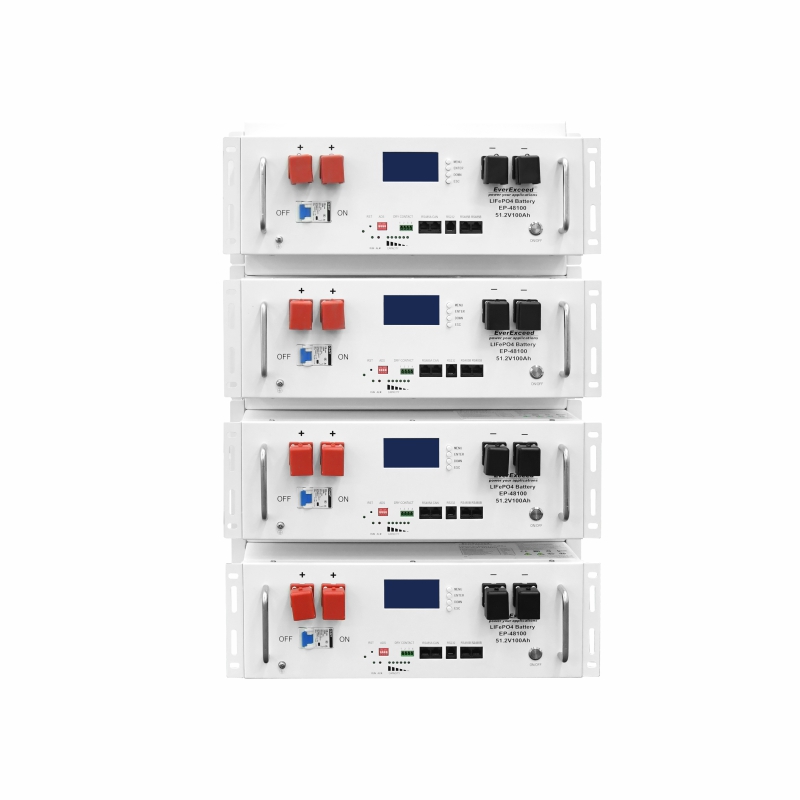
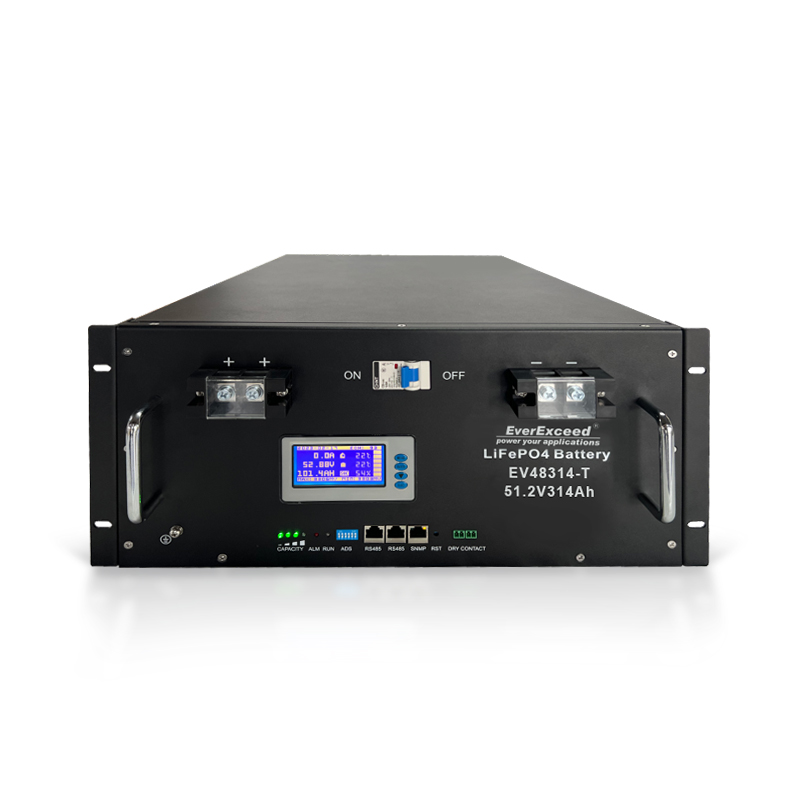
EverExceed offers LiFePO₄ battery solutions for commercial and industrial energy storage applications, with modular system configurations designed to meet different capacity and power requirements.
For projects requiring higher energy density and thermal management, EverExceed also provides liquid-cooled BESS solutions for C&I applications.
Explore EverExceed C&I Energy Storage Solutions
The Power Conversion System (PCS) is responsible for converting electrical energy between AC and DC and controlling the charging and discharging of the battery system.
When evaluating a PCS, consider:
PCS performance directly affects the overall efficiency and operating flexibility of the energy storage system.
The Energy Management System (EMS) acts as the control and optimization layer of the energy storage system.
It can coordinate the battery, PCS, PV system, grid, and loads according to predefined operating strategies.
For example, the EMS can manage:
For commercial and industrial applications, an intelligent EMS is particularly important because energy storage value depends not only on battery capacity but also on how effectively the system is operated.
Safety should be considered throughout the entire lifecycle of a C&I energy storage system.
A comprehensive system should include appropriate electrical protection, battery monitoring, thermal management, and fire safety measures.
The BMS continuously monitors battery operating conditions such as:
It can also provide protection against abnormal operating conditions and support communication with higher-level energy management systems.
Battery temperature can affect performance, efficiency, and service life.
Depending on the system capacity and application requirements, energy storage systems may use air cooling or liquid cooling.
For larger C&I BESS installations, liquid cooling can provide more controlled thermal management across battery modules and help maintain more consistent operating conditions.
EverExceed's All-in-One Liquid Cooling BESS is designed for C&I applications, integrating battery storage and system-level components into a compact energy storage solution.
All-in-One Liquid Cooling BESS for C&I Applications
Explore EverExceed Liquid Cooling BESS
The physical installation environment is another important factor when selecting a commercial and industrial energy storage system.
Commercial and industrial sites often have limited installation space.
Depending on the project capacity and site conditions, businesses may select:
The appropriate configuration should take into account available floor space, access routes, maintenance requirements, electrical connections, and future expansion.
For larger projects, containerized systems can integrate batteries, PCS, thermal management, fire protection, and other components into a standardized solution.
The installation environment should also be evaluated carefully.
Key factors include:
For outdoor installations, the enclosure protection rating and environmental control system should be selected according to the actual site conditions.
A C&I energy storage system should be evaluated based on its overall lifecycle economics rather than the initial equipment price alone.
The lifecycle cost may include:
A system with a lower initial purchase price does not necessarily have the lowest total lifecycle cost.
Battery cycle life, system efficiency, warranty conditions, maintenance requirements, and expected operating profile should all be considered.
The payback period can be estimated by comparing the total project investment with the expected annual financial benefits.
Potential sources of value may include:
Electricity bill savings + demand charge reduction + PV self-consumption benefits + backup power value
However, the actual payback period varies significantly between projects.
Factors such as electricity prices, peak-to-off-peak price differences, demand charges, PV generation, battery utilization, system efficiency, financing structure, and local regulations can all affect the result.
Therefore, a project-specific financial model should be completed before making a final investment decision.
A commercial and industrial energy storage system should not be evaluated as an independent battery installation.
The system needs to work together with the site's existing electrical infrastructure and potentially with:
Communication protocols and control interfaces should also be considered during system design.
A modular architecture can provide greater flexibility when future capacity expansion is required.
The right energy storage system depends on the specific requirements of each project.
Before selecting a solution, consider the following questions:
1. What is the primary application?
Peak shaving, demand management, backup power, PV self-consumption, or a combination of several applications?
2. How much power is required?
Determine the maximum load, peak demand, and critical load power.
3. How much energy is required?
Calculate the required backup duration or daily energy-shifting requirement.
4. What battery technology is appropriate?
Consider battery chemistry, cycle life, usable capacity, safety, and operating conditions.
5. What PCS and EMS configuration is required?
Ensure compatibility with the grid, PV system, loads, and operating strategy.
6. What are the site conditions?
Evaluate available space, environmental conditions, thermal management, and installation requirements.
7. What is the expected project return?
Consider energy savings, demand charge reduction, PV utilization, system efficiency, investment cost, and lifecycle costs.
Selecting a commercial and industrial energy storage system requires a balance between power, energy capacity, efficiency, safety, installation conditions, and project economics.
EverExceed provides integrated energy storage solutions covering LiFePO₄ battery systems, PCS, EMS, C&I BESS, and liquid-cooled energy storage systems, supporting applications such as peak shaving, demand management, PV + energy storage, and backup power.
For projects with higher power and energy requirements, EverExceed's All-in-One Liquid Cooling BESS for C&I Applications provides an integrated approach to battery storage and thermal management.
For projects requiring customized system configurations, EverExceed can also provide system-level solutions based on the project's load profile, required capacity, operating strategy, and installation environment.
From battery storage to integrated C&I BESS, EverExceed provides flexible energy storage solutions designed around your project's actual power and energy requirements.
categories
recent posts




scan to wechat:everexceed