



Blog
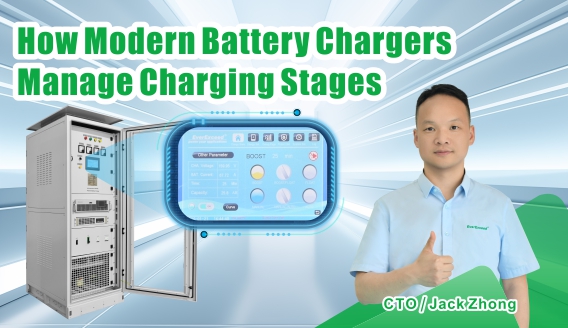
  • Battery Charger Control Methods for Lead-Acid Batteries

    Battery Charger Control Methods for Lead-Acid Batteries

    Feb , 26 2026
    Effective charging control is essential to improve battery efficiency, extend service life, and prevent overcharge or undercharge. A typical battery charging process includes three stages: bulk charge, equalizing charge, and float charge, with automatic transition and proper charge termination control.   1. Automatic Transition Between Charging Stages   Most industrial battery chargers a...
    more
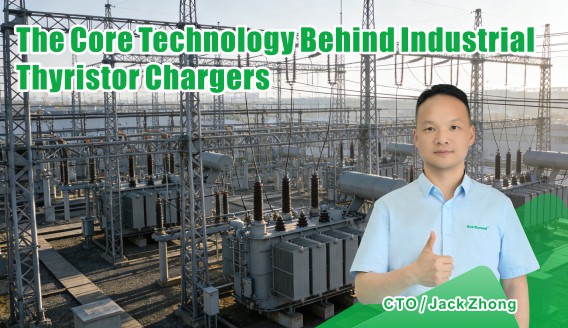
  • The Core of Industrial Thyristor Chargers: Understanding Phase-Controlled Rectification Technology

    The Core of Industrial Thyristor Chargers: Understanding Phase-Controlled Rectification Technology

    Mar , 06 2026
    In many industrial applications—such as electrochemical processing, railway traction power supply, large-scale energy storage systems, and metallurgical equipment—industrial thyristor battery chargers play a crucial role as the core energy conversion hub.   Unlike commercial chargers, industrial environments require equipment capable of handling high power, large currents, and har...
    more
  • How to Choose the Right Industrial DC Charger

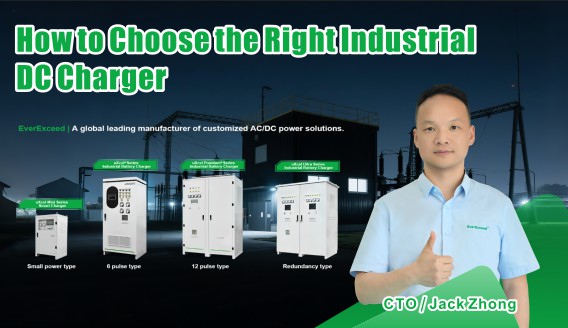
    How to Choose the Right Industrial DC Charger

    Mar , 14 2026
    Industrial DC chargers play a critical role in substations, power plants, railway systems, oil & gas facilities, and industrial automation environments. They are not just battery charging devices — they are the backbone of reliable DC power systems.   Selecting the right industrial DC charger ensures system stability, battery longevity, and grid compliance. Here are the key factors ...
    more
  • The Rise of Harmonic Distortion — and Why Industrial Battery Chargers Must Adapt

    The Rise of Harmonic Distortion — and Why Industrial Battery Chargers Must Adapt

    Mar , 14 2026
    Modern power systems are undergoing a profound transformation. What was once a grid dominated by large synchronous generators and linear loads has evolved into a complex, inverter-rich network powered by renewable energy, battery energy storage systems (BESS), EV chargers, and power electronics-based equipment.   While this transition enhances sustainability and flexibility, it also introduce...
    more
  • Why Industrial Frequency Chargers Are Still Used After 30 Years

    Why Industrial Frequency Chargers Are Still Used After 30 Years

    Mar , 20 2026
    Even as power electronics evolve rapidly, one “old-timer” has remained essential in industrial applications—power plants, substations, and rail systems: the industrial frequency (IF) charger.   High-frequency switch-mode power supplies are efficient, compact, and cost-effective. So why do IF chargers, seemingly “heavy and outdated,” persist? The answer: in critic...
    more
  • FAT On-Site: Experience True UPS Reliability

    FAT On-Site: Experience True UPS Reliability

    Mar , 31 2026
    In mission-critical environments — from data centers and industrial plants to healthcare facilities and telecom networks — a UPS is far more than a backup. It’s the last line of defense against costly downtime. It must be proven before the system ever reaches the site. That’s why Factory Acceptance Testing (FAT) plays a vital role in every EverExceed UPS.   W...
    more
  • 5 Common UPS Parallel Systems & Redundancy Modes Explained

    5 Common UPS Parallel Systems & Redundancy Modes Explained

    Apr , 01 2026
    In mission-critical environments such as data centers, telecom networks, industrial plants, and financial institutions, a reliable UPS parallel system is essential to eliminate single points of failure and ensure continuous power. Choosing the right UPS redundancy configuration requires balancing reliability, complexity, and investment. Below are five common UPS architectures, ranked from high-end...
    more
  • 12 Key Considerations for UPS Installation: Ensure Safe and Reliable Power

    12 Key Considerations for UPS Installation: Ensure Safe and Reliable Power

    Apr , 01 2026
    Proper installation of a UPS (Uninterruptible Power Supply) or EPS system is essential for safety, reliability, and long-term performance. Following best practices can prevent operational failures, extend battery life, and protect connected equipment. Here are 12 key points to guide UPS installation.   1. Prepare Input and Output Wiring Pre-install input/output cables to the site, reserving 1...
    more
  • How RBMS Works in High-Voltage Lithium Battery Systems

    How RBMS Works in High-Voltage Lithium Battery Systems

    Apr , 03 2026
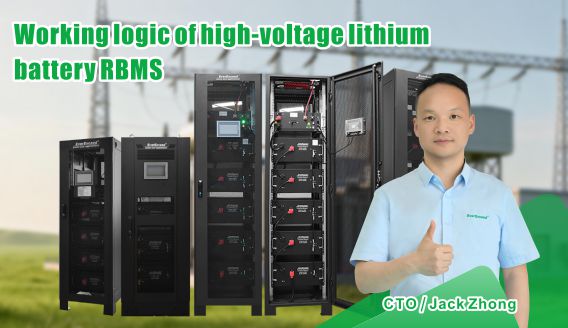
    A Deep Dive into Safety Logic for Modern Energy Storage In today’s fast-growing energy storage and data center industries, high-voltage lithium battery systems have become the backbone of reliable power infrastructure. Ensuring their safety and stability requires a highly intelligent control system — this is where the RBMS (Remote Battery Management System) plays a critical role. At Ev...
    more
first page << 1 ... 13 14 15 last page

a total of15 pages

leave a message
welcome to everexceed
If you are interested in our products and want to know more details,please leave a message here,we will reply you as soon as we can.

home

products

about

contact