






Blog
  • Base Station Lithium Battery Application & Maintenance Guide

    Base Station Lithium Battery Application & Maintenance Guide

    May , 23 2026
    With the deep rollout of 5G networks and the continuous growth of AI computing demands, the need for reliable energy storage in communication base stations is surging. Lithium batteries, with their high energy density, long cycle life, and fast charge-discharge capabilities, are increasingly replacing traditional lead-acid batteries, becoming the mainstream choice for base station energy storage. ...
    more
  • Why Lead-Acid Batteries Should Not Be Charged at High Temperatures

    Why Lead-Acid Batteries Should Not Be Charged at High Temperatures

    May , 23 2026
    Charging lead-acid batteries at high temperatures poses significant safety risks, primarily due to the potential for thermal runaway—a dangerous chain reaction that can cause battery swelling, leakage, fire, or even explosion. Core Risk: Thermal RunawayThermal runaway is one of the most severe failure modes for lead-acid batteries during charging. At elevated temperatures: Heat Accumulation:...
    more
  • Why Remote Telecom Base Station Power Systems Enable Mass Deployment

    Why Remote Telecom Base Station Power Systems Enable Mass Deployment

    May , 26 2026
    Remote telecom base station power systems can be deployed at scale because they are built on four core principles: a standardized 48V DC architecture, modular rectifier design, low-maintenance operation, and remote monitoring capability. These features allow operators to deploy thousands of sites efficiently while reducing installation complexity, operational costs, and maintenance frequency. Why ...
    more
  • Ni-Cd Battery Electrolyte Skin Contact Safety Guideline | EverExceed HSE Standard

    Ni-Cd Battery Electrolyte Skin Contact Safety Guideline | EverExceed HSE Standard

    May , 29 2026
    As a professional manufacturer of industrial energy storage solutions, EverExceed is committed to the highest level of battery safety, occupational health, and environmental protection (HSE) across all applications, including UPS systems, telecom backup power, and industrial energy storage systems. During the manufacturing, maintenance, or electrolyte handling of Nickel-Cadmium (Ni-Cd) batteries, ...
    more
  • Why Industrial Battery Charger Testing Requires More Than Output Voltage Checks

    Why Industrial Battery Charger Testing Requires More Than Output Voltage Checks

    Jun , 04 2026
    Field testing of an industrial battery charger should not rely only on output voltage. A complete verification must include output quality,protection functions, alarm signals, load response, and communication interfaces. Only full-system testing can ensure reliable operation in real DC power systems. Introduction In many field commissioning scenarios, battery chargers are often evaluated by simply...
    more
  • Why Front-Terminal LiFePO₄ Batteries Are Becoming the Preferred Power Solution for Telecom Networks

    Why Front-Terminal LiFePO₄ Batteries Are Becoming the Preferred Power Solution for Telecom Networks

    Jun , 06 2026
    As telecom networks continue to expand with the rapid deployment of 4G, 5G, fiber broadband, and edge infrastructure, the demand for reliable backup power has never been greater. Traditional front-terminal AGM and gel batteries have served the telecom industry for decades, but network operators are increasingly seeking longer-lasting, more efficient, and lower-maintenance energy storage solutions....
    more
  • Choosing the Right UPS Lithium Battery for AI Data Centers: Key Design Considerations

    Choosing the Right UPS Lithium Battery for AI Data Centers: Key Design Considerations

    Jun , 06 2026
    Artificial intelligence data centers (AIDC) are pushing power infrastructure to unprecedented levels. High-performance computing clusters demand continuous, stable electricity, while rapid workload fluctuations require instant power response. In this environment, selecting the right UPS lithium battery system is no longer a routine equipment decision—it is a strategic infrastructure choice. ...
    more
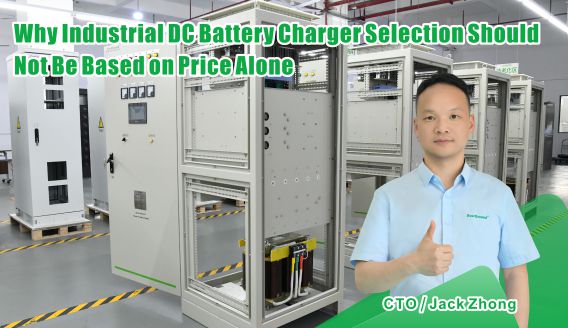
  • Why Industrial DC Battery Charger Selection Should Not Be Based on Price Alone

    Why Industrial DC Battery Charger Selection Should Not Be Based on Price Alone

    Jun , 12 2026
    Critical Loads Require Long-Term Reliability, Not Just a Low Initial Cost In substations, telecom facilities, industrial plants, railway systems, and renewable energy projects, an Industrial DC Battery Charger plays a vital role in maintaining system reliability. It charges battery banks, stabilizes the DC bus voltage, and ensures continuous power supply to protection relays, control circuits, and...
    more
  • Advantages of Larger-Sized Nickel-Cadmium Batteries at the Same Capacity

    Advantages of Larger-Sized Nickel-Cadmium Batteries at the Same Capacity

    Jun , 13 2026
    In industrial power applications, Nickel-Cadmium (Ni-Cd) batteries remain a highly reliable solution, especially for demanding environments such as power plants, substations, railways, and telecom backup systems. When comparing batteries with the same rated capacity, a larger physical size design brings several significant technical and operational advantages. As a global leading provider of energ...
    more
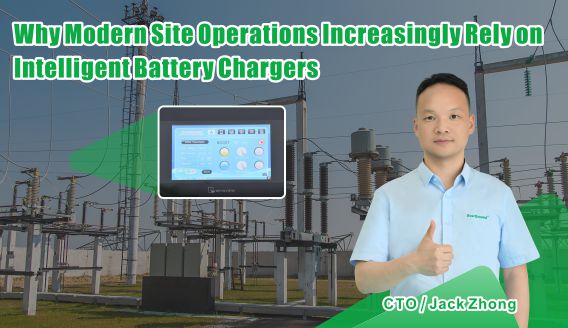
  • Why Modern Site Operations Increasingly Rely on Intelligent Battery Chargers

    Why Modern Site Operations Increasingly Rely on Intelligent Battery Chargers

    Jun , 13 2026
    In the past, a battery charger was considered a simple power conversion device: AC in, DC out, and charge the battery. That was enough. Today, however, applications such as telecom power systems, substations, industrial facilities, and energy storage systems have fundamentally changed the expectations for charging equipment. Users no longer focus only on whether the system runs—they want vis...
    more
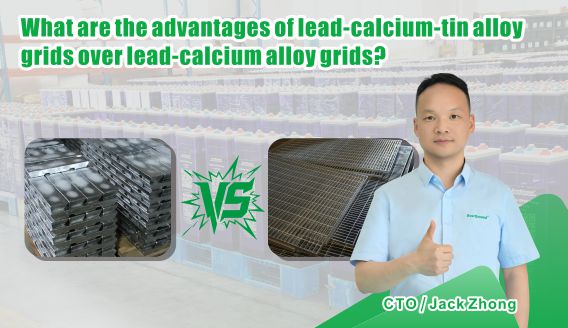
  • Lead-Acid Batteries: Advantages of Lead-Calcium-Tin Alloy over Lead-Calcium Alloy Grids

    Lead-Acid Batteries: Advantages of Lead-Calcium-Tin Alloy over Lead-Calcium Alloy Grids

    Jun , 13 2026
    In modern valve-regulated lead-acid (VRLA) batteries, the grid alloy plays a critical role in determining battery life, stability, and long-term performance. Compared with traditional lead-calcium (Pb-Ca) alloy, the addition of tin (Pb-Ca-Sn) significantly improves overall electrochemical and mechanical properties. As a global leading provider of energy storage systems with 20+ years battery manuf...
    more
first page << 1 ... 16 17 18 last page

a total of18 pages

leave a message
welcome to everexceed
If you are interested in our products and want to know more details,please leave a message here,we will reply you as soon as we can.

home

products

about

contact