

Blog
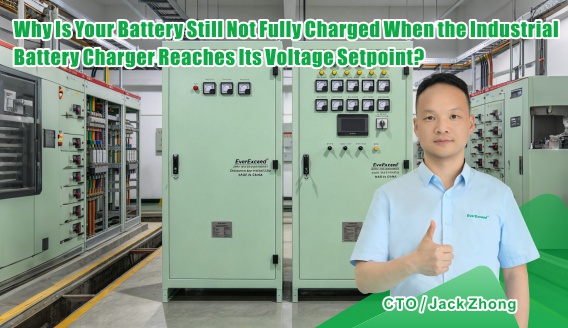
  • Why Is Your Battery Still Not Fully Charged When the Industrial Battery Charger Reaches Its Voltage Setpoint?

    Why Is Your Battery Still Not Fully Charged When the Industrial Battery Charger Reaches Its Voltage Setpoint?

    Oct , 22 2026
    In industrial applications, a common assumption is that once the battery voltage reaches its setpoint, charging should be complete. However, for DC systems, auxiliary power supplies, substation battery banks and large industrial equipment, this judgment is incomplete. Reaching the target terminal voltage only indicates that charging has entered a new stage. It does not necessarily mean the battery...
    more
  • Industrial Battery Charger Sizing: How to Choose the Right Capacity

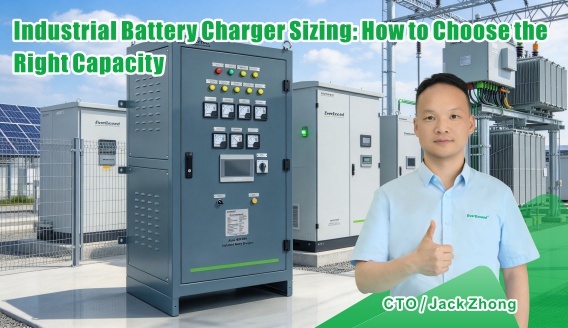
    Industrial Battery Charger Sizing: How to Choose the Right Capacity

    Oct , 29 2026
    Quick Answer Choosing an industrial battery charger with a higher current rating does not automatically make a DC power system more reliable. The right capacity depends on three factors: the continuous DC load, the charging current required to restore the battery after a discharge, and an appropriate design margin. A charger that is too small may operate near its rated capacity and leave insuffici...
    more
  • Modular Charger Redundancy: Why a Failed Charger Module Should Never Be Ignored

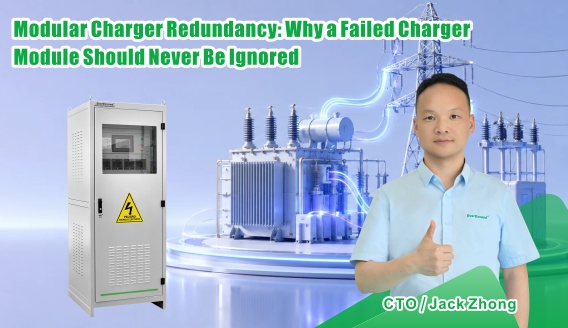
    Modular Charger Redundancy: Why a Failed Charger Module Should Never Be Ignored

    Nov , 06 2026
    A reliable redundancy design does more than keep the DC Panel running. It turns unexpected failures into planned maintenance. A charger module fails, but the DC Panel continues operating normally. The DC bus voltage remains stable, connected loads receive power, and the monitoring system records only a module fault. Should maintenance wait until the entire DC Panel loses power? Not at all. In a re...
    more
  • Customized UPS and High-Voltage Lithium Battery Solutions for Critical Power Applications

    Customized UPS and High-Voltage Lithium Battery Solutions for Critical Power Applications

    Nov , 06 2026
    Reliable backup power is essential for facilities where even a brief power interruption can affect operational continuity, equipment safety, and service availability. From public utilities and wastewater treatment plants to modern data centers, UPS systems must deliver stable power while meeting specific requirements for backup duration, load capacity, installation space, and system integration. C...
    more
  •  Float Charging vs. Equalization Charging: Why Industrial Battery Chargers Need Both Modes

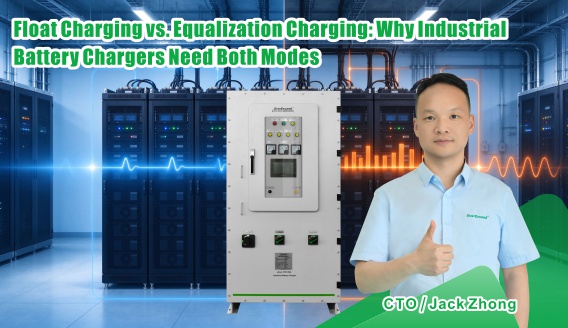
    Float Charging vs. Equalization Charging: Why Industrial Battery Chargers Need Both Modes

    Nov , 09 2026
    A backup battery can remain connected to a charger for a long time. But does keeping it at one fixed voltage really meet its charging requirements? For backup power systems used in power utilities, rail transit and telecommunications, batteries need to remain adequately charged while avoiding prolonged overcharging. This is why industrial battery chargers distinguish between two important charging...
    more
  • How to Plan a High-Voltage UPS Battery System for Reliable Backup Power and Future Expansion

    How to Plan a High-Voltage UPS Battery System for Reliable Backup Power and Future Expansion

    Nov , 12 2026
    As data centers, industrial facilities, and critical infrastructure continue to expand, reliable backup power has become increasingly important. A well-designed UPS battery system must not only provide sufficient backup power during outages but also accommodate future changes in load demand, runtime requirements, and facility capacity. High-voltage lithium battery systems are becoming an increasin...
    more
  • What Happens When AC Power Fails in a DC Panel? How Does the Battery Take Over?

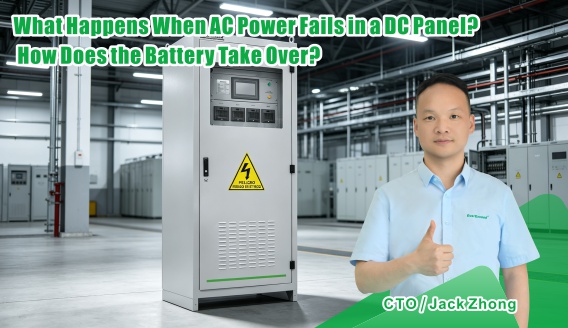
    What Happens When AC Power Fails in a DC Panel? How Does the Battery Take Over?

    Nov , 17 2026
    Reliable backup power is not just about keeping equipment running. It is about making the transition from normal operation to battery supply as seamless as possible. Quick Answer When AC input fails in a DC Panel, the charging modules lose their normal AC supply. The battery then takes over the DC load through its existing connection to the DC bus or a controlled connection path. Unlike some AC po...
    more
  • What Happens When Battery Polarity Is Reversed? How Industrial Battery Chargers Protect Against Reverse Polarity

    What Happens When Battery Polarity Is Reversed? How Industrial Battery Chargers Protect Against Reverse Polarity

    Nov , 25 2026
    Quick Answer When a battery is connected to an industrial battery charger with reversed positive and negative terminals, the battery may feed a large fault current into the charger circuit. Depending on the battery capacity, system configuration and protection design, this can damage rectifiers, contactors, DC bus components and cables. A reliable reverse polarity protection strategy should combin...
    more
first page << 1 ... 9 10 11 last page

a total of11 pages

leave a message
welcome to everexceed
If you are interested in our products and want to know more details,please leave a message here,we will reply you as soon as we can.

home

products

about

contact