


Blog
  • Top 10 Factors to Consider When Choosing an Energy Storage System

    Top 10 Factors to Consider When Choosing an Energy Storage System

    Sep , 28 2026
    How to Select a Safe, Reliable, and Cost-Effective ESS Solution As energy storage systems become increasingly important for residential, commercial, industrial, and renewable energy applications, selecting the right ESS requires careful evaluation of battery technology, system design, safety features, and long-term performance. With over 20 years of battery manufacturing experience and 10+ years o...
    more
  • Industrial SCR Battery Charger: The Battery Guardian Through Precision Float and Equalization Charging Managemen

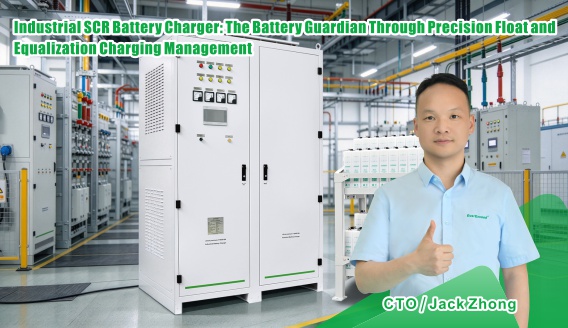
    Industrial SCR Battery Charger: The Battery Guardian Through Precision Float and Equalization Charging Managemen

    Sep , 28 2026
    Quick Answer In industrial DC systems such as substations, power plants, and railway applications, battery replacement costs are often much higher than the charger itself. Many batteries fail prematurely not because they reach the end of their designed life, but because of improper charging management. An industrial SCR battery charger extends battery lifespan through precise float charging contro...
    more
  • Wind Power vs Solar Power for Home: Cost & Best Choice

    Wind Power vs Solar Power for Home: Cost & Best Choice

    Oct , 09 2026
    For most homes, solar power is the better first choice because it is easier to site, predict, install and maintain. Residential wind can be competitive when a property has strong unobstructed wind, enough land for a properly elevated tower and favorable local rules. Where both resources are strong, a wind-solar-battery hybrid can offer better generation coverage. Here is the short comparison. Fact...
    more
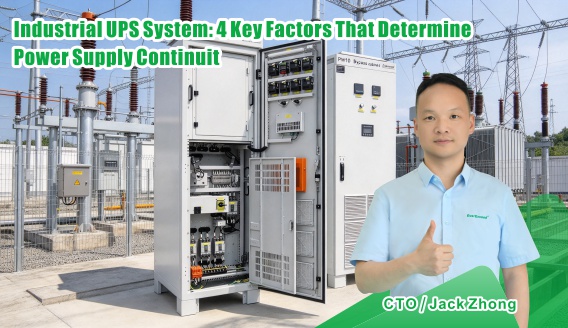
  • Industrial UPS System: 4 Key Factors That Determine Power Supply Continuit

    Industrial UPS System: 4 Key Factors That Determine Power Supply Continuit

    Oct , 16 2026
    A UPS is more than a backup power source that keeps equipment running during a power outage. For servers, industrial control systems, communication equipment, and other critical loads, power continuity depends on how the entire system responds to changing operating conditions. From normal utility power to a sudden outage, and from inverter operation to bypass and battery operation, the real value ...
    more
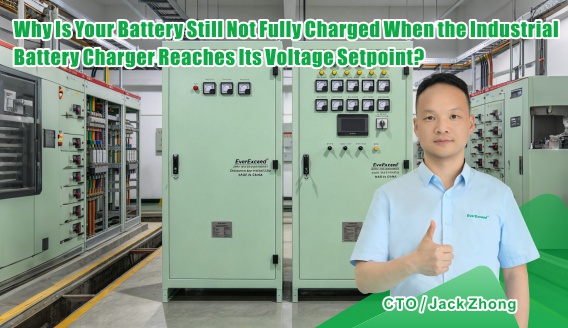
  • Why Is Your Battery Still Not Fully Charged When the Industrial Battery Charger Reaches Its Voltage Setpoint?

    Why Is Your Battery Still Not Fully Charged When the Industrial Battery Charger Reaches Its Voltage Setpoint?

    Oct , 22 2026
    In industrial applications, a common assumption is that once the battery voltage reaches its setpoint, charging should be complete. However, for DC systems, auxiliary power supplies, substation battery banks and large industrial equipment, this judgment is incomplete. Reaching the target terminal voltage only indicates that charging has entered a new stage. It does not necessarily mean the battery...
    more
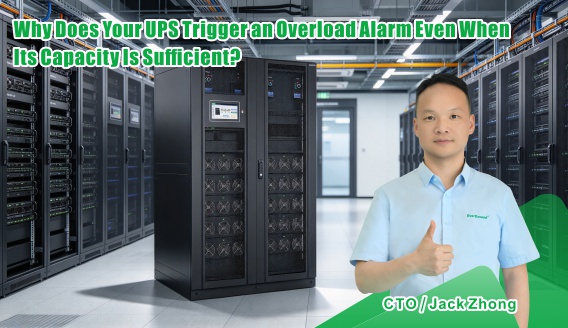
  • Why Does Your UPS Trigger an Overload Alarm Even When Its Capacity Is Sufficient?

    Why Does Your UPS Trigger an Overload Alarm Even When Its Capacity Is Sufficient?

    Oct , 22 2026
    In data centers, industrial automation systems, medical equipment and other critical applications, a UPS may trigger an overload alarm even when the displayed load is well below its rated capacity. Why does this happen when the load is only 60%? The problem is not necessarily that the UPS is undersized. Nonlinear loads, such as servers, variable-frequency drives and rectifier-based power supplies,...
    more
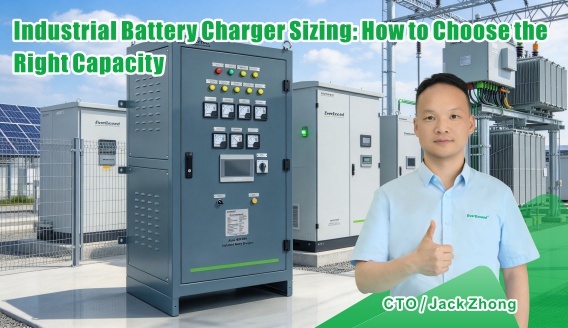
  • Industrial Battery Charger Sizing: How to Choose the Right Capacity

    Industrial Battery Charger Sizing: How to Choose the Right Capacity

    Oct , 29 2026
    Quick Answer Choosing an industrial battery charger with a higher current rating does not automatically make a DC power system more reliable. The right capacity depends on three factors: the continuous DC load, the charging current required to restore the battery after a discharge, and an appropriate design margin. A charger that is too small may operate near its rated capacity and leave insuffici...
    more
  • The Ultimate Guide to Testing LiFePO4 Batteries: Voltage, Capacity & Health Checks

    The Ultimate Guide to Testing LiFePO4 Batteries: Voltage, Capacity & Health Checks

    Oct , 30 2026
    LiFePO4 (Lithium Iron Phosphate) batteries have become the gold standard for reliable energy storage in RV systems, marine applications, solar installations, and off-grid power setups. Their superior lifespan, safety profile, and stable performance make them a worthwhile investment.   But what happens when your lithium battery stops holding a charge, shows strange voltage readings, or simply ...
    more
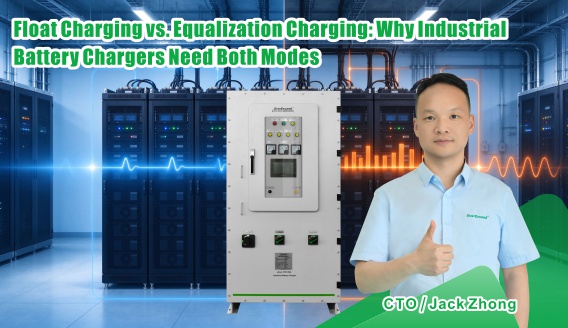
  •  Float Charging vs. Equalization Charging: Why Industrial Battery Chargers Need Both Modes

    Float Charging vs. Equalization Charging: Why Industrial Battery Chargers Need Both Modes

    Nov , 09 2026
    A backup battery can remain connected to a charger for a long time. But does keeping it at one fixed voltage really meet its charging requirements? For backup power systems used in power utilities, rail transit and telecommunications, batteries need to remain adequately charged while avoiding prolonged overcharging. This is why industrial battery chargers distinguish between two important charging...
    more
  • Power Outage Survival Guide: Essential Supplies and Solar Battery Backup for Your Home

    Power Outage Survival Guide: Essential Supplies and Solar Battery Backup for Your Home

    Nov , 11 2026
    A power outage can happen without warning. Severe storms, hurricanes, extreme temperatures, grid failures, or unexpected equipment faults can leave households without electricity for hours or even several days. While flashlights, emergency food, and drinking water are essential, preparing for a prolonged blackout requires something more: a reliable backup power solution. A well-prepared household ...
    more
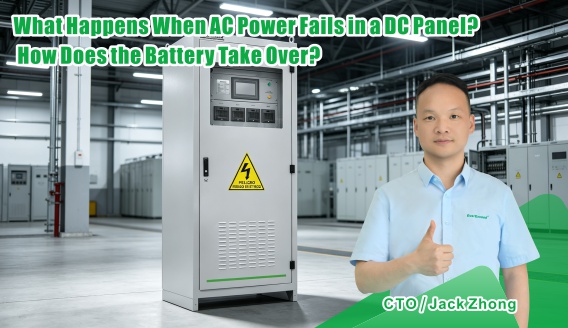
  • What Happens When AC Power Fails in a DC Panel? How Does the Battery Take Over?

    What Happens When AC Power Fails in a DC Panel? How Does the Battery Take Over?

    Nov , 17 2026
    Reliable backup power is not just about keeping equipment running. It is about making the transition from normal operation to battery supply as seamless as possible. Quick Answer When AC input fails in a DC Panel, the charging modules lose their normal AC supply. The battery then takes over the DC load through its existing connection to the DC bus or a controlled connection path. Unlike some AC po...
    more
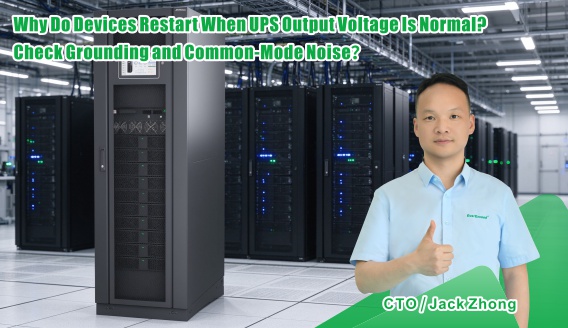
  • Why Do Devices Restart When UPS Output Voltage Is Normal? Check Grounding and Common-Mode Noise

    Why Do Devices Restart When UPS Output Voltage Is Normal? Check Grounding and Common-Mode Noise

    Nov , 17 2026
    Quick Answer When servers, instruments or communication devices restart intermittently despite normal UPS output voltage and frequency, the cause may not be the UPS itself. Neutral-to-ground voltage (N-PE), common-mode noise, grounding impedance and cable connections can also affect sensitive electronic loads. A reliable diagnosis should go beyond checking the UPS output voltage. It should examine...
    more
first page << 1 ... 15 16 17 18 >> last page

a total of18 pages

leave a message
welcome to everexceed
If you are interested in our products and want to know more details,please leave a message here,we will reply you as soon as we can.

home

products

about

contact