
Blog
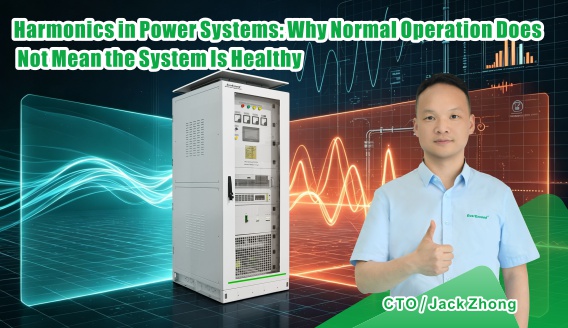
  • Harmonics in Power Systems: Why Normal Operation Does Not Mean the System Is Healthy

    Harmonics in Power Systems: Why Normal Operation Does Not Mean the System Is Healthy

    Sep , 08 2026
    Quick Answer The biggest challenge with harmonics is that they usually do not cause immediate equipment failure. A power system may continue operating normally, while distorted current gradually increases losses, temperature rise, and stress on the entire power distribution system. For systems with rectifiers, UPS systems, battery chargers, variable frequency drives, and switching power supplies, ...
    more
  • How Does a High-Capacity 48V DC Power System Support Data Center Reliability?

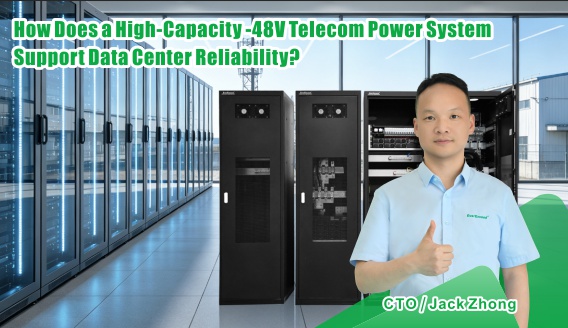
    How Does a High-Capacity 48V DC Power System Support Data Center Reliability?

    Sep , 15 2026
    Quick Answer Data centers rely on stable and continuous DC power to support critical communication and computing equipment. As equipment density and power requirements continue to increase, traditional low-capacity DC power configurations may face challenges in supporting higher loads and maintaining long-term reliability. A high-capacity 48V DC power system integrates rectifier modules, intellige...
    more
  • How Industrial Voltage Regulators Ensure Stable Power for Factory Equipment

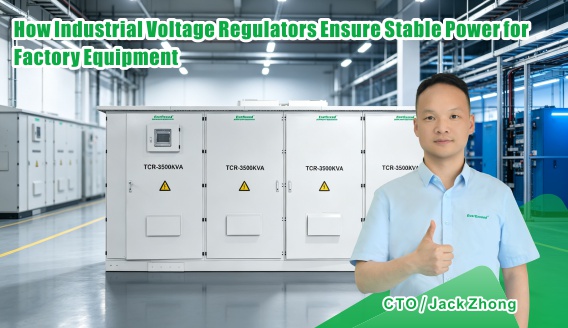
    How Industrial Voltage Regulators Ensure Stable Power for Factory Equipment

    Sep , 15 2026
    Quick Answer Industrial equipment requires a stable and reliable power supply to maintain continuous operation and production efficiency. However, voltage fluctuations caused by unstable grid conditions may affect equipment performance, increase maintenance requirements, and create operational risks. An Automatic Voltage Regulator (AVR) helps maintain stable output voltage by automatically adjusti...
    more
  • Why Are SCR Battery Chargers Reliable Under Unstable Industrial Grid Conditions?

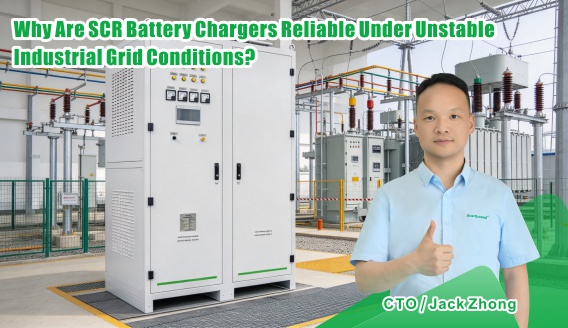
    Why Are SCR Battery Chargers Reliable Under Unstable Industrial Grid Conditions?

    Sep , 24 2026
    Quick Answer Industrial SCR battery chargers are designed to maintain stable DC output even under challenging grid conditions, including voltage fluctuations, harmonic distortion, and transient surges. By combining a robust power-frequency transformer, thyristor-based phase-controlled regulation, and wide-range adaptive control, SCR chargers provide reliable charging performance for substations, p...
    more
  • Top 10 Factors to Consider When Choosing an Energy Storage System

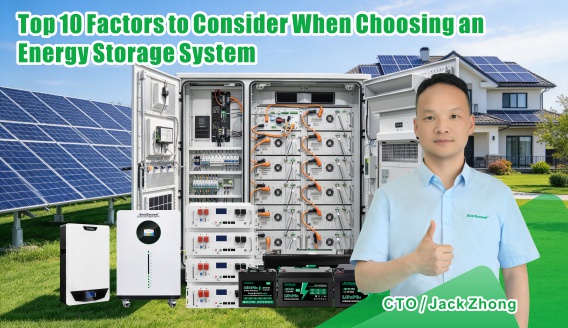
    Top 10 Factors to Consider When Choosing an Energy Storage System

    Sep , 28 2026
    How to Select a Safe, Reliable, and Cost-Effective ESS Solution As energy storage systems become increasingly important for residential, commercial, industrial, and renewable energy applications, selecting the right ESS requires careful evaluation of battery technology, system design, safety features, and long-term performance. With over 20 years of battery manufacturing experience and 10+ years o...
    more
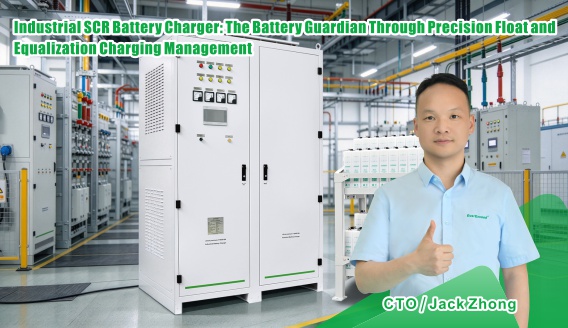
  • Industrial SCR Battery Charger: The Battery Guardian Through Precision Float and Equalization Charging Managemen

    Industrial SCR Battery Charger: The Battery Guardian Through Precision Float and Equalization Charging Managemen

    Sep , 28 2026
    Quick Answer In industrial DC systems such as substations, power plants, and railway applications, battery replacement costs are often much higher than the charger itself. Many batteries fail prematurely not because they reach the end of their designed life, but because of improper charging management. An industrial SCR battery charger extends battery lifespan through precise float charging contro...
    more
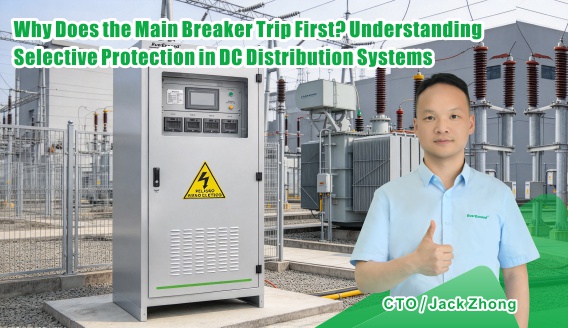
  • Why Does the Main Breaker Trip First? Understanding Selective Protection in DC Distribution Systems

    Why Does the Main Breaker Trip First? Understanding Selective Protection in DC Distribution Systems

    Oct , 09 2026
    Quick Answer When a branch short circuit causes the main breaker to trip first, the problem is not necessarily that the breaker is too small or too large. A more common cause is poor selectivity and coordination between upstream and downstream protection devices. A well-designed DC distribution system should isolate a fault as close to its location as possible. Ideally, a short circuit on one bran...
    more
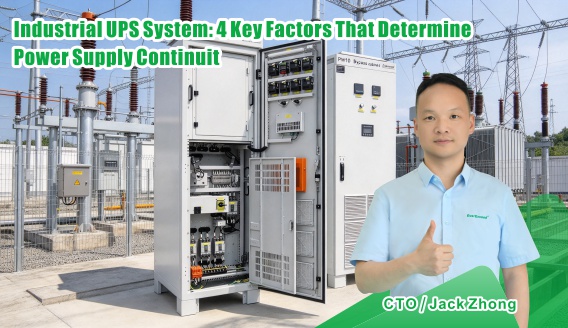
  • Industrial UPS System: 4 Key Factors That Determine Power Supply Continuit

    Industrial UPS System: 4 Key Factors That Determine Power Supply Continuit

    Oct , 16 2026
    A UPS is more than a backup power source that keeps equipment running during a power outage. For servers, industrial control systems, communication equipment, and other critical loads, power continuity depends on how the entire system responds to changing operating conditions. From normal utility power to a sudden outage, and from inverter operation to bypass and battery operation, the real value ...
    more
  • Lifecycle Management of UPS Batteries for High-Intensity AI Computing

    Lifecycle Management of UPS Batteries for High-Intensity AI Computing

    Oct , 16 2026
    As AI computing continues to expand in scale and intensity, power reliability has become a defining factor for the stability of AI data centers. In AIDC, UPS lithium batteries are no longer passive backup components—they operate continuously under high stress and must support dynamic, high-density computing workloads. Effective lifecycle management of UPS batteries is therefore essential for...
    more
  • Why Is Your Battery Still Not Fully Charged When the Industrial Battery Charger Reaches Its Voltage Setpoint?

    Why Is Your Battery Still Not Fully Charged When the Industrial Battery Charger Reaches Its Voltage Setpoint?

    Oct , 22 2026
    In industrial applications, a common assumption is that once the battery voltage reaches its setpoint, charging should be complete. However, for DC systems, auxiliary power supplies, substation battery banks and large industrial equipment, this judgment is incomplete. Reaching the target terminal voltage only indicates that charging has entered a new stage. It does not necessarily mean the battery...
    more
  • Why Does Your UPS Trigger an Overload Alarm Even When Its Capacity Is Sufficient?

    Why Does Your UPS Trigger an Overload Alarm Even When Its Capacity Is Sufficient?

    Oct , 22 2026
    In data centers, industrial automation systems, medical equipment and other critical applications, a UPS may trigger an overload alarm even when the displayed load is well below its rated capacity. Why does this happen when the load is only 60%? The problem is not necessarily that the UPS is undersized. Nonlinear loads, such as servers, variable-frequency drives and rectifier-based power supplies,...
    more
first page << 1 ... 13 14 15 last page

a total of15 pages

leave a message
welcome to everexceed
If you are interested in our products and want to know more details,please leave a message here,we will reply you as soon as we can.

home

products

about

contact