

Blog
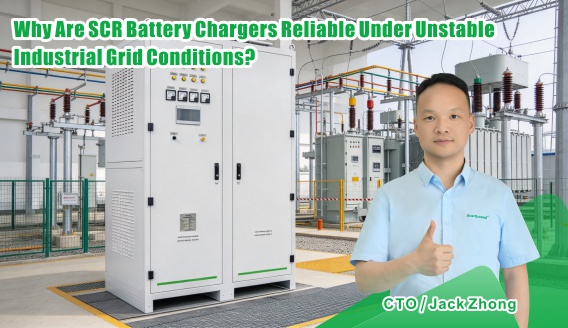
  • Why Are SCR Battery Chargers Reliable Under Unstable Industrial Grid Conditions?

    Why Are SCR Battery Chargers Reliable Under Unstable Industrial Grid Conditions?

    Sep , 24 2026
    Quick Answer Industrial SCR battery chargers are designed to maintain stable DC output even under challenging grid conditions, including voltage fluctuations, harmonic distortion, and transient surges. By combining a robust power-frequency transformer, thyristor-based phase-controlled regulation, and wide-range adaptive control, SCR chargers provide reliable charging performance for substations, p...
    more
  • Why Does the Main Breaker Trip First? Understanding Selective Protection in DC Distribution Systems

    Why Does the Main Breaker Trip First? Understanding Selective Protection in DC Distribution Systems

    Oct , 09 2026
    Quick Answer When a branch short circuit causes the main breaker to trip first, the problem is not necessarily that the breaker is too small or too large. A more common cause is poor selectivity and coordination between upstream and downstream protection devices. A well-designed DC distribution system should isolate a fault as close to its location as possible. Ideally, a short circuit on one bran...
    more
  • Lifecycle Management of UPS Batteries for High-Intensity AI Computing

    Lifecycle Management of UPS Batteries for High-Intensity AI Computing

    Oct , 16 2026
    As AI computing continues to expand in scale and intensity, power reliability has become a defining factor for the stability of AI data centers. In AIDC, UPS lithium batteries are no longer passive backup components—they operate continuously under high stress and must support dynamic, high-density computing workloads. Effective lifecycle management of UPS batteries is therefore essential for...
    more
  • Why Is Your Battery Still Not Fully Charged When the Industrial Battery Charger Reaches Its Voltage Setpoint?

    Why Is Your Battery Still Not Fully Charged When the Industrial Battery Charger Reaches Its Voltage Setpoint?

    Oct , 22 2026
    In industrial applications, a common assumption is that once the battery voltage reaches its setpoint, charging should be complete. However, for DC systems, auxiliary power supplies, substation battery banks and large industrial equipment, this judgment is incomplete. Reaching the target terminal voltage only indicates that charging has entered a new stage. It does not necessarily mean the battery...
    more
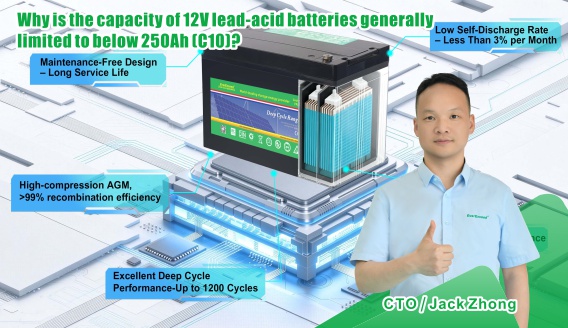
  • Why Are 12V Lead Acid Batteries Commonly Limited to Around 250Ah (C10)?

    Why Are 12V Lead Acid Batteries Commonly Limited to Around 250Ah (C10)?

    Oct , 24 2026
    Introduction When selecting a 12V lead acid battery for UPS systems, telecommunications, solar energy storage, or backup power applications, buyers often notice that many standard products have capacities of 250Ah (C10) or less. Meanwhile, 2V lead acid batteries are widely available in much higher capacities, ranging from several hundred amp-hours to over 3,000Ah. Why is there such a difference? T...
    more
  • Industrial Battery Charger Sizing: How to Choose the Right Capacity

    Industrial Battery Charger Sizing: How to Choose the Right Capacity

    Oct , 29 2026
    Quick Answer Choosing an industrial battery charger with a higher current rating does not automatically make a DC power system more reliable. The right capacity depends on three factors: the continuous DC load, the charging current required to restore the battery after a discharge, and an appropriate design margin. A charger that is too small may operate near its rated capacity and leave insuffici...
    more
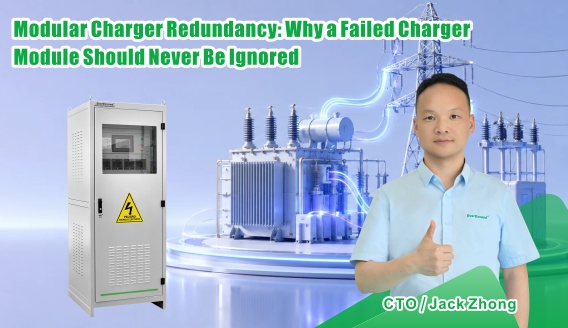
  • Modular Charger Redundancy: Why a Failed Charger Module Should Never Be Ignored

    Modular Charger Redundancy: Why a Failed Charger Module Should Never Be Ignored

    Nov , 06 2026
    A reliable redundancy design does more than keep the DC Panel running. It turns unexpected failures into planned maintenance. A charger module fails, but the DC Panel continues operating normally. The DC bus voltage remains stable, connected loads receive power, and the monitoring system records only a module fault. Should maintenance wait until the entire DC Panel loses power? Not at all. In a re...
    more
  • Customized UPS and High-Voltage Lithium Battery Solutions for Critical Power Applications

    Customized UPS and High-Voltage Lithium Battery Solutions for Critical Power Applications

    Nov , 06 2026
    Reliable backup power is essential for facilities where even a brief power interruption can affect operational continuity, equipment safety, and service availability. From public utilities and wastewater treatment plants to modern data centers, UPS systems must deliver stable power while meeting specific requirements for backup duration, load capacity, installation space, and system integration. C...
    more
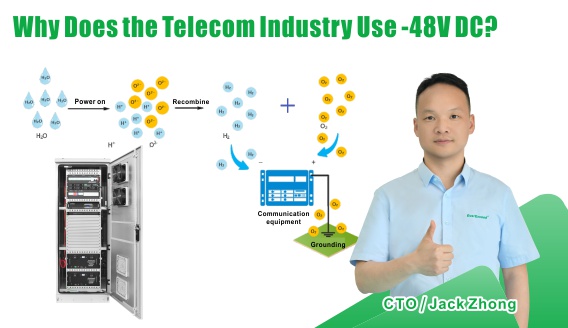
  •  Why Does the Telecom Industry Use -48V DC? The Long-Standing Choice Behind Power Safety and Corrosion Control

    Why Does the Telecom Industry Use -48V DC? The Long-Standing Choice Behind Power Safety and Corrosion Control

    Nov , 10 2026
    From historical practice to modern telecom power systems, -48V was not an arbitrary choice. In telecom power systems, -48V does not mean that every point inside the equipment is 48V below ground. In a common system configuration, the positive DC pole is connected to the ground reference, while the negative pole serves as the power supply rail. Therefore, when measured relative to ground, the negat...
    more
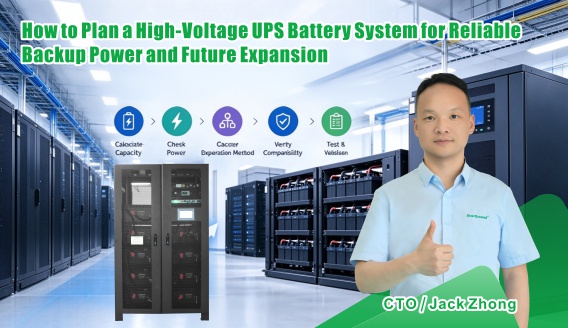
  • How to Plan a High-Voltage UPS Battery System for Reliable Backup Power and Future Expansion

    How to Plan a High-Voltage UPS Battery System for Reliable Backup Power and Future Expansion

    Nov , 12 2026
    As data centers, industrial facilities, and critical infrastructure continue to expand, reliable backup power has become increasingly important. A well-designed UPS battery system must not only provide sufficient backup power during outages but also accommodate future changes in load demand, runtime requirements, and facility capacity. High-voltage lithium battery systems are becoming an increasin...
    more
  • What Happens When AC Power Fails in a DC Panel? How Does the Battery Take Over?

    What Happens When AC Power Fails in a DC Panel? How Does the Battery Take Over?

    Nov , 17 2026
    Reliable backup power is not just about keeping equipment running. It is about making the transition from normal operation to battery supply as seamless as possible. Quick Answer When AC input fails in a DC Panel, the charging modules lose their normal AC supply. The battery then takes over the DC load through its existing connection to the DC bus or a controlled connection path. Unlike some AC po...
    more
first page << 1 ... 10 11 12 last page

a total of12 pages

leave a message
welcome to everexceed
If you are interested in our products and want to know more details,please leave a message here,we will reply you as soon as we can.

home

products

about

contact