

Blog
  • Things You Must Know Before Buying A Residential Energy Storage Battery

    Things You Must Know Before Buying A Residential Energy Storage Battery

    Nov , 09 2021
    With the requirement for energy growing by leaps and bounds in all aspects of life, it is wise to save energy for the future, instead of wasting away the excess. This is where a residential energy storage battery comes into the picture. When attached to the grid-based system, the battery stores sustainable energy and supplies it during the times when you cannot gain access to solar power or other ...
    more
  • Three things the energy storage industry should know about end of battery life

    Three things the energy storage industry should know about end of battery life

    Nov , 12 2021
    In the latest update of Circular Energy Storage’s data on the lithium-ion battery end-of-life market we conclude that over 1.2 million tons of waste batteries will be recycled in 2030. Although it sounds like a massive number, the recycling industry is in fact well prepared and will most probably fight for the volumes. This is good news for the energy storage industry, as it is for all other busin...
    more
  • Why small, low-cost batteries are generally a poor match for highly capable ohmic battery monitoring products?

    Why small, low-cost batteries are generally a poor match for highly capable ohmic battery monitoring products?

    Nov , 18 2021
    The answer isn’t just cost. There are some contrasts between the differing performance expectations and resource environments of two categories of stationary battery system users. It proposes some simple requirements for battery monitoring at cost-constrained sites with modest-sized stationary battery systems and proposes a solution to providing battery health assessment at such sites. Operators o...
    more
  • Implementing a useful battery assessment system at low cost

    Implementing a useful battery assessment system at low cost

    Nov , 22 2021
    In the battery system industry, some companies provide charger and battery systems to smaller, mission-critical applications; for some years, it has been clear that reducing the impact of battery failure is the best way to increase the user’s overall system reliability. In contrast to power electronics that can achieve MTBF in the range of 1 million hours, all VRLA batteries will fail between “now...
    more
  • What type of Battery assessment is suited for GENSET applications?

    What type of Battery assessment is suited for GENSET applications?

    Nov , 27 2021
    Lead-acid battery monitoring technology has matured to the point where the IEEE issued a standard (IEEE 1491) in 2005 to describe the various battery health assessment methods. Most large data centers, for example, spend tens of thousands of dollars for battery monitoring equipment designed to predict whether their UPS batteries will work. Data centers with downtime costs of six figures per minute...
    more
  • How to implement battery monitoring in a deployable product?

    How to implement battery monitoring in a deployable product?

    Nov , 27 2021
    Standalone ohmic battery monitoring systems designed for data center application are not suited for a genset environment. Although ohmic monitors work, they are expensive (estimated at $2,000 for a 24-volt system), time-consuming to install, and require trained personnel to interpret their data output. To achieve widespread adoption in the genset market any battery monitoring technology will need ...
    more
  • What are the recharge cycles phases of a Lead acid battery?

    What are the recharge cycles phases of a Lead acid battery?

    Nov , 27 2021
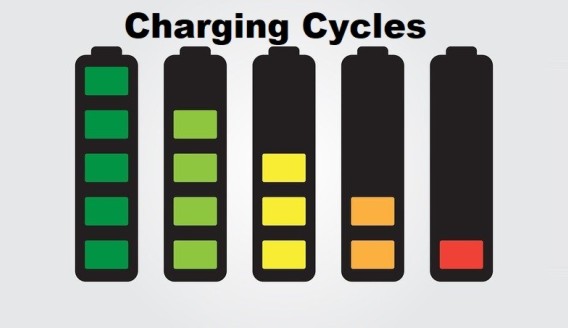
    The fastest generally accepted way to charge a conventional (lead‐acid or NiCd) battery is with a constant voltage, a current limited battery charger that is capable of both “boost” and “float” output voltages. “Boost” charging applies a higher than normal voltage to the battery early in the charge cycle to charge the battery as quickly as possible. Later, once the battery is charged, charging vol...
    more
  • What is the right duration of Phase 2 of a charging cycle?

    What is the right duration of Phase 2 of a charging cycle?

    Nov , 27 2021
    The duration of Phase 1 is determined by the battery’s depth of discharge, the ratio of charger ampacity to battery capacity, and whether there are parasitic DC loads connected to the system. Although the duration of Phase 1 does vary, we are not concerned with this variation since, once the battery capacity, charger output, and DC loads are installed, we have no means to change the duration of Ph...
    more
  • What is Dynamic Boost and how does it works?

    What is Dynamic Boost and how does it works?

    Dec , 03 2021
    As with the current‐controlled automatic boost system, Dynamic Boost includes no pre‐programmed boost timer. Unlike the current‐controlled automatic boost system, however, Dynamic Boost automatically adjusts boost duration to take into account differing parasitic DC loads and other variables discussed above. The principle behind Dynamic Boost is simple and straightforward. Refer back to Figure 1. ...
    more
  • Why flooded SLI batteries in GENSET applications fail sooner and more suddenly than in vehicle applications?

    Why flooded SLI batteries in GENSET applications fail sooner and more suddenly than in vehicle applications?

    Dec , 06 2021
    Continuous float charging flooded SLI batteries accelerates the deterioration of polyethylene plate separators to a life shorter than that which battery designers intended. When subjected to continuous float charging, the dominant and earliest failure mode tends to be premature failure of the polyethylene separator. Separator failure typically results in short circuits that prevent the battery fro...
    more
  • How a new intermittent charging algorithm addresses premature SLI battery failure?

    How a new intermittent charging algorithm addresses premature SLI battery failure?

    Dec , 06 2021
    A new charging algorithm addresses the problems of short genset battery life and sudden battery failure discussed above, while meeting the regulatory needs to deliver non-stop DC power to critical applications. The principle is simple and straightforward. Emulate the beneficial intermittent vehicle charging regime for which SLI batteries were originally designed, but continue charger operation to ...
    more
  • Characteristics of Lead Acid and Nickel Cadmium Batteries for Generator starting application

    Characteristics of Lead Acid and Nickel Cadmium Batteries for Generator starting application

    Dec , 10 2021
    The charger strips electrons from the cathode leaving it with a net positive charge and forces those electrons onto the anode giving it a negative charge. The energy pumped into the cell transforms the active chemicals back to their original state. The generator set industry primarily uses an automatic type battery charger for standby applications. The system designer selects the battery type on i...
    more
first page << 1 ... 7 8 9 10 11 ... 33 >> last page

a total of33 pages

leave a message
welcome to everexceed
If you are interested in our products and want to know more details,please leave a message here,we will reply you as soon as we can.

home

products

about

contact