
Blog
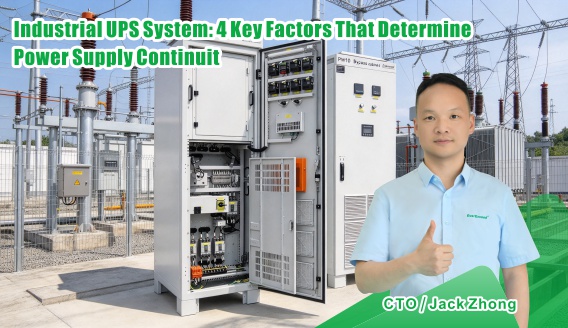
  • Industrial UPS System: 4 Key Factors That Determine Power Supply Continuit

    Industrial UPS System: 4 Key Factors That Determine Power Supply Continuit

    Oct , 16 2026
    A UPS is more than a backup power source that keeps equipment running during a power outage. For servers, industrial control systems, communication equipment, and other critical loads, power continuity depends on how the entire system responds to changing operating conditions. From normal utility power to a sudden outage, and from inverter operation to bypass and battery operation, the real value ...
    more
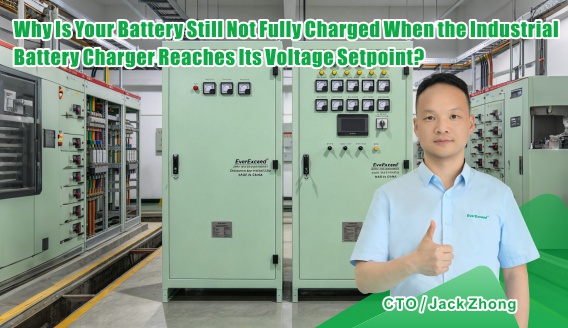
  • Why Is Your Battery Still Not Fully Charged When the Industrial Battery Charger Reaches Its Voltage Setpoint?

    Why Is Your Battery Still Not Fully Charged When the Industrial Battery Charger Reaches Its Voltage Setpoint?

    Oct , 22 2026
    In industrial applications, a common assumption is that once the battery voltage reaches its setpoint, charging should be complete. However, for DC systems, auxiliary power supplies, substation battery banks and large industrial equipment, this judgment is incomplete. Reaching the target terminal voltage only indicates that charging has entered a new stage. It does not necessarily mean the battery...
    more
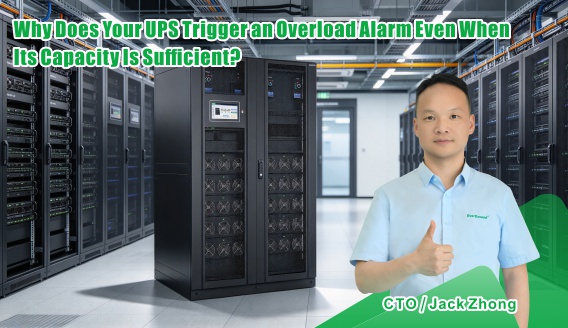
  • Why Does Your UPS Trigger an Overload Alarm Even When Its Capacity Is Sufficient?

    Why Does Your UPS Trigger an Overload Alarm Even When Its Capacity Is Sufficient?

    Oct , 22 2026
    In data centers, industrial automation systems, medical equipment and other critical applications, a UPS may trigger an overload alarm even when the displayed load is well below its rated capacity. Why does this happen when the load is only 60%? The problem is not necessarily that the UPS is undersized. Nonlinear loads, such as servers, variable-frequency drives and rectifier-based power supplies,...
    more
  • Industrial Battery Charger Sizing: How to Choose the Right Capacity

    Industrial Battery Charger Sizing: How to Choose the Right Capacity

    Oct , 29 2026
    Quick Answer Choosing an industrial battery charger with a higher current rating does not automatically make a DC power system more reliable. The right capacity depends on three factors: the continuous DC load, the charging current required to restore the battery after a discharge, and an appropriate design margin. A charger that is too small may operate near its rated capacity and leave insuffici...
    more
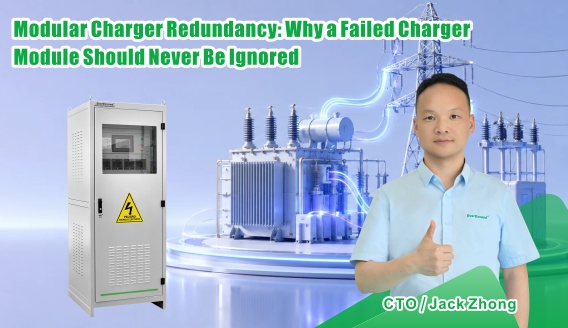
  • Modular Charger Redundancy: Why a Failed Charger Module Should Never Be Ignored

    Modular Charger Redundancy: Why a Failed Charger Module Should Never Be Ignored

    Nov , 06 2026
    A reliable redundancy design does more than keep the DC Panel running. It turns unexpected failures into planned maintenance. A charger module fails, but the DC Panel continues operating normally. The DC bus voltage remains stable, connected loads receive power, and the monitoring system records only a module fault. Should maintenance wait until the entire DC Panel loses power? Not at all. In a re...
    more
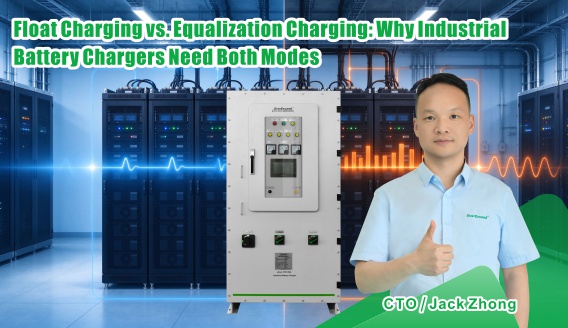
  •  Float Charging vs. Equalization Charging: Why Industrial Battery Chargers Need Both Modes

    Float Charging vs. Equalization Charging: Why Industrial Battery Chargers Need Both Modes

    Nov , 09 2026
    A backup battery can remain connected to a charger for a long time. But does keeping it at one fixed voltage really meet its charging requirements? For backup power systems used in power utilities, rail transit and telecommunications, batteries need to remain adequately charged while avoiding prolonged overcharging. This is why industrial battery chargers distinguish between two important charging...
    more
  • What Happens When AC Power Fails in a DC Panel? How Does the Battery Take Over?

    What Happens When AC Power Fails in a DC Panel? How Does the Battery Take Over?

    Nov , 17 2026
    Reliable backup power is not just about keeping equipment running. It is about making the transition from normal operation to battery supply as seamless as possible. Quick Answer When AC input fails in a DC Panel, the charging modules lose their normal AC supply. The battery then takes over the DC load through its existing connection to the DC bus or a controlled connection path. Unlike some AC po...
    more
  • Why Do Devices Restart When UPS Output Voltage Is Normal? Check Grounding and Common-Mode Noise

    Why Do Devices Restart When UPS Output Voltage Is Normal? Check Grounding and Common-Mode Noise

    Nov , 17 2026
    Quick Answer When servers, instruments or communication devices restart intermittently despite normal UPS output voltage and frequency, the cause may not be the UPS itself. Neutral-to-ground voltage (N-PE), common-mode noise, grounding impedance and cable connections can also affect sensitive electronic loads. A reliable diagnosis should go beyond checking the UPS output voltage. It should examine...
    more
first page << 1 ... 9 10 11 last page

a total of11 pages

leave a message
welcome to everexceed
If you are interested in our products and want to know more details,please leave a message here,we will reply you as soon as we can.

home

products

about

contact