Blog
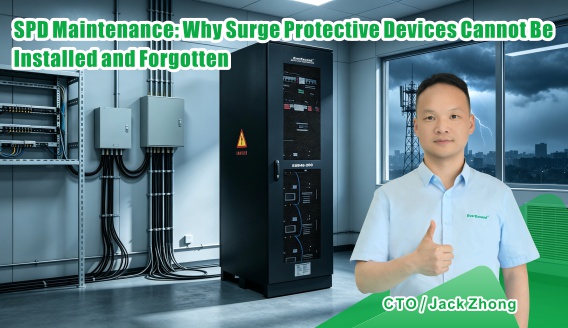
  • SPD Maintenance: Why Surge Protective Devices Cannot Be Installed and Forgotten

    SPD Maintenance: Why Surge Protective Devices Cannot Be Installed and Forgotten

    Aug , 31 2026
    Quick Answer A Surge Protective Device (SPD) cannot be considered permanently effective simply because its indicator window remains green. The indicator only shows part of the device status. Actual protection performance also depends on installation quality, grounding conditions, upstream protection coordination, wiring length, and previous surge events. During lightning strikes, grid switching, o...
    more
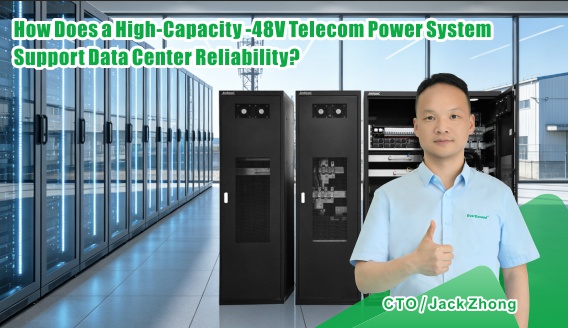
  • How Does a High-Capacity 48V DC Power System Support Data Center Reliability?

    How Does a High-Capacity 48V DC Power System Support Data Center Reliability?

    Sep , 15 2026
    Quick Answer Data centers rely on stable and continuous DC power to support critical communication and computing equipment. As equipment density and power requirements continue to increase, traditional low-capacity DC power configurations may face challenges in supporting higher loads and maintaining long-term reliability. A high-capacity 48V DC power system integrates rectifier modules, intellige...
    more
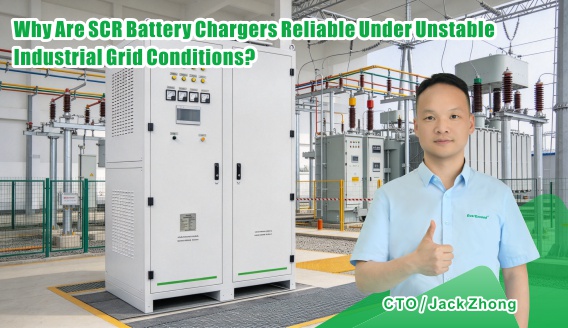
  • Why Are SCR Battery Chargers Reliable Under Unstable Industrial Grid Conditions?

    Why Are SCR Battery Chargers Reliable Under Unstable Industrial Grid Conditions?

    Sep , 24 2026
    Quick Answer Industrial SCR battery chargers are designed to maintain stable DC output even under challenging grid conditions, including voltage fluctuations, harmonic distortion, and transient surges. By combining a robust power-frequency transformer, thyristor-based phase-controlled regulation, and wide-range adaptive control, SCR chargers provide reliable charging performance for substations, p...
    more
  • Why Does the Main Breaker Trip First? Understanding Selective Protection in DC Distribution Systems

    Why Does the Main Breaker Trip First? Understanding Selective Protection in DC Distribution Systems

    Oct , 09 2026
    Quick Answer When a branch short circuit causes the main breaker to trip first, the problem is not necessarily that the breaker is too small or too large. A more common cause is poor selectivity and coordination between upstream and downstream protection devices. A well-designed DC distribution system should isolate a fault as close to its location as possible. Ideally, a short circuit on one bran...
    more
first page << 1 ... 4 5 6 last page

a total of6 pages

leave a message
welcome to everexceed
If you are interested in our products and want to know more details,please leave a message here,we will reply you as soon as we can.

home

products

about

contact