When designing a battery backup system, increasing capacity by connecting multiple lead acid batteries in parallel may seem like an effective solution. However, parallel connection of multiple battery strings can introduce serious challenges related to battery imbalance, circulating current, uneven charging, and reduced system reliability.
For industrial applications such as UPS systems, telecom backup power, solar energy storage, and emergency power systems, selecting the right battery configuration is critical to ensure long service life and stable performance.
As a professional battery manufacturer, EverExceed provides reliable industrial lead acid batteries, VRLA batteries, and lithium battery solutions designed for demanding backup power applications.
(Internal link suggestion: Industrial Lead Acid Battery Solution)
Due to differences in manufacturing processes, internal resistance, aging conditions, and usage history, multiple parallel-connected lead acid battery strings cannot maintain exactly the same voltage and internal resistance.
When batteries with different voltage levels are connected in parallel, a higher-voltage battery string may discharge current into a lower-voltage battery string. This phenomenon is known as circulating current.
The circulating current does not provide useful power output but instead creates:
For example, when a fully charged battery string is connected with a partially discharged string, the fully charged battery may continuously charge the weaker battery, causing excessive stress on the battery plates.
(Internal link suggestion: EverExceed VRLA Battery for UPS Backup System)
During charging, parallel battery strings do not always share current evenly.
According to Ohm’s Law:
I = U / R
Battery strings with lower internal resistance will receive higher charging current, while batteries with higher internal resistance receive less charging current.
Over time, batteries receiving insufficient charging may suffer from:
This creates a negative cycle where weaker batteries continue to deteriorate faster, eventually reducing the performance of the entire battery system.
Using high-quality and well-matched industrial lead acid batteries can significantly reduce these imbalance issues.
(Internal link suggestion: EverExceed Industrial Battery Series)
During discharge, current distribution is also affected by battery resistance differences.
Batteries with lower internal resistance tend to provide more current, while weaker batteries contribute less energy. This can result in:
This problem becomes more serious when new and old batteries are connected together.
A new battery may continuously carry higher discharge loads, causing premature degradation and shortening the overall system lifespan.
Therefore, new and old lead acid batteries should never be mixed in the same parallel system.
Although parallel connection increases total capacity, battery imbalance can significantly reduce the actual service life of the battery system.
The lifespan of a parallel battery bank depends not only on individual battery quality but also on:
In many cases, a poorly designed parallel system may require earlier battery replacement, increasing total ownership costs.
For applications requiring higher capacity and longer service life, selecting a properly designed battery solution is often more economical than simply adding more parallel battery strings.
(Internal link suggestion: EverExceed 2V Tubular Lead Acid Battery)
The more battery strings connected in parallel, the more complex the system becomes.
If one battery string develops a fault, such as:
Other healthy battery strings may continue supplying current to the failed string, causing additional stress and possible cascading failures.
For critical applications such as:
battery system reliability should always be a priority.
Battery imbalance caused by improper parallel connection may lead to:
Additionally, multiple parallel battery strings increase the available short-circuit current. In the event of a short circuit, the potential damage can become more severe.
Choosing professionally designed UPS battery systems with proper protection and monitoring is essential for safe operation.
(Internal link suggestion: UPS Battery Backup Solution)
If parallel connection is unavoidable due to power requirements, the following principles should be strictly :
All batteries connected in parallel should have:
New and aged batteries have different:
Mixing them can accelerate battery degradation.
Batteries manufactured in the same batch usually have closer performance characteristics, improving system balance and reliability.
Parallel battery strings should start operation together to maintain similar aging conditions throughout their service life.
For industrial applications, excessive parallel connection is generally not recommended.
In many engineering designs, the number of parallel battery strings is usually limited to maintain:
When higher capacity is required, using larger-capacity battery units is often a better approach.
For example, 2V tubular lead acid batteries are widely used in large-scale UPS and energy storage applications because they allow flexible series configuration while maintaining excellent cycle performance.
(Internal link suggestion: EverExceed 2V OPzV / OPzS Tubular Battery)
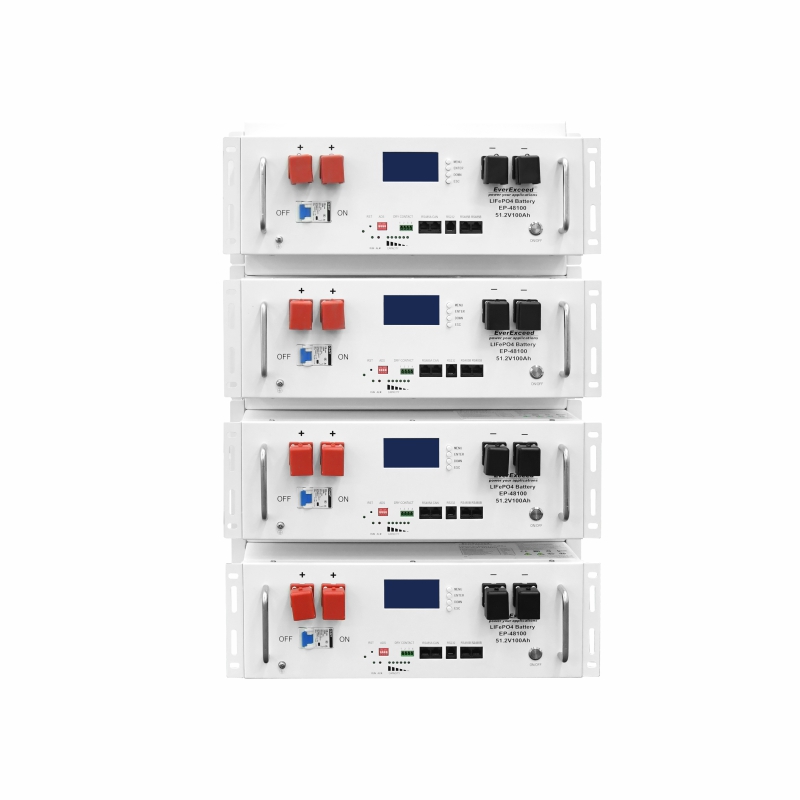
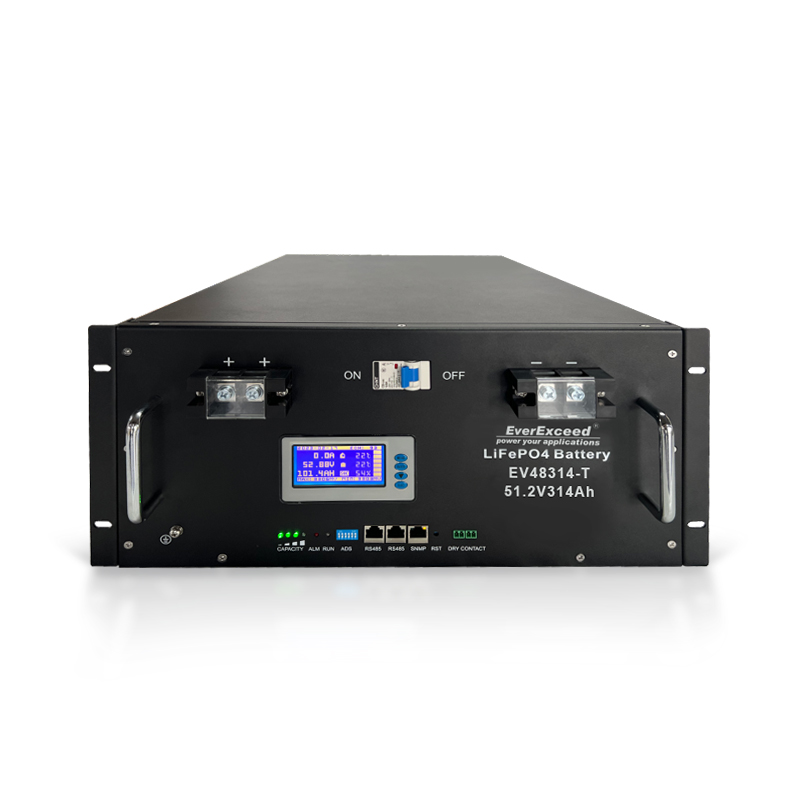
Compared with traditional lead acid battery systems, LiFePO4 lithium batteries offer advantages including:
For applications requiring frequent cycling, high reliability, and space optimization, lithium battery systems are becoming an increasingly popular choice.
EverExceed provides advanced LiFePO4 lithium battery solutions for UPS backup, telecom power, solar energy storage, and industrial energy storage applications.
(Internal link suggestion: EverExceed LiFePO4 Lithium Battery Solution)
Connecting multiple lead acid batteries in parallel can increase system capacity, but it also introduces risks related to battery imbalance, circulating current, uneven charging, and reduced reliability.
For a stable and long-lasting power backup system:
With more than 20 years of battery manufacturing experience, EverExceed delivers reliable lead acid battery and lithium battery solutions for UPS, telecom, renewable energy, and industrial power applications worldwide.
categories
recent posts




scan to wechat:everexceed