Blog
  • What are the factors that are unfavorable to lead-acid batteries?

    What are the factors that are unfavorable to lead-acid batteries?

    Apr , 15 2023
    There are many factors that are unfavorable to the battery, mainly in the charging and discharging phase. (1). The "second super" discharge stage is mainly the discharge current overvalue, that is, the discharge exceeds the allowable current value for a long time; the second problem of discharge is over-discharge, that is, exceeding the allowable discharge capacity of the battery, which is called ...
    more
  • Three-stage charging of lead-acid battery

    Three-stage charging of lead-acid battery

    Apr , 15 2023
    1. What is the three-stage charging of lead-acid batteries? The charging method of lead-acid batteries should be divided into three stages, namely: constant current charging - constant voltage charging - trickle charging. Constant current charging stage: charge to 13.4V with 0.2C10 A current. Constant voltage charging stage: 2.4V/cell, charging time 3h, cut-off current 0.02C10A Trickle charge phas...
    more
  • Summary of the Design of Power Battery Management system

    Summary of the Design of Power Battery Management system

    Apr , 24 2023
    With the increasing number of electric vehicles, battery energy management system is becoming more and more important in addition to looking for batteries with high energy density and high safety. Different power batteries have different properties, and even if the same type of battery properties are inconsistent, in the process of use, there will be the possibility of accidents caused by expansio...
    more
  • Negative electrode formula for high temperature performance of lead-acid battery

    Negative electrode formula for high temperature performance of lead-acid battery

    Jun , 07 2023
    Negative electrode formulation for high-temperature performance of lead-acid batteries (containing the first hydrogen evolution inhibitor Bi2O2CO3 and the second hydrogen evolution inhibitor ZnO). The basic formula of the negative electrode (number of weight) is: 100 parts lead powder, 8 ~ 11 parts dilute sulfuric acid, 9 ~ 13 parts deionized water, 0.06 ~ 0.14 parts short fiber, 0.10 ~ 0.20 parts...
    more
  • Preparation of reduced graphene oxide loaded lead oxide composites for lead carbon batteries

    Preparation of reduced graphene oxide loaded lead oxide composites for lead carbon batteries

    Jun , 07 2023
    Graphene is a new type of two-dimensional structure conductive material, which is composed of a single layer of carbon atoms and its basic structural unit is a six-membered ring structure, which has good chemical stability. Moreover, graphene has a high specific surface area, which not only provides a large reaction interface, but also improves the dispersion of surface nanomaterials. The high con...
    more
  • Selection of lead carbon-carbon addition

    Selection of lead carbon-carbon addition

    Jun , 30 2023
    The influence of chemical properties such as carbon material type and addition amount on battery performance was studied. Several different types of carbon materials (graphite, carbon black, activated carbon, etc.) were selected and tested for their effects on the negative electrode plate with additional amounts ranging from 0.2% to 4%, as well as hydrogen evolution inhibitors and adhesives. And c...
    more
  • Lithium-ion battery terms explained

    Lithium-ion battery terms explained

    Aug , 18 2023
    I. Battery voltage (V) 1. Open circuit voltage (OCV) The voltage of the lithium battery when it is not connected to an external circuit or load can generally be tested with a multimeter. 2. Operating voltage (WV) The potential difference between the positive and negative terminals of the battery under applied load, that is, when there is current flowing through the battery in the circuit. When the...
    more
  • Why choose gel batteries?

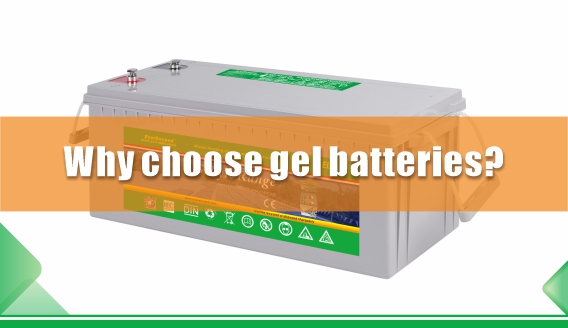
    Why choose gel batteries?

    Aug , 22 2023
    The colloidal lead-acid battery is an improvement of the ordinary lead-acid battery with liquid electrolyte. The sulfuric acid electrolyte is replaced by a colloidal electrolyte, and the safety, power storage, discharge performance, and service life are improved compared with the ordinary battery. The colloidal lead-acid battery adopts a gel-like electrolyte; no free liquid is inside. Under the sa...
    more
  • The relationship between temperature and battery

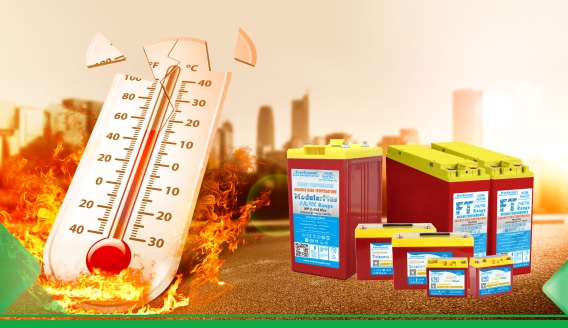
    The relationship between temperature and battery

    Mar , 22 2024
    High ambient temperature greatly affects the battery service life. When the temperature rises, the corrosion of the battery plate will increase, and more water will be consumed, thus shortening the battery life. The battery can obtain a long life at 25 ° C, and the service life is reduced by about half if the long-term operating temperature is increased by 10 ° C. The storage battery should be pla...
    more
  • Long-term storage methods for lithium batteries and storage requirements for lithium iron phosphate batteries

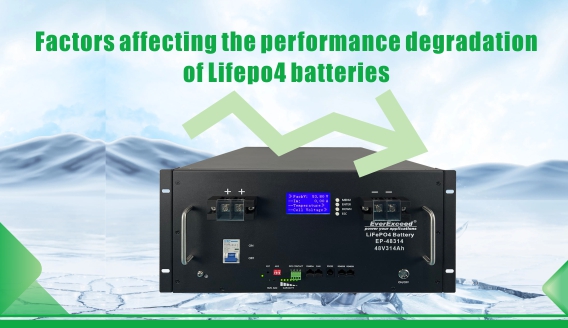
    Long-term storage methods for lithium batteries and storage requirements for lithium iron phosphate batteries

    Apr , 20 2024
    What impact will the lithium battery have after being put aside for a long time? When the lithium battery is idle, due to the nature of the battery itself, self-discharge, passivation of positive and negative electrode materials, electrolyte decomposition and other phenomena will occur. The instability of the negative SEI will lead to the rapid decline of the negative active substance, which is ea...
    more
  • What is a nickel-cadmium battery

    What is a nickel-cadmium battery

    May , 31 2024
    1. Working principle of nickel-cadmium battery Nickel-cadmium batteries are rechargeable batteries that convert chemical energy into electricity through REDOX reactions. It consists of a negative electrode (the negative material is Cd), a positive electrode (the positive material is NiOOH), and an electrolyte (the main component is KOH). 2. Features of nickel-cadmium batteries Long cycle life; Wid...
    more
  • Effect of electrolyte density and discharge on lead-acid batteries

    Effect of electrolyte density and discharge on lead-acid batteries

    Nov , 29 2024
    (1) Electrolyte density under different geographical and climatic strips. Whether the electrolyte density is high or low, it is necessary to make a specific analysis for the specific situation. Winter temperature is low, the viscosity of the electrolyte is large, it is not easy to penetrate the inside of the plate, the end voltage and capacity of the battery will decline, especially in the strong ...
    more
first page << 1 2 3 4 5 >> last page

a total of5 pages

leave a message
welcome to everexceed
If you are interested in our products and want to know more details,please leave a message here,we will reply you as soon as we can.

home

products

about

contact