Negative Effects of High Temperature on Lithium Batteries
High temperature has comprehensive and irreversible impacts on lithium batteries. The main issues are as follows:
1. Capacity Fading and Shortened Lifespan (Most Common Impact)
Mechanism: Elevated temperatures accelerate side reactions in the battery’s electrochemical system, such as electrolyte decomposition and the reaction of active lithium ions with the electrolyte to form a Solid Electrolyte Interphase (SEI) layer. The continuous growth of the SEI layer irreversibly consumes active lithium and electrolyte, leading to permanent capacity loss.
Manifestation: Noticeable reduction in battery endurance. After a full charge, the usable time becomes shorter. A general rule of thumb: for every 10°C rise in average operating temperature, the cycle life of the battery may be reduced by half.
2. Performance Degradation
Mechanism: Increase in internal resistance. While high temperature may temporarily lower internal resistance and slightly improve discharge performance, prolonged exposure accelerates SEI growth, resulting in permanent internal resistance increase.
Manifestation: Larger voltage fluctuations during charge/discharge, weaker power output — for instance, an EV with reduced acceleration or a smartphone experiencing lag during gaming.
3. Safety Risks (Most Severe Impact)
Mechanism: High temperatures may trigger thermal runaway — a vicious self-accelerating feedback loop:
-
Elevated temperature decomposes SEI layers, releasing heat.
-
Heat further raises cell temperature, causing separator shrinkage/melting, leading to internal short-circuits.
-
Electrolyte and cathode materials decompose under heat, releasing more heat and flammable gases.
-
Ultimately, this can cause fire or explosion.
Manifestation: Swelling, smoke emission, fire.
Solutions and Mitigation Strategies
Addressing high-temperature challenges requires combined efforts in cell design, system management, and end-user practices.
1. Cell Design & Material Level (Led by Manufacturers)
High-temperature resistant materials: Use safer and more stable chemistries such as LiFePO₄ (LFP), which inherently offers higher thermal stability compared to NMC. Employ ceramic-coated separators with higher thermal tolerance and flame-retardant electrolyte additives.
Optimized structural design: Techniques like stacking processes, larger electrode surface areas, and optimized tab designs reduce internal resistance and heat generation.
2. System Design & BMS Level (Led by Product Manufacturers)
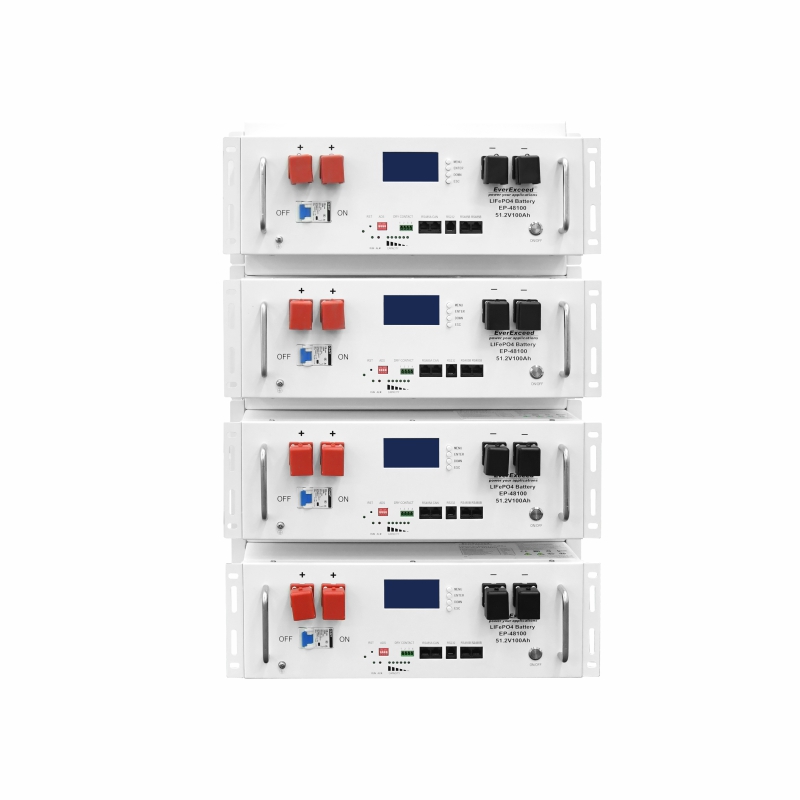
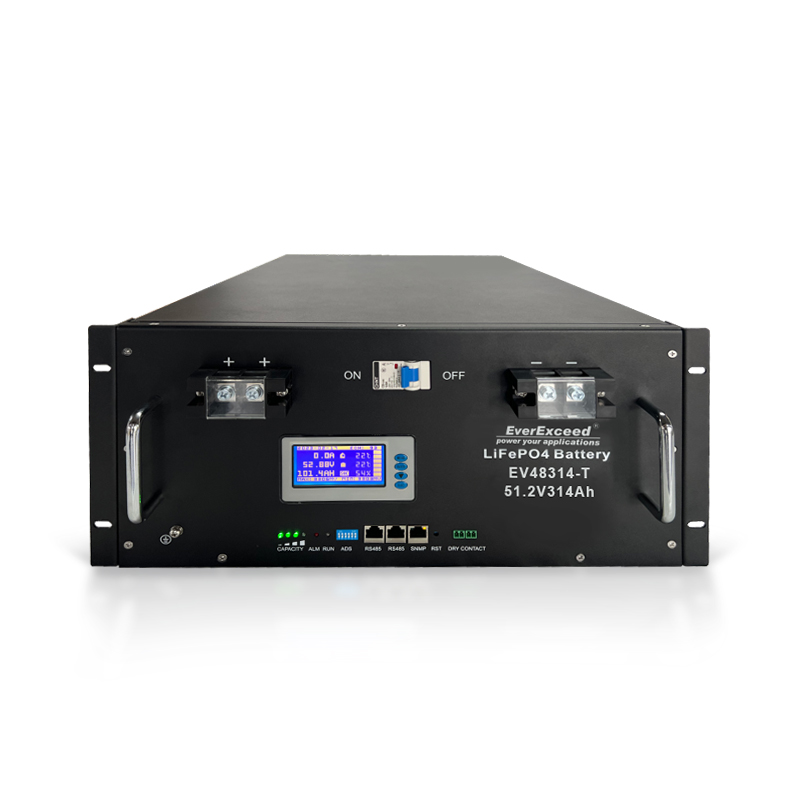
This is the core of battery safety assurance, and EverExceed provides advanced Battery Management Systems (BMS) to meet these demands.
Temperature monitoring: Multiple sensors are strategically placed inside the pack for real-time thermal monitoring.
Thermal management solutions:
Passive air cooling: Natural convection or fan-assisted cooling, cost-effective for small-scale applications.
Active liquid cooling: Circulating coolant through internal piping for efficient heat dissipation — the mainstream solution for EVs and high-power applications.
Direct refrigerant cooling: Using refrigerant from the air conditioning system for maximum cooling efficiency.
Smart charge/discharge control: EverExceed BMS intelligently adjusts charging and discharging power based on cell temperature. For example, charging slows down or pauses under high temperatures until safe conditions are restored.
✅
Conclusion
High temperature accelerates lithium battery degradation, reduces capacity, and significantly increases safety risks. The solutions require a system-level approach:
For battery manufacturers: Innovation in materials and design to enhance thermal resistance.
For system integrators: Implementation of advanced BMS and efficient thermal management solutions such as liquid cooling.
For end-users: Awareness that lithium batteries are “heat-sensitive,” avoiding prolonged exposure to high temperatures and developing good usage habits.
EverExceed, with decades of experience in
lithium battery and energy storage solutions, delivers high-safety LiFePO₄ technologies, intelligent BMS, and cutting-edge cooling systems. Our solutions ensure that telecom, data centers, EVs, and industrial energy storage systems remain reliable, safe, and long-lasting even in high-temperature environments.