For
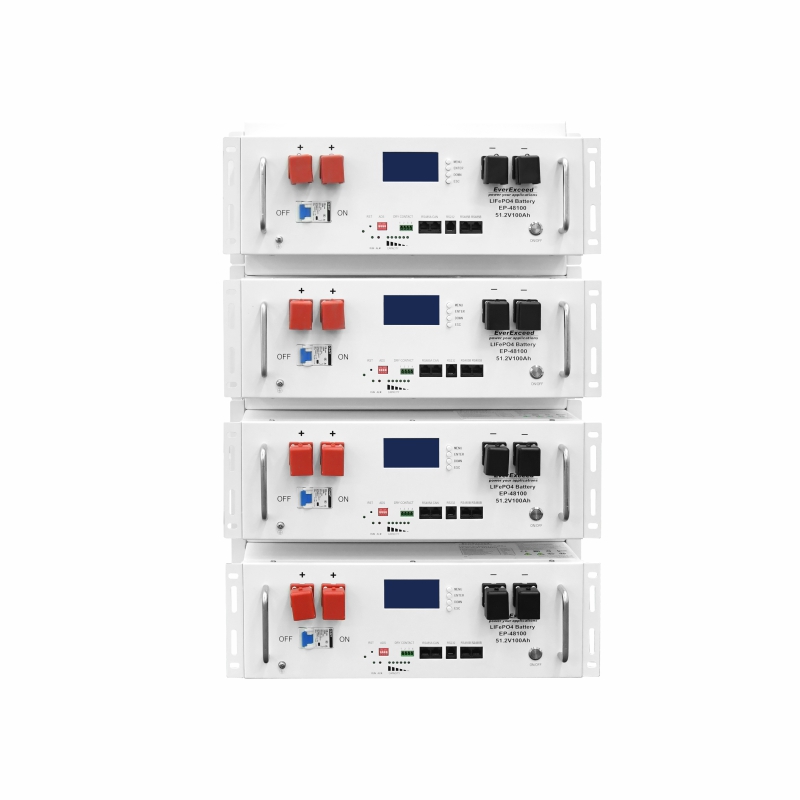
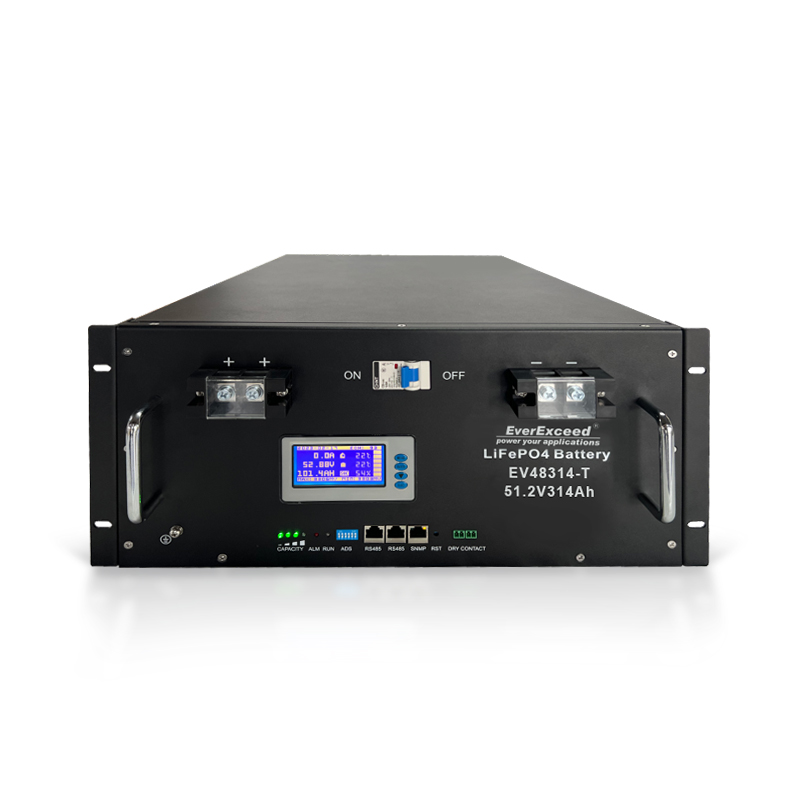
EverExceed lithium batteries, communication capability represents the intelligent dialogue between the battery management system (BMS) — the "brain" of the battery — and external devices such as inverters and monitoring panels. Its core role is to convert the invisible internal operating status of the battery into interpretable and executable commands for external devices, enabling safe, intelligent, and efficient collaborative operation. This function is critical in modern energy storage systems; without it, precise system management would be impossible.
Communication is enabled via standard industrial interfaces including RS485 and CAN, with data exchange through protocols like Modbus.
Specifically, EverExceed lithium batteries with integrated communication deliver four core functions:
1. Real-Time Monitoring & Status Sharing
Communication makes battery status fully transparent, including:
- Accurate State of Charge (SOC) Estimation: Real-time precise remaining capacity percentage, eliminating estimation errors from voltage-only readings.
- State of Health (SOH) Evaluation: Battery health status to assess aging and support maintenance and replacement planning.
- Critical Parameter Acquisition: Shared data on total pack voltage, current, temperature, and more for comprehensive system decision-making.
2. Intelligent Safety Protection
As the core value of communication, the BMS immediately alerts the inverter to shut down upon detecting hazards. EverExceed’s protective actions include:
| Protection Type |
BMS Fault Signal |
Inverter Response |
Core Value |
| Overvoltage / Undervoltage |
Any cell voltage out of range |
Immediately stop charging or discharging |
Prevent overcharging fires or deep-discharge failure |
| Overcurrent |
Charge/discharge current exceeds threshold |
Current limit or circuit cutoff |
Protect battery and power components |
| High / Low Temperature |
Temperature outside safe range |
Stop charge/discharge or adjust power |
Avoid lithium plating at low temps and thermal runaway at high temps |
| Short Circuit |
Short circuit detected |
Instant battery disconnection |
Prevent catastrophic short-circuit damage |
| Insulation Fault |
Insulation resistance drop |
Alarm and enter safe mode |
Prevent electric shock hazards |
3. Dynamic Charge & Discharge Control
The inverter optimizes charging and discharging strategies in real time based on BMS data from EverExceed batteries, protecting cells and improving efficiency:
- Current-Limited Charging: Reduce charging current automatically at high temperatures.
- Precision Equalizing Charging: Switch to constant-voltage charging when nearly full.
- Intelligent Load Shedding: Disconnect non-critical loads at low SOC to extend backup time.
4. Historical Data Logging & Alarm Tracing
Through the communication interface, users can access recorded data inside the EverExceed BMS:
- Cycle Count: Total full charge-discharge cycles completed.
- Rated & Real-Time Capacity: Nominal and actual available capacity.
- Fault Alarm Records: Timestamps, fault codes, and key pre- and post-fault data for accurate troubleshooting.
Important Note
The communication-based safety protection of EverExceed lithium batteries differs from hardware-based secondary protection:
- Communication Protection (Primary Protection): Active, collaborative, and non-destructive. It stops the inverter via software commands for routine safety without battery damage.
- Hardware Secondary Protection: Passive, final, and destructive. If communication protection fails, the BMS hardware forcibly disconnects the main circuit as the last physical defense to avoid catastrophic failure.