
Blog
  • The Maintenance-Free Principle of Nickel-Cadmium Batteries

    The Maintenance-Free Principle of Nickel-Cadmium Batteries

    Dec , 12 2025
    The core principle behind the "maintenance-free" feature of nickel-cadmium batteries lies in their sealed structure and internal gas recombination reaction, which prevents water loss in the electrolyte—eliminating the need for manual maintenance.   In short, traditional open-cell batteries require maintenance because charging produces gases, causing water in the electrolyte to evaporate...
    more
  • Main Causes of Lithium Battery Swelling and Effective Solutions

    Main Causes of Lithium Battery Swelling and Effective Solutions

    Dec , 20 2025
    — Powered by EverExceed Advanced Lithium Battery Technology   Lithium battery swelling is a common issue that can affect the safety, reliability, and service life of lithium-ion batteries. As a global manufacturer of high-performance lithium batteries, EverExceed explains the main causes of battery swelling and provides practical solutions to help users extend battery lifespan and ensur...
    more
  • The Risks of Storing LiFePO₄ Batteries at Full Charge

    The Risks of Storing LiFePO₄ Batteries at Full Charge

    Dec , 20 2025
    — Professional Insights from EverExceed   Lithium iron phosphate (LiFePO₄) batteries are widely recognized for their excellent safety, thermal stability, and long cycle life. However, even LiFePO₄ batteries are not immune to aging, especially when stored at full charge for extended periods.   As a professional manufacturer of industrial lithium battery solutions, EverExceed explain...
    more
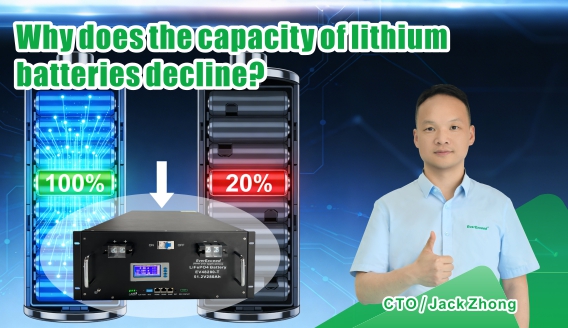
  • Causes of Lithium-Ion Battery Capacity Degradation — Technical Insights from EverExceed Lithium Battery Solutions

    Causes of Lithium-Ion Battery Capacity Degradation — Technical Insights from EverExceed Lithium Battery Solutions

    Dec , 26 2025
    A lithium-ion power battery is a highly complex electrochemical system composed of cathode and anode materials, current collectors, electrolyte, and separator. Under ideal conditions, only the reversible intercalation and de-intercalation of lithium ions occur between the electrodes, without any parasitic reactions. In this case, lithium ions are not consumed, and the battery capacity remains stab...
    more
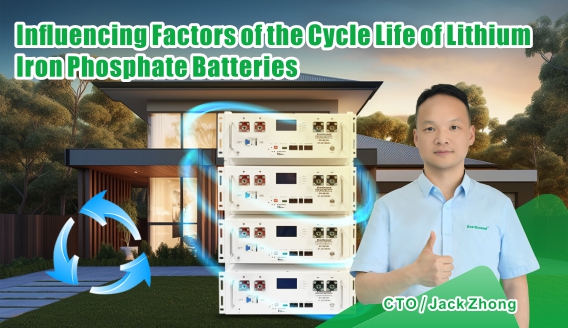
  • Key Factors Affecting Lithium-Ion Battery Cycle Life

    Key Factors Affecting Lithium-Ion Battery Cycle Life

    Dec , 26 2025
    — From Cell Design to System Management | EverExceed Technical Overview The cycle life of a lithium-ion battery is determined by a combination of intrinsic cell factors, external operating conditions, and system-level management. Among these, cell design and manufacturing quality form the foundation, while operating stress and battery management strategies directly influence long-term perfor...
    more
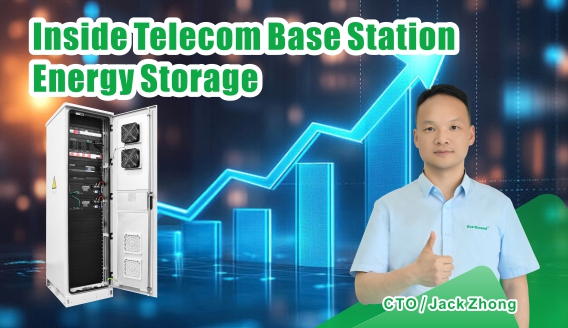
  • Reliable Power Infrastructure for Modern Telecom Networks

    Reliable Power Infrastructure for Modern Telecom Networks

    Dec , 30 2025
    In today’s always-connected world, telecom base stations form the foundation of mobile communication networks. From signal coverage and data transmission to user access, every critical network function depends on a stable and continuous power supply. Without reliable power infrastructure, even the most advanced radio and transmission technologies cannot operate.   EverExceed Telecom Pow...
    more
  • Telecom Base Station Energy Storage Systems: Workflow and Value Analysis

    Telecom Base Station Energy Storage Systems: Workflow and Value Analysis

    Jan , 14 2026
    As mobile communication networks continue to expand, energy storage systems for telecom base stations have become a critical foundation for network reliability and operational resilience. Beyond emergency backup, modern storage systems now deliver measurable economic, environmental, and grid-level value.   This article outlines the core operating workflow and comprehensive benefits of base st...
    more
  • What Is Battery DOD (Depth of Discharge)?

    What Is Battery DOD (Depth of Discharge)?

    Jan , 17 2026
    Depth of Discharge (DOD) refers to the percentage of a battery’s rated capacity that has been discharged during a single cycle. Formula:DOD = (Discharged Capacity / Rated Battery Capacity) × 100% Examples: A 100 Ah LiFePO₄ battery that delivers 30 Ah has a DOD of 30%. If the battery is discharged until only 20% state of charge (SOC) remains, the DOD is 80%. DOD = 100% represents a full...
    more
  • RV Battery vs Car Battery What's the Difference

    RV Battery vs Car Battery What's the Difference

    Feb , 04 2026
    When people first get into RV travel, one of the most common questions they ask is surprisingly simple: Aren't RV batteries and car batteries basically the same thing? They often look similar, they're both usually 12V, and they both store electricity, so it's easy to assume they're interchangeable. In reality, the difference between an RV battery and a car battery is significant, and choosing the ...
    more
  • Factors affecting the self-discharge rate of lithium iron phosphate batteries

    Factors affecting the self-discharge rate of lithium iron phosphate batteries

    Feb , 05 2026
    Introduction The self-discharge rate of LiFePO₄ batteries (Lithium Iron Phosphate batteries) is the result of a combination of intrinsic material properties, manufacturing processes, and operating conditions.Although LiFePO₄ chemistry is well known for its low self-discharge and high stability, abnormal capacity loss during storage or idle periods may still occur if key factors are not properly co...
    more
first page << 1 ... 11 12 13 last page

a total of13 pages

leave a message
welcome to everexceed
If you are interested in our products and want to know more details,please leave a message here,we will reply you as soon as we can.

home

products

about

contact