How EverExceed's modular power architecture empowers operators in the 5G era
As 5G deployment expands from 'broad coverage' to 'deep coverage,' network density continues to increase. Meanwhile, the power consumption of a single 5G site has risen by 30–50% compared with 4G. Traditional integrated power systems are struggling with the challenges of capacity expansion, energy efficiency, and complex maintenance.
Modular telecom power systems, with their flexibility, scalability, high efficiency, and easy maintenance, have quickly become the mainstream choice for 5G operators. This article breaks down the underlying logic behind their rise from three dimensions: technical features, scenario adaptability, and lifecycle value.
1. Why Traditional Power Systems Fail to Meet 5G Requirements
The evolution of 5G base stations brings three core challenges to power supply systems:
• Surge in power consumption & rapidly changing demands
5G main equipment, edge computing nodes, and Massive MIMO antennas significantly increase the site load—from 2–4 kW in 4G to 8–12 kW in 5G. Different site types (macro, micro, indoor DAS) require completely different load levels.
• Diverse deployment environments
5G sites are installed on rooftops, towers, machine rooms, underground parking lots, rural areas, and tunnels—placing higher requirements on size, weight, and environmental resilience.
• Increased O&M complexity
As site quantity doubles, a single failure in traditional power systems requires shutting down the entire unit, affecting coverage and raising labor costs.
These pain points expose the limitations of traditional integrated power systems: Fixed capacity, difficult to expand; Low conversion efficiency under partial load; A single failure affects the entire system; Long maintenance time and high OPEX
Modular telecom power systems were designed precisely to solve these challenges.
2. Four Key Advantages of Modular Power Systems for 5G Networks
Flexible Scalability: Configure Only What You Need
Modular power systems adopt a “building-block” structure composed of independent power modules (typically 3–4 kW each).
For example, a new 5G macro site may need only 8 kW initially—so operators can install two rectifier modules. Later, as traffic grows, additional modules can be added without replacing the entire system. Hot-swappable modules; Expansion without shutdown
No service interruption during upgrades
EverExceed Advantage:
EverExceed modular rectifiers (3kW/4kW) support true hot-swap and plug-and-play expansion, ensuring smooth capacity growth while reducing CAPEX.
2. High Efficiency & Lower Energy Bills
5G sites experience large power fluctuations ('peak–valley' characteristics). Traditional systems operate inefficiently under low loads, often below 85%.
Modular systems solve this with intelligent sleep mode:
When load drops, redundant modules automatically enter sleep mode
Active modules operate in the optimal efficiency zone
Overall conversion efficiency reaches 96%–98%
This helps operators save 3,000–5,000 RMB per site annually, contributing significantly to large-scale energy reduction.
EverExceed Advantage:
Our high-efficiency rectifiers and intelligent controller ensure real-time module rotation, extending lifespan and improving energy performance to meet green network initiatives.
3. Easy Maintenance & Higher Reliability
Modular architecture greatly reduces O&M difficulty and failure impact:
A single module failure does not cause system shutdown
Remaining modules automatically share the load
The faulty module can be replaced within 10 minutes, no special tools required
Real-time monitoring provides early warnings for voltage, current, temperature, and module performance
Compared with traditional systems requiring hours of on-site repair, O&M efficiency improves by over 80%.
EverExceed Advantage:
EverExceed Telecom Power Systems include advanced monitoring controllers and remote management platforms, enabling predictive maintenance and reducing site visits.
4. Compact & Highly Adaptable for Diverse Deployment
Modular power systems offer higher power density:
2.5–3 kW/L power density
30% smaller footprint
40% lighter weight
Benefits include:
Space-limited rooftop sites can use wall-mount or stacked installation
Faster deployment in remote or emergency communication scenarios
Wide input voltage range (90–290 VAC)
Wide operating temperature (–40°C to +75°C)
EverExceed Advantage:
Our compact, industrial-grade power systems are designed for harsh environments such as high-temperature regions, low-voltage grids, coastal areas, and mountainous terrains.
3. Real-World Applications: Proven Value of Modular Power Systems
Case Study: 5G Deployment in a Tier-1 City
After adopting modular power systems, the operator reported:
Installation time reduced from 4 hours to 1.5 hours (62.5% faster)
Failure rate decreased from 3.2% to 0.8%
O&M efficiency doubled—technicians can now maintain 120 sites instead of 50
Conversion efficiency improved by 5%–8%, saving 120 million kWh annually, reducing carbon emissions by 96000 tons
Case Study: Rural 5G Coverage
The flexible 'install as needed' model reduced initial investment by 40%, allowing phased capacity expansion aligned with user growth.
4. Future Trends: Modular Power Systems Will Evolve Toward 'Intelligent + Integrated' Architectures
As 6G R&D accelerates and carbon neutrality becomes global policy, modular power systems will advance in two major directions:
• Intelligent Evolution
AI-based load forecasting
Automatic module optimization
Digital twin technology for full lifecycle diagnostics
• Integrated Hybrid Power Solutions
Modular power will increasingly integrate:
Lithium battery energy storage
Solar PV interfaces
Hybrid energy management platforms
This enables a unified solution: Power + Energy Storage + Solar, supporting the green transformation of future site infrastructure.
Conclusion
Modular telecom power systems have become mainstream in the 5G era because they perfectly match the evolving needs of telecom networks. By offering scalable capacity, high energy efficiency, easy maintenance, and strong adaptability, they significantly reduce the total cost of ownership (TCO) for operators.
As technologies evolve, modular power systems will extend beyond macro and micro base stations into industrial IoT, V2X, and smart infrastructure—becoming a foundational power platform for the digital economy.
For operators, modular power is no longer an option—it is the new standard.
EverExceed provides a complete range of telecom power solutions, including:
Modular 3kW / 4kW rectifier modules
Highly efficient modular telecom power systems (48V DC)
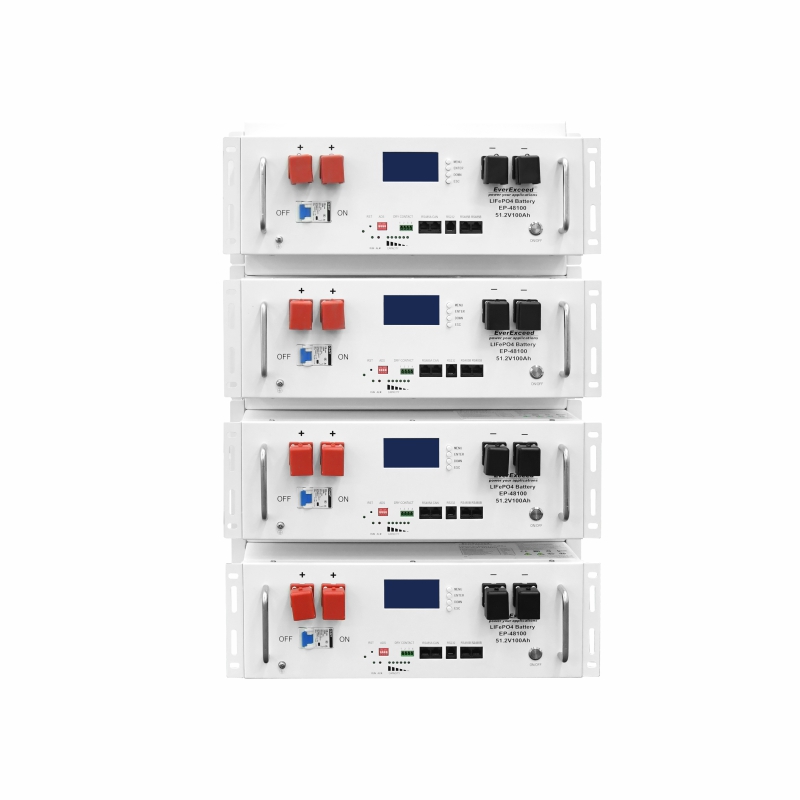
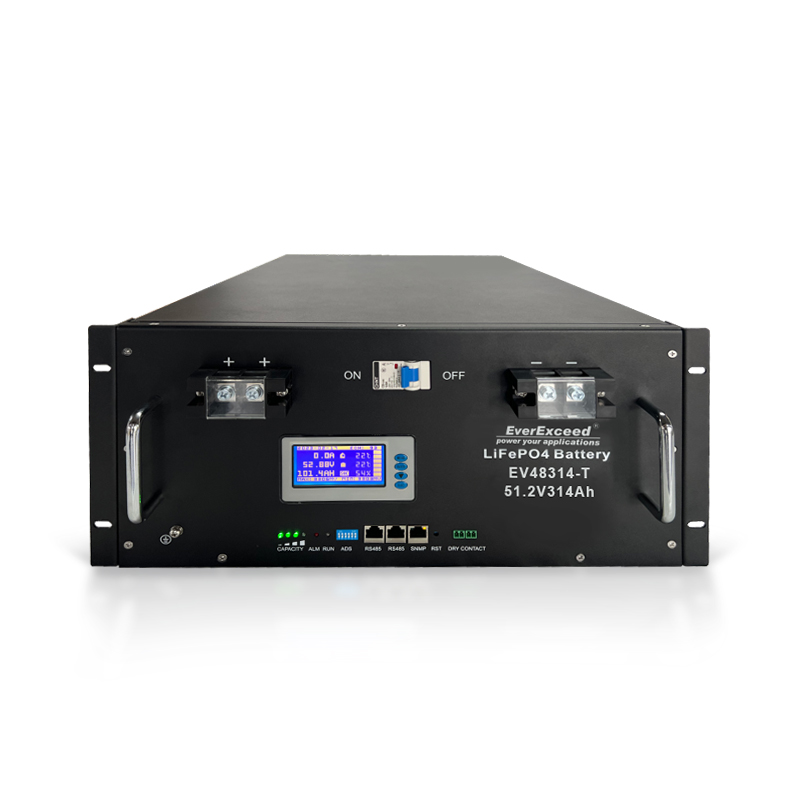
Lithium battery energy storage (48V / 51.2V / High-voltage ESS)
MPPT solar controllers & hybrid inverters
Advanced remote monitoring platforms
Customizable energy solutions for all site types
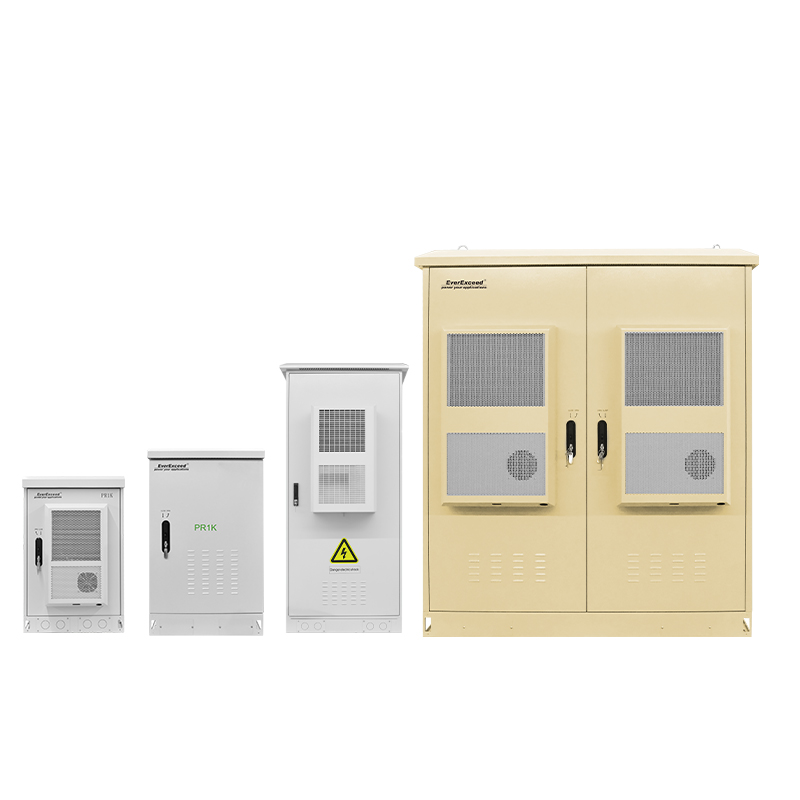
Our products are engineered for 5G, edge computing, remote sites, and harsh environments, helping operators build greener, more intelligent, and more reliable networks.
tags :
categories
recent posts




scan to wechat:everexceed