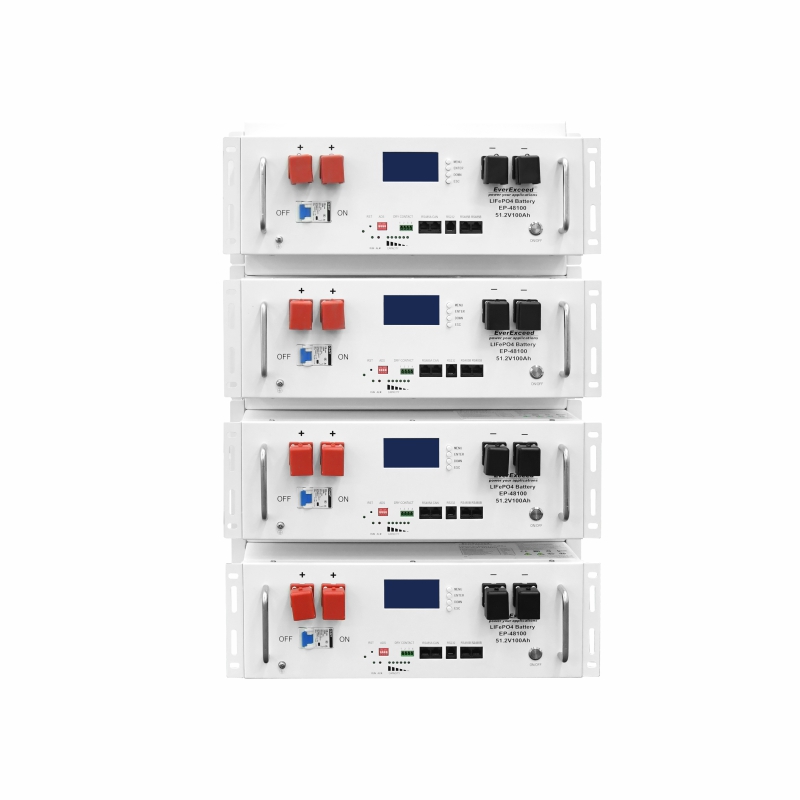
1.How much solar battery storage do l need?
For a small household with monthly electricity consumption below 100 kWh, a 5 kWh lithium battery would suffice. f monthly consumption is around 300 kWh,a 10 kWh lithium battery would be suitable. For consumption around 500 kWh per month, a 20 kWh lithium battery would suffice. f monthly consumption is around 1000 kWh, a 50 kWh lithium battery would suffice. The specific situation also depends on factors such as daily electricity usage,availability of grid power, and consecutive rainy days.
2.Is the LiFePO4 battery safe for indoor installation?
Yes. The battery features an intelligent BMS for overcharge, over-discharge, overheating, and short-circuit protection, plus an independent aerosol fire suppression device for rapid fire suppression during a thermal event.
3.Are lithium ion batteries safe?
Absolutely. LiFePO₄ batteries are among the safest lithium battery chemistries. The system includes a built-in Battery Management System (BMS) for protection against overcharge, over-discharge, overheating, and short circuits. Additionally, it features an independent physical aerosol fire extinguisher for enhanced fire safety.
4.How many cells in a lithium ion battery?
It depends on the battery capacity. For conventional sizes like 5 kWh and 10 kWh,they are typically composed of 16 cells,each with a voltage of 3.2 V, connected in series.
5.How long can a solar battery power a house?
This depends on the capacity of the battery and the power of the household load.
6.What inverters are compatible with the 10kWh battery?
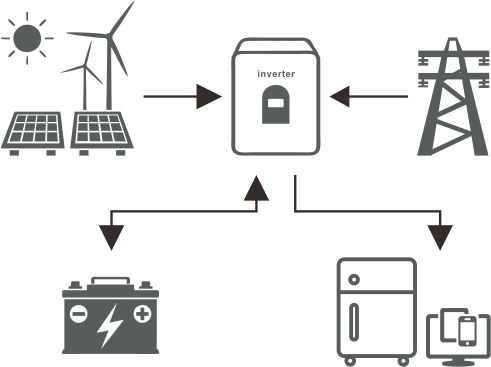
The battery is compatible with most grid-tied and off-grid inverters, including hybrid systems from major brands.
7.What happens if a lithium battery enters low-voltage protection without inverter communication?
Without communication, some inverters may fail to detect the battery voltage after low-voltage protection, preventing automatic charging recovery. EverExceed provides AC activation and manual activation solutions to ensure reliable battery restart.