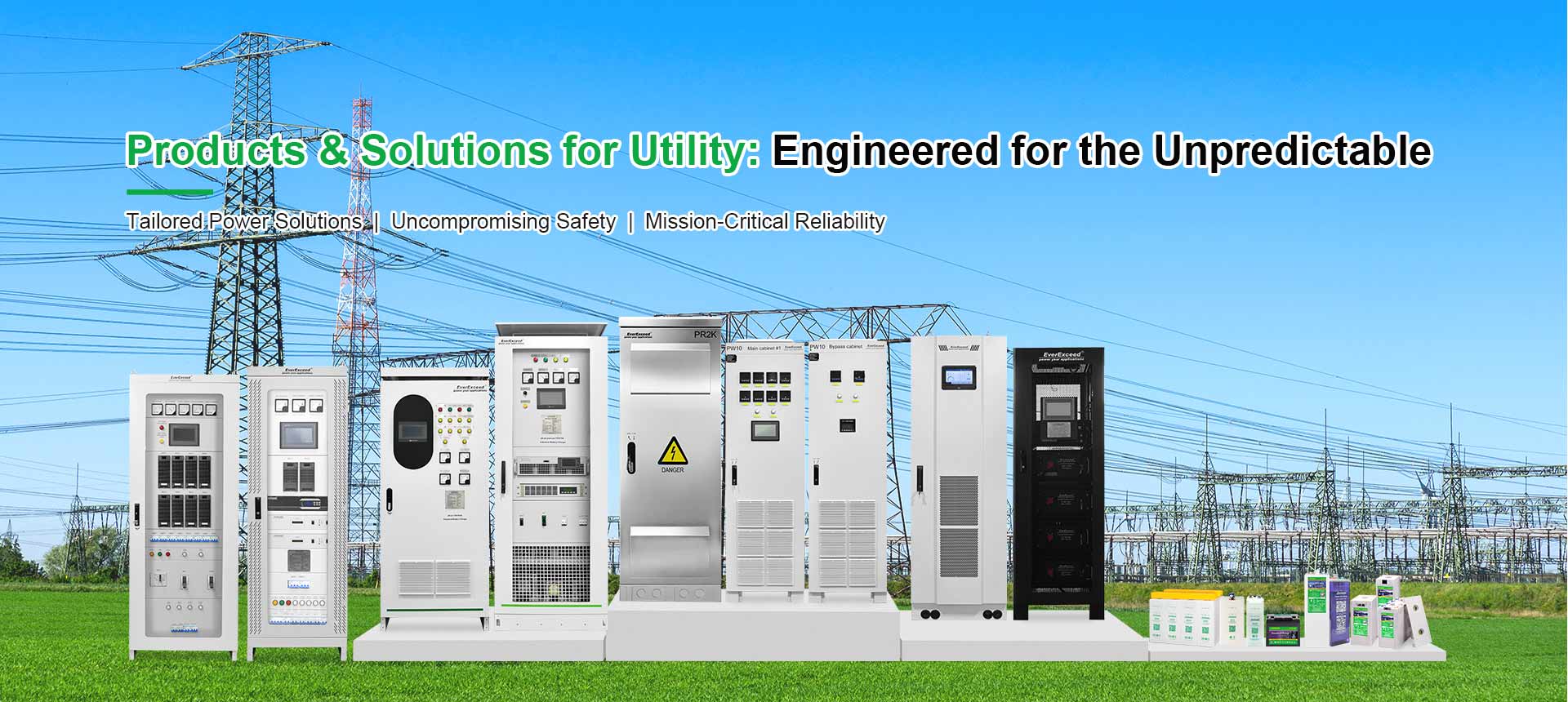
Off-grid Power Deployment and Benefit Analysis in Weak Grid Areas
For telecom base stations in weak-grid areas, the most economical solution is a hybrid off-grid power architecture integrating solar system + LiFePO₄ energy storage + backup diesel generator + high-frequency rectifier system.
A typical configuration includes:
|
Item |
Configuration |
|
Solar system |
5–15 kW |
|
Energy storage |
20–80 kWh LiFePO₄ battery |
|
Backup generator |
8–20 kVA |
|
DC power system |
48V high-frequency modular rectifier |
The solution can achieve:
EverExceed provides a complete telecom power solution including:
Tower structures, civil foundations and EPC services are provided by owners or third-party contractors. EverExceed focuses on power system interface design, installation guidance and commissioning support to ensure smooth integration with tower structures, grounding and power distribution systems.
Key Highlights
|
Item |
Description |
|
Replace pure diesel operation |
5–15 kW solar + 20–80 kWh storage can reduce diesel consumption by 60%–90% for remote telecom sites |
|
Battery backup duration |
Designed for 8–24 hours backup based on BTS load; typical single-tenant sites require 2–6 kW continuous power with 20%–40% reserve margin |
|
Core power equipment |
EverExceed ESB telecom power system with 48V high-frequency modular rectifier, ≥96% efficiency and N+1 hot-swappable redundancy |
|
Clear project boundary |
EverExceed supplies power system, solar, storage and monitoring; tower structures and civil works are provided by owners or third parties |
|
Early design input |
Define wind speed, structural life and applicable standards at early stage to avoid interface redesign |
|
Delivery options |
FOB supply, CIF delivery and on-site technical support available |
|
ROI calculation |
Hybrid systems can recover additional investment within 3–6 years compared with diesel-only operation |
|
Remote operation & maintenance |
Monitor battery SOC, rectifier efficiency and generator runtime to reduce emergency visits |
|
Compliance verification |
Power systems comply with IEC/UL related standards; tower structural compliance is handled by tower suppliers |
Weak grid areas do not always mean areas without electricity.
Many telecom sites experience limited grid availability:
|
Parameter |
Range |
|
Grid availability |
4–12 hours/day |
|
Continuous load |
2–6 kW |
|
Multi-tenant or microwave-heavy sites |
Above 8–12 kW |
Common challenges include:
Therefore, telecom power systems should be designed with off-grid capability to maintain continuous operation of:
For typical single-tenant macro sites, continuous load is around 2–6 kW, depending on:
Higher-capacity multi-tenant or microwave sites may exceed 8–12 kW.
From a site integration perspective, the power system must also coordinate with tower structures and layout.
|
Tower Type |
Application |
|
15 m monopole tower |
Suburban 4G coverage sites with limited land |
|
40 m monopole tower |
Industrial macro sites supporting multiple antennas and microwave backhaul |
|
12 m shared pole |
Integrated power and telecom deployment along public corridors |
In weak-grid projects, EverExceed coordinates with tower suppliers during early design, including:
to ensure reliable system integration.
A remote telecom base station with an average DC load of 3.5 kW. Grid power is available for only 6 hours/day, and fuel delivery is required every 3–4 weeks.
The tower structure and foundation are provided by a third-party contractor. EverExceed supplies the complete hybrid power system.
|
Component |
Specification |
Supplier |
|
Solar system |
8 kW |
EverExceed |
|
LiFePO₄ battery |
40 kWh |
EverExceed |
|
Diesel generator |
12 kVA |
Owner / Third party |
|
Telecom power system |
ESB Series 48V / 6kW modular system with N+1 redundancy |
EverExceed |
|
MPPT controller |
Integrated into power system |
EverExceed |
|
Remote monitoring |
Intelligent monitoring platform |
EverExceed |
|
Tower & foundation |
15–40 m monopole tower / 12 m shared pole |
Owner / Third party |
|
Parameter |
Target |
|
Annual availability |
≥99.5% |
|
Average generator runtime |
<4 hours/day |
The EverExceed hybrid telecom power architecture includes:
| System Module | Configuration / Function |
| DC power core | ESB telecom power system with 48V high-frequency modular rectifier, typically using 3–6 kW modules, supporting hot-swappable maintenance and N+1 redundancy |
| Solar system | Typically 5–15 kW for weak-grid telecom sites |
| Battery system | 20–80 kWh LiFePO₄ battery providing 8–24 hours backup |
| Backup generator | 8–20 kVA based on load and charging requirements (optional) |
| ATS & controller | Power priority management, battery SOC control and automatic generator start/stop |
| Remote monitoring | Monitoring voltage, temperature, fuel level, access control, smoke alarm and rectifier status |
| Grounding & surge protection | Power-side grounding bar and SPD coordinated with tower grounding system |
Tower structures (12 m shared pole, 15 m monopole tower or 40 m monopole tower) and civil foundations are provided by owners or third-party suppliers.
EverExceed provides:
| Interface Requirement | Support |
| Equipment installation dimensions | √ |
| Equipment load requirements | √ |
| Grounding interface | √ |
| Cable routing requirements | √ |
| Lightning protection coordination | √ |
This ensures seamless integration between telecom power systems, tower structures and civil infrastructure.
The key advantage of hybrid architecture is load separation.
| Load Type | Design Approach |
| Critical telecom loads | Directly connected to DC bus for continuous operation |
| Non-critical AC loads | Minimized, such as lighting and auxiliary outlets |
Benefits:
Reducing parasitic loads by 5%–10% can also reduce required battery capacity and generator operating time.
Battery capacity is determined by critical load and backup duration.
Example:
| Parameter | Value |
| Average load | 3.5 kW |
| Backup duration | 10 hours |
| Required usable energy | 35 kWh |
Considering 80% DOD:
35 kWh ÷ 80% = 43.75 kWh
Recommended configuration:
45–50 kWh LiFePO₄ battery system
For sites with temperatures up to 45°C, consider:
Solar capacity depends on:
Typical high irradiation condition:
| Parameter | Value |
| Daily generation of 1 kW solar system | 4–6 kWh |
| Site consumption | 40 kWh/day |
| Recommended solar capacity | 8–12 kW |
Design should consider:
Generator sizing should consider both site load and battery charging power.
Example:
| Parameter | Value |
| Base station load | 3.5 kW |
| Battery charging power | 4–5 kW |
| Recommended generator size | 10–12 kVA |
An undersized generator may cause:
Industrial communication sites usually require higher tower capacity and stable power supply for LTE/4G networks, CCTV backhaul and microwave transmission.
| Item | Specification |
| Site Type | Industrial communication site |
| Tower Type | 40 m monopole tower (third party supplied) |
| Tower Configuration | 3 platforms, 12 antennas, 2 microwave antennas |
| Coverage Application | Dedicated LTE, 4G and CCTV backhaul within 1–3 km area |
| Average Load | 4–6 kW |
| Solar System | 12 kW |
| Energy Storage | 60 kWh LiFePO₄ battery |
| Backup Generator | 15 kVA |
| Power System | EverExceed ESB 48V DC telecom power system |
| Monitoring | Battery SOC, rectifier status and alarm management |
| Parameter | Target |
| System availability | ≥99.5% |
| Diesel consumption reduction | 70%–85% compared with diesel-only operation |
| Backup capability | 8–24 hours |
| Operation mode | Solar priority + battery storage + generator backup |
Actual diesel reduction depends on solar conditions, battery dispatch strategy, load profile and thermal management.
Compared with diesel-only operation, the hybrid architecture reduces fuel consumption, generator runtime and maintenance requirements.
Different site conditions require different power architectures.
| Solution | Typical Load | Main Equipment | Diesel Reduction | Best Application |
| Pure Diesel Power | 2–10 kW | Generator + small battery | 0% | Emergency sites or low-budget projects |
| Grid + Battery Backup | 2–8 kW | Rectifier + 10–30 kWh battery | 10%–30% | Sites with stable grid (>18 h/day) |
| Solar Hybrid Off-grid System | 2–6 kW | 5–15 kW solar + 20–80 kWh battery + generator | 60%–90% | Weak-grid and remote telecom sites |
| High Autonomy Renewable System | 2–5 kW | 10–20 kW solar + 60–120 kWh battery + generator | 80%–95% | Extremely remote sites |
| Shared Pole Power Corridor | 1–4 kW | 12 m shared pole + hybrid power system | Project dependent | Rural broadband and roadside corridors |
For telecom operators, hybrid systems shift cost from continuous fuel consumption to controlled equipment investment. Although diesel-only systems have lower initial cost, fuel logistics, security and maintenance often increase lifecycle costs.
A bankable telecom off-grid project should define key engineering requirements before procurement, including:
Tower structural design is provided by tower suppliers, while EverExceed ensures the power system meets electrical requirements and interface specifications.
In telecom infrastructure projects, failures often occur at system interfaces rather than individual equipment.
Common integration challenges include:
To avoid redesign and installation issues, EverExceed provides complete interface documents:
| Interface Item | Provided Information |
| Equipment Installation | Cabinet dimensions and installation requirements |
| Mechanical Interface | Equipment weight and load requirements |
| Grounding | Grounding terminal specifications and connection requirements |
| Cable Routing | DC cable routing recommendations |
| Lightning Protection | Surge protection coordination requirements |
| Energy Management | Solar, battery and generator priority logic |
This ensures smooth integration between EverExceed power systems, tower suppliers and civil contractors.
Compliance requirements should be clearly divided according to supplier responsibility.
| Requirement | Responsible Party | Standard / Specification |
| Tower Structure Design | Tower Supplier | TIA-222-H / EN 1993-3-1, wind speed 40–50 m/s |
| Overhead Line / Grid Coordination | Project Contractor | IEC 60826, ASCE 74, EN 50341 |
| Solar Module Compliance | EverExceed | IEC 61215, IEC 61730 |
| Battery Safety Standard | EverExceed | UL 1973 or IEC battery safety documents |
| Distributed Energy Interface | EverExceed / Grid Contractor | IEEE 1547 (when grid connection exists) |
| Steel Material & Galvanization | Tower Supplier | ASTM material documents and galvanization records |
| Grounding, Surge & Lightning Protection | Joint Responsibility | Coordination between power and tower grounding systems |
Tower suppliers are responsible for structural compliance, while EverExceed ensures electrical equipment compliance.
The 12m shared pole integrates 10kV power distribution and telecom loads on the same structure.
Compared with independent poles, shared pole solutions can reduce corridor occupation by approximately 30%–50%.
Successful deployment requires coordination of:
For shared pole applications, EverExceed ensures the DC power system is properly isolated and coordinated with the 10kV distribution system.
Battery thermal management is critical in remote telecom applications.
When battery cabinet temperature remains above 30–35°C, battery lifetime may decrease. Cooling strategy should be selected based on environmental conditions.
| Environment Condition | Recommended Approach |
| Moderate climate | Passive ventilation may be sufficient |
| High temperature area (peak around 45°C) | Insulated battery cabinet, filtered ventilation or DC cooling evaluation |
| Harsh environment | Additional thermal protection and capacity derating |
If an additional 2%–5% auxiliary energy consumption can extend battery lifetime from 5 years to 8–10 years, the investment is usually justified.
Investment Analysis & Delivery Structure
EverExceed focuses on the design and supply of the telecom power system package, including:
Tower structures, civil foundations and EPC works are provided by owners or third-party contractors.
EverExceed provides technical documents, installation guidance and commissioning support to ensure smooth project execution.
| Delivery Model | Scope |
| FOB Supply | Solar modules, battery system, ESB telecom power system, controller and accessories delivered from factory or FOB port |
| CIF Delivery | FOB scope + sea freight and insurance to destination port |
| On-site Technical Support | Equipment supply + installation guidance, commissioning, testing and operator training |
For a typical telecom site with a 3.5 kW average load, diesel-only operation results in high operating costs due to:
When fuel logistics costs are considered, hybrid power systems can significantly reduce total operating expenses.
Typical investment recovery period:
3–6 years
The fastest return is usually achieved in sites with:
If an EverExceed hybrid system achieves:
| Item | Improvement |
| Diesel consumption reduction | 75% |
| Emergency maintenance visits reduction | 25% |
The annual OPEX can be significantly reduced.
Additional benefits, including carbon reduction value and improved network availability, are not included.
Therefore, EverExceed evaluates projects based on 5-year Total Cost of Ownership (TCO) rather than initial equipment price only.
For operators managing dozens or hundreds of sites, portfolio-level savings are usually more important than single-site equipment cost.
An off-grid telecom power system provides continuous power without relying on stable grid supply.
Typical configuration:
It ensures continuous operation of RF, transmission and control equipment during outages or unstable grid conditions.
Tower structures and civil works are provided by owners or third parties.
Weak-grid sites may only have 4–12 hours of grid availability per day, with voltage fluctuations and frequent outages.
Therefore, operators require battery storage and backup generation to maintain network availability.
For typical sites with 2–6 kW continuous load:
The final sizing depends on load profile, solar conditions, temperature and backup requirements.
A solar hybrid system can reduce diesel consumption by 60%–90%, while lowering:
The actual performance depends on solar resources and energy management strategy.
No.
EverExceed focuses on telecom power solutions, including:
Tower structures, foundations and EPC works are provided by owners or third parties.
Standards should be divided by supplier responsibility:
Tower suppliers handle structural compliance, while EverExceed ensures power system compliance.
Typical maintenance includes:
EverExceed monitoring can help reduce emergency site visits by 20%–40%.
EverExceed provides:
Tower supply, civil construction and EPC services are outside the supply scope.
EverExceed supports:
Large-scale projects may receive volume-based pricing support.
Compared with diesel-only operation, many weak-grid telecom sites can achieve:
3–6 years investment recovery
Faster payback usually occurs in sites with:
EverExceed provides interface documents covering:
This helps tower suppliers and civil contractors complete smooth integration.
Customers should provide:
EverExceed can then recommend the suitable solar, battery and telecom power configuration.
For telecom base stations in weak-grid and remote areas, a hybrid off-grid power system combining:
5–15 kW solar system + 20–80 kWh LiFePO₄ battery + backup generator
can achieve:
The key challenge for remote telecom infrastructure is not only power generation, but also long-term reliability, operating cost control and system integration.
EverExceed provides complete telecom power solutions covering:
Through flexible delivery models including FOB supply, CIF delivery and on-site technical support, EverExceed works with tower suppliers, EPC contractors and telecom operators to deliver reliable power solutions for weak-grid base station deployment worldwide.
EverExceed is a global power electronics solution provider specializing in telecom power systems, UPS, energy storage solutions and intelligent monitoring platforms.
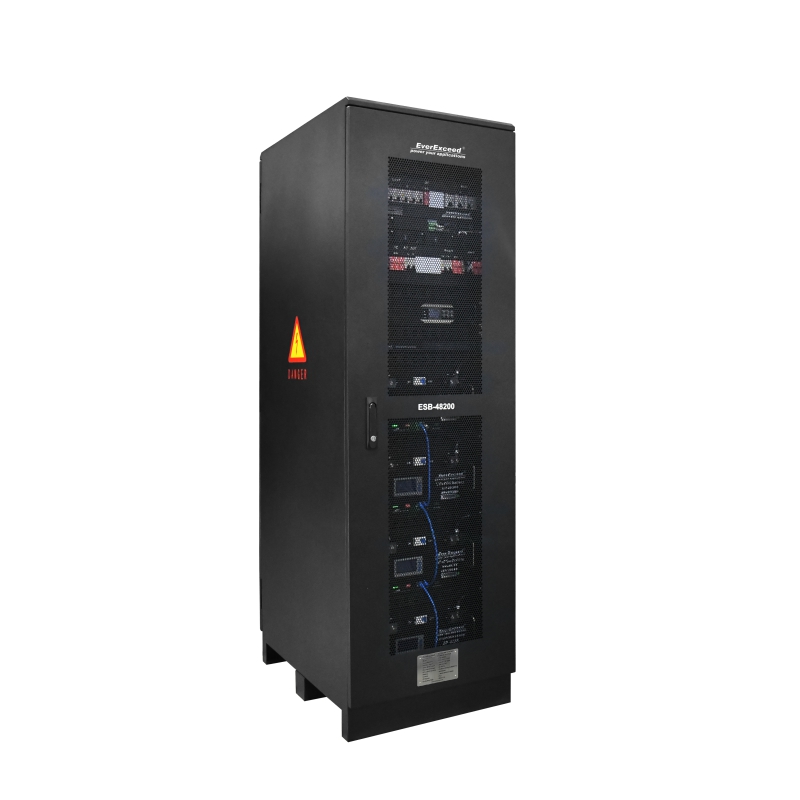
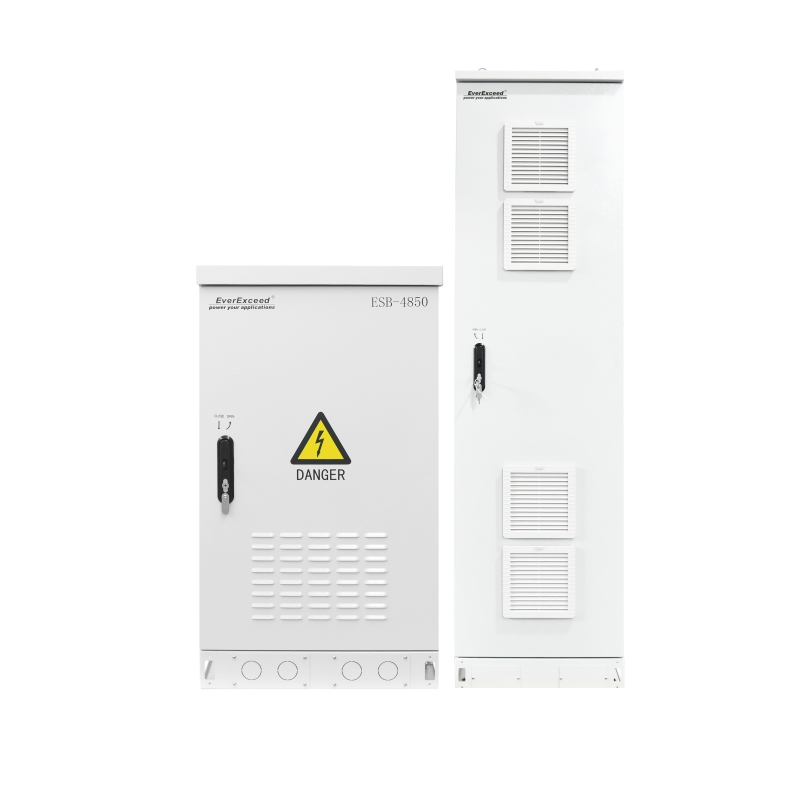
The EverExceed ESB telecom power system adopts a high-frequency modular 48V DC architecture featuring high efficiency, flexible expansion and reliable operation. It is widely applied in telecom base stations, remote communication sites and weak-grid regions.
EverExceed focuses on power system design, manufacturing and delivery, while tower structures and civil construction are completed by owners or third-party contractors.
With customized solutions and professional technical support, EverExceed provides reliable power infrastructure solutions for B2B customers across more than 100 countries.

One-Stop Solution
With advanced design and manufacturing facilities, our products are at the leading edge of power technology, employing state-of-the-art components and production technology.

All-Scenario Communications
An international network of sales and support facilities enables us to provide local customer support across technical sales, design engineering, operations & logistics.

Premium Quality Assurance
Quality assurance and control is involved at all stages to ensure that our products are of the highest quality and are safe & reliable.



scan to wechat:everexceed